
Hiding a cable box, streaming player, Blu-ray player, or AV receiver in a cabinet can improve your room’s appearance—but it may also block the device’s infrared sensor. The right repeater solves that problem by carrying remote-control signals to equipment you cannot reach directly.
These 10 infrared repeaters for home use cover straightforward cable extensions, multi-device kits, dual-frequency designs, and wireless options. Use the guide below to match connection type, range, emitter count, and installation style to your entertainment setup.
Best 10 Infrared Repeaters for Home Use Picks for 2026
Maximum Device Coverage
ICESPRING Infrared Repeater Kit

- Controls up to 10 devices, expandable to 12
- Includes five 10-foot dual IR emitters
- Designed for cabinets and multi-room equipment
Best For: Larger home theater systems with multiple hidden IR devices
Dual-Frequency Flexibility
TNP Dual-Frequency IR Repeater Kit
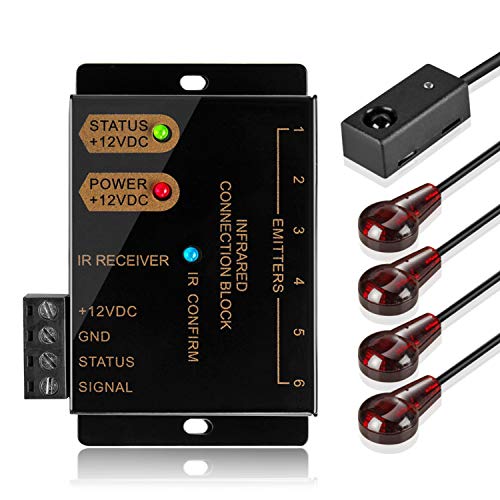
- Supports 38 kHz and 56 kHz IR signals
- Includes two dual 10-foot emitters
- Provides up to six emitter outputs
Best For: Cabinet-based systems with cable boxes and mixed A/V components
Expandable Plug-and-Play Control
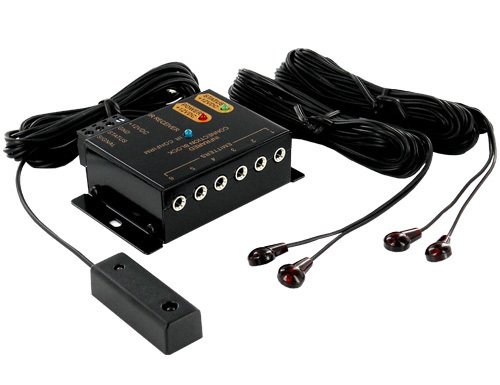
- Controls four devices out of the box
- Expandable to a maximum of 12 devices
- Includes distribution block, receiver, emitters, and adapter
Best For: Simple home theater installations that may expand
Compact USB-Powered Setup

- USB-powered with a 6-foot Y-cable
- Blue LED verifies signal transmission
- Supports up to a 15-foot IR signal range
Best For: Nearby hidden A/V sources in TV and entertainment setups
Best Wired Multi-Device Value
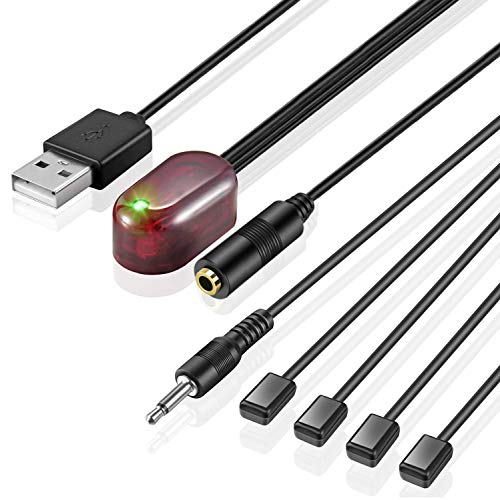
- Four emitters for multiple A/V components
- 34–60kHz compatibility range
- USB-powered with receiver status LED
Best For: Wired home theater setups with up to four IR devices
Best Long-Range Wireless Option

- 433MHz wireless range up to 500 feet
- Dual channel switches reduce interference
- Includes receiver, emitter, cables, and power adapters
Best For: Large or separated home entertainment installations
Best for Hidden Cabinet Installations

- Supports up to 32 concealed A/V components
- Works through cabinet doors or walls
- Four emitter outputs with confirmation LED
Best For: Large wired entertainment cabinets and equipment closets
Best Compact Cable
Cable Matters 10ft IR Extender
- 10-foot cable for concealed A/V components
- USB-powered with signal-confirming LED
- Adhesive-backed receiver and transmitter
Best For: Single-device home-theater installations
Best for Multiple Devices

- Controls up to 10 devices, expandable to 12
- Includes five IR emitters and receiver
- 20KHz–60KHz broadband compatibility
Best For: Large hidden-component home theaters
Best Simple Cabinet Setup

- USB-powered receiver and transmitter kit
- Stated remote range up to 22 feet
- Designed for cabinets and media centers
Best For: Simple single-device TV cabinet setups
Maximum Device Coverage – ICESPRING Infrared Repeater Kit
For shoppers comparing infrared repeaters for home use, this ICESPRING kit is designed for larger entertainment setups. It can control up to 10 hidden IR devices out of the box and is expandable to 12, making it suitable for cabinets, consoles, and equipment placed in another room.
Best For: Multi-device home theater installations that need broad compatibility and centralized control.
Pros:
- Controls up to 10 devices and can expand to 12.
- Includes five dual IR emitters with 10-foot leads.
- Supports real-time transmission and works in most lighting environments, including areas with CFL lighting.
- Can control equipment at various locations up to 10 meters.
Cons:
- Plasma displays may cause interference with the IR receiver.
- Multiple receivers require spacing of at least 6 meters to help avoid interference.
- The supplied range is listed as 10 feet in the product details, so installation distances may need careful planning.
With its high device capacity and included emitters, this is a strong choice when one repeater needs to serve a substantial home theater system. Pay close attention to receiver placement and the differing range guidance before installing.
Dual-Frequency Flexibility – TNP Dual-Frequency IR Repeater Kit
This TNP kit is a practical option for infrared repeaters for home use when cable boxes and other components are stored behind cabinet doors. Its 38/56 kHz dual-frequency receiver is intended to support a wider range of IR remotes, while the system supports up to six emitter connections.
Best For: Home theater cabinets containing cable boxes, set-top boxes, and multiple A/V components.
Pros:
- Dual-frequency support covers 38 kHz and 56 kHz signals.
- Includes two dual IR emitter blasters with 10-foot leads.
- Supports up to six emitter outputs.
- Offers a stated range of up to 40 feet.
Cons:
- Only two dual emitters are included in the package.
- Additional IR emitters are available separately.
- Setup may require adapters or an extension cable for longer emitter runs.
The dual-frequency receiver gives this TNP model useful flexibility for mixed A/V equipment, and its 40-foot stated range suits many cabinet-based layouts. It is less convenient for larger systems unless you budget for additional emitters.
Expandable Plug-and-Play Control – HdtvHookup Deluxe IR Repeater
For buyers seeking straightforward infrared repeaters for home use, the HdtvHookup Deluxe IR 1204 is built around simple installation and broad expansion. It controls four devices out of the box and can support up to 12, helping keep audio and video equipment hidden while preserving remote control access.
Best For: Users who want a simple starting kit with room to expand their home theater setup.
Pros:
- Plug-and-play setup is designed to take just a few minutes.
- Controls four devices out of the box and expands to 12.
- Includes the distribution block, mini receiver, two dual IR emitters, and AC/DC adapter.
- Offers a stated maximum range of 40 feet.
Cons:
- The initial package includes two dual emitters, so larger installations may require additional hardware.
- The supplied notes do not specify the exact supported IR frequencies.
This model makes sense when easy installation matters and the system may grow over time. Its 12-device maximum is useful, but the included emitter count is better suited to a modest setup than a fully populated equipment rack.
Compact USB-Powered Setup – Cable Matters 6ft IR Extender
This Cable Matters cable is a compact choice among infrared repeaters for home use, especially for a wall-mounted TV connected to equipment in a nearby closet or cabinet. It uses USB power, includes adhesive-backed transmitter and receiver cables, and is intended for A/V devices that use IR rather than RF.
Best For: Single-source TV and home theater setups needing a tidy, short-distance IR connection.
Pros:
- Uses a 5V USB power connection and includes a 6-foot Y-cable.
- Blue receiver LED confirms signal transmission.
- Adhesive backing helps secure the transmitter and receiver.
- Supports an IR signal range of up to 15 feet.
Cons:
- It does not work with RF signal devices.
- The 6-foot cable and 15-foot stated range are less suited to distant rooms or large installations.
- A USB wall charger is recommended because a TV USB port may not provide power when the TV is off.
Its simple cable design and USB power make this a convenient solution for one nearby hidden A/V source. Confirm that your equipment uses infrared and plan for a separate USB wall charger if the TV cannot provide continuous power.
Best Wired Multi-Device Value – Hidden IR Remote Extender
For shoppers comparing infrared repeaters for home use, this wired kit offers a straightforward way to control A/V equipment from another room or around a home theater. Its single receiver, four emitters, USB power, and 34–60kHz operating range make it a practical fit for several standard IR-controlled components.
Best For: Home theater setups with up to four IR-controlled devices and flexible receiver placement.
Pros:
- Four emitters can control multiple components simultaneously.
- Supports common devices including cable boxes, satellite receivers, DVD/Blu-ray players, and amplifiers.
- USB-powered design and included 2-meter receiver cable simplify installation.
- Receiver confirmation LED provides visual feedback when a signal is received.
Cons:
- Wired design requires routing cables between the receiver and components.
- Remote control performance depends on aiming at the IR receiver.
- Maximum supported device count is four.
This is a sensible option when you want a simple, affordable wired repeater for a conventional entertainment system rather than a long-range wireless link.
Best Long-Range Wireless Option – 500-Foot IRBlast Repeater
Among infrared repeaters for home use, this wireless kit stands out for installations where the receiver and A/V equipment are far apart or separated by a cabinet. It uses a 433MHz wireless connection rated for up to 500 feet, while the receiver captures IR commands for compatible devices.
Best For: Large rooms, remote equipment cabinets, and home expansion setups needing a wireless connection.
Pros:
- Wireless range is rated up to 500 feet, with greater range possible in open air.
- Works with many standard IR devices, including cable boxes, Blu-ray players, DVD players, and home audio receivers.
- Two channel switches help prevent cross-control between separately installed systems.
- Includes receiver, emitter, two extension cables, power adapters, adhesive pads, and a one-year warranty.
Cons:
- Only works with IR remotes, not RF, Bluetooth, Wi-Fi, or app-controlled remotes.
- Does not support Bluetooth/Wi-Fi smart TVs and streaming boxes controlled through apps.
- Requires matching the receiver and emitter channel settings during setup.
The long wireless range is the main reason to choose this model, but compatibility should be checked carefully if your entertainment devices rely on newer wireless or app-based controls.
Best for Hidden Cabinet Installations – 32-Component IR Repeater
This Ensigear kit is designed for shoppers seeking infrared repeaters for home use that can hide equipment behind cabinet doors or walls. Its distribution system supports up to 32 A/V components, with one receiver input, four emitter outputs, and a built-in confirmation LED.
Best For: Larger entertainment cabinets or equipment closets with many concealed IR-controlled components.
Pros:
- Supports up to 32 audio/video components according to the supplied specifications.
- Passes IR signals through solid doors or walls without requiring direct line of sight to equipment.
- Four emitter outputs accommodate multiple devices.
- Works with practically all brands of IR remote controls and includes a two-year warranty.
Cons:
- Uses a wired infrared connection rather than a wireless room-to-room link.
- Listed range is 4 meters, which may limit receiver placement compared with longer-range options.
- The supplied specifications identify a 38kHz frequency, so compatibility with unusual IR devices should be verified.
Its high stated component capacity makes this a strong fit for centralized A/V storage, especially when concealment and broad IR-device support matter more than wireless range.
Best Compact Cable – Cable Matters 10ft IR Extender
For shoppers comparing infrared repeaters for home use, the Cable Matters IR extender is a straightforward choice for controlling one hidden A/V source from a TV-watching position. Its 10-foot cable, USB power, adhesive-backed components, and blue signal LED suit clean home-theater installations.
Best For: Concealing a single DVD player, Blu-ray player, cable box, receiver, or other IR-controlled source near a wall-mounted TV.
Pros:
- 10-foot cable helps bridge the gap between the remote and concealed equipment.
- USB-powered design uses a 5V USB wall charger.
- Blue receiver LED verifies signal transmission.
- Adhesive backing supports tidy mounting of the receiver and transmitter.
Cons:
- Designed for IR equipment and does not work with RF signal devices.
- Requires a separate 5V USB wall charger; a TV USB port may not power it when the TV is off.
- Performance can be affected by Wi-Fi routers or CFL bulbs.
This is a practical, cable-based option when you need reliable control of one concealed component rather than a multi-device distribution system. The 30-degree receiver angle and stated 15-foot IR signal range add flexibility, provided your equipment uses infrared remotes.
Best for Multiple Devices – Herfair IR Repeater System
Among infrared repeaters for home use, this Herfair system stands out for installations with several hidden A/V components. The console box supports up to 10 devices, expandable to 12, and includes five emitters for directing commands to multiple components in a cabinet or media console.
Best For: Multi-device home theaters with cable boxes, receivers, amplifiers, DVD or Blu-ray players, DVRs, and similar IR-controlled equipment.
Pros:
- Controls up to 10 devices and can expand to 12.
- Includes one receiver, five emitters, a console box, and a 12V DC adapter.
- Broadband support covers 20KHz–60KHz devices.
- Indicator lights show power and signal activity.
Cons:
- Requires more installation and cable management than a single-device extender.
- Multiple IR receivers should be spaced at least 20 feet apart to help avoid interference.
- The supplied 12V power adapter adds another component to place near the system.
The Herfair kit is the most capable option here for consolidating a larger collection of hidden components. Its included emitters and expandable capacity make it a better fit for a dedicated equipment cabinet than a simple one-device setup.
Best Simple Cabinet Setup – Qavrulino 6.5ft IR Extender
This Qavrulino kit is a simple pick for infrared repeaters for home use when you want to keep a cable box, disc player, or other AV component behind a cabinet door. It includes a receiver and transmitter, uses USB power, and is rated for remote operation up to 22 feet.
Best For: TV cabinets, media centers, and compact home theaters where one hidden IR-controlled device needs to remain accessible.
Pros:
- USB-powered design helps keep hidden equipment inside a cabinet.
- Supports a stated operating range of up to 22 feet.
- Works with a range of IR devices, including set-top boxes, disc players, and AV receivers.
- Simple receiver-and-transmitter installation.
Cons:
- The 6.5-foot cable offers less reach than longer extender kits.
- It is presented as a basic receiver/transmitter kit rather than a multi-emitter system.
- It requires the controlled equipment to use infrared remote technology.
Choose this model when ease of setup and cabinet concealment matter more than supporting many components. Its compact design and 22-foot stated range make it suitable for everyday living-room layouts, while the shorter cable may limit placement in larger installations.
How We Picked These Infrared Repeaters for Home Use
We focused on the features that matter most in everyday AV installations: compatibility with common infrared remotes, signal reliability, cable length, emitter count, installation flexibility, and the number of devices each kit can control. We also included both wired and wireless designs because a simple cabinet installation has different needs from a setup where components are located in another room.
Because product listings can vary by revision, verify the included power adapter, receiver, emitters, connectors, and stated frequency range before ordering. Infrared systems are generally intended for line-of-sight remote signals, not radio-frequency or Bluetooth remotes.
Quick Comparison
| Best For | Look For | Why It Matters |
|---|---|---|
| One cabinet or shelf | Short wired cable | Simple installation with less excess wiring |
| Several AV components | Multiple IR emitters | Lets one receiver control multiple hidden devices |
| Longer cable runs | 6.5- or 10-foot cable | Provides more placement flexibility |
| Separate rooms | Wireless transmission | Avoids running a signal cable between locations |
| Large systems | Support for up to 10 devices | Reduces the need for additional repeaters |
Key Buying Factors for Infrared Repeaters for Home Use
Wired Versus Wireless
Wired kits are usually the most direct choice for equipment stored behind a television or inside one cabinet. They tend to be easier to troubleshoot and do not require a clear wireless path. Wireless models are more useful when components are far from the viewing position or installed in another room, but they add transmitter and receiver placement considerations.
Emitter Count and Device Capacity
Count the components you want to control, then check how many emitters are included. A multi-emitter kit is better for a receiver, cable box, disc player, and streaming device in the same cabinet. Kits advertised for up to 10 devices can be a practical choice for larger home theaters, provided the emitters can be positioned over each component’s IR sensor.
Cable Length, Frequency, and Placement
Measure the route before choosing a 6-foot, 6.5-foot, or 10-foot cable. Avoid sharp bends and confirm that the receiver can sit where your remote has a clear path. Dual-frequency support may improve compatibility with equipment that uses different infrared operating ranges.
Installation and Compatibility
Check whether the kit uses adhesive-backed emitters, a central blaster, or individual wired emitters. Before permanently attaching anything, test the remote from your normal seating position. Also confirm that your remote actually uses infrared; RF and Bluetooth remotes may not work with a conventional IR repeater.
Who Should Buy Which Infrared Repeaters for Home Use?
Choose a basic wired extender if you only need to control one hidden device. Select a kit with four emitters for a typical multi-component cabinet, and consider a longer Cable Matters-style cable when the receiver must sit several feet from the equipment. A high-capacity system suits larger AV racks, while a wireless repeater is the better fit for equipment installed across a room or in another location. If compatibility is your main concern, prioritize clear frequency specifications and a return policy over extra accessories you may not use.