
The best high-speed memory cards help cameras, phones, drones, and gaming devices save large files quickly and move them to a computer with less waiting. However, maximum advertised read speed is only part of the buying decision.
This roundup compares 10 options across SD and microSD formats, capacities, UHS bus types, and video-speed ratings so you can choose a card that matches your device and workload.
Best 10 High Speed Memory Cards Picks for 2026
Best High-Speed SD Card
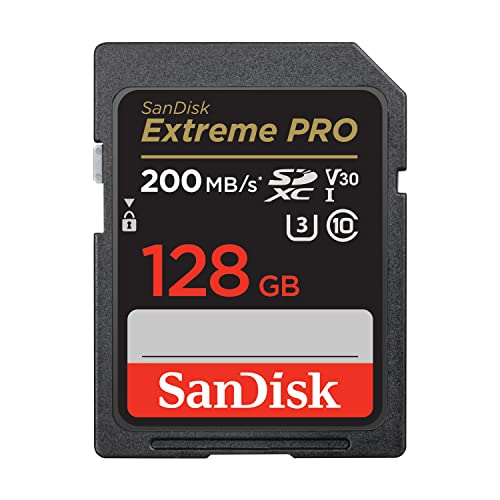
- Up to 200MB/s read speeds with compatible devices
- Up to 90MB/s write speeds for 4K and burst shooting
- U3 and V30 rated with rugged protection
Best For: Compatible cameras, 4K video, and burst photography
Fastest Next-Generation Pick

- Up to 880MB/s read and 650MB/s write speeds
- Designed for Nintendo Switch 2 and future PCIe-NVMe devices
- 512GB capacity with extensive durability protection
Best For: Nintendo Switch 2 and compatible microSD Express devices
Best Everyday Value

- Up to 100MB/s read speed with U3 and V30 ratings
- A2 performance for supported Android applications
- Includes full-size adapter and outdoor-oriented protection
Best For: Everyday camera, drone, smartphone, tablet, and Switch storage
Best Compact 4K Pick

- Up to 200MB/s read and 90MB/s write speeds
- U3 and V30 ratings for compatible 4K recording
- Rugged protection for travel and outdoor shooting
Best For: 4K cameras and burst photography with moderate storage needs
Professional Workflow Pick
Lexar Silver PRO 128GB SD Card

- Up to 280MB/s read and 120MB/s write speeds
- V60/U3 support for Full HD and 4K video
- Backwards-compatible with high UHS-I speeds
Best For: Professional photographers and videographers with UHS-II cameras
Flexible Multi-Device Value

- Includes two 128GB TF cards
- Up to 80MB/s transfer speed
- Adapters included for broader compatibility
Best For: Everyday storage expansion across phones, tablets, cameras, and consoles
High-Capacity Pro Choice
SanDisk Extreme PRO 256GB SD Card
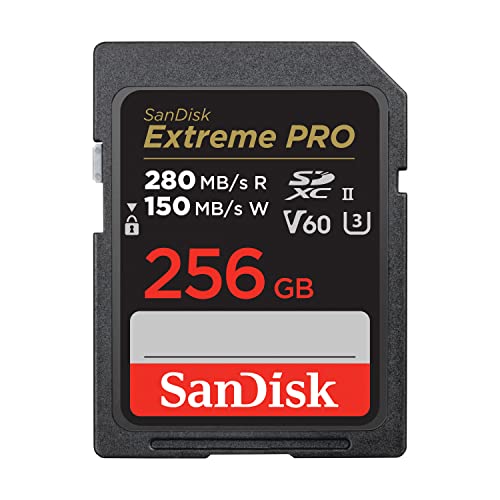
- 256GB capacity for large photo and video files
- Up to 280MB/s read and 150MB/s write speeds
- V60 support for compatible 6K and 4K UHD recording
Best For: Professionals and prosumers using compatible UHS-II cameras
Best MicroSD Value

- 128GB capacity with included adapter
- Class 10/A1 rating for everyday use
- Works with phones, cameras, consoles, and more
Best For: Everyday device storage expansion
Best Professional Speed

- Up to 300 MB/s read and write speeds
- V90-rated for demanding 4K and 8K video
- IP68 water and dust resistance
Best For: Professional photography and videography
Best Balanced UHS-II Choice
Lexar Professional 1667x 128GB

- Up to 250 MB/s read speed
- V60-rated for Full HD and 4K video
- Backwards compatible with UHS-I devices
Best For: Enthusiast camera workflows and 4K capture
Best High-Speed SD Card – SanDisk Extreme PRO 128GB
For cameras that need fast file offloads and dependable 4K recording, this SanDisk Extreme PRO is one of the more capable high speed memory cards in a full-size SD format. It offers up to 200MB/s read speeds with compatible equipment and up to 90MB/s write speeds for burst photography and video capture.
Best For: Photographers and videographers using compatible SDXC cameras for 4K UHD video and sequential burst shooting.
Pros:
- Up to 200MB/s read speeds with compatible devices and readers
- Up to 90MB/s write speeds for burst photos and 4K UHD video
- U3 and V30 ratings support sustained video capture requirements
- Waterproof, temperature-proof, shock-proof, and X-ray-proof design
Cons:
- Maximum read speeds require compatible host devices and may require a separate PRO-READER
- Actual performance can vary with the host device, interface, and usage conditions
This is a strong choice when fast transfers and high-resolution capture matter more than basic storage. Check your camera and reader compatibility before expecting the advertised top speeds.
Fastest Next-Generation Pick – SanDisk 512GB microSD Express
This SanDisk microSD Express card is designed for next-generation devices and stands out among high speed memory cards with up to 880MB/s read and 650MB/s write speeds. It is especially relevant for Nintendo Switch 2, while remaining usable at UHS-I speeds in compatible older microSD devices.
Best For: Nintendo Switch 2 owners and users with compatible PCIe-NVMe or microSD Express hardware who want high capacity and very fast transfers.
Pros:
- Up to 880MB/s read and 650MB/s write speeds
- 512GB capacity for games, video, and other large files
- Works with Nintendo Switch 2
- Waterproof, temperature-proof, drop-proof, shock-proof, and X-ray-proof
Cons:
- Top speeds require compatible microSD Express equipment and may require a separate reader
- Older UHS-I and UHS-II devices use the card at their supported UHS-I speeds
This is the forward-looking option in the group, but its speed advantage depends heavily on device compatibility. It makes the most sense for Switch 2 or other systems built to use the Express interface.
Best Everyday Value – Amazon Basics 128GB microSDXC
The Amazon Basics 128GB microSDXC is a practical option for everyday storage, offering up to 100MB/s read speeds, A2 application performance, and a full-size adapter. It fits the needs of phones, tablets, cameras, drones, and other devices that accept microSD cards.
Best For: Android devices, cameras, drones, and Nintendo Switch users who need affordable 128GB storage for 4K video, apps, or games.
Pros:
- Up to 100MB/s read speed for general transfers and playback
- U3 and V30 ratings support high-bitrate video and burst photography
- A2 rating is suited to responsive app loading on supported Android devices
- Shock-resistant, water-resistant, temperature-rated, X-ray-resistant, and magnetic-resistant
Cons:
- Not compatible with Nintendo Switch 2
- Advertised read speed is lower than the faster SanDisk options
- Includes a 12-month warranty rather than a lifetime limited warranty
This card balances speed, versatility, and everyday durability without targeting the highest transfer rates. Confirm your device’s supported capacity and remember that usable storage is lower than the labeled 128GB.
Best Compact 4K Pick – SanDisk Extreme PRO 64GB SDXC
SANDISK 64GB Extreme PRO SDXC UHS-I Memory Card - C10, U3, V30, 4K UHD, SD Card - SDSDXXU-064G-GN4IN
Check Price On AmazonFor photographers who prefer a smaller-capacity full-size SD card, this 64GB SanDisk Extreme PRO delivers up to 200MB/s read speeds and up to 90MB/s write speeds. Its U3 and V30 ratings make it suited to compatible cameras recording 4K UHD video or capturing sequential bursts.
Best For: Camera users who want fast offloads and 4K-ready performance in a 64GB SDXC card.
Pros:
- Up to 200MB/s read speeds with compatible hardware and QuickFlow support
- Up to 90MB/s write speeds for 4K UHD video and burst photography
- U3, V30, and Class 10 speed classifications
- Waterproof, temperature-proof, shockproof, and X-ray-proof construction
Cons:
- 64GB provides less capacity than the larger cards in this roundup
- Maximum read speeds require compatible devices and a suitable reader
This is a focused choice for camera workflows where speed matters and 64GB is sufficient for a shooting session. Its performance credentials are strong, but verify that your camera and reader can take advantage of the advertised transfer rates.
Professional Workflow Pick – Lexar Silver PRO 128GB SD Card
The Lexar Silver PRO is a high speed memory card for photographers and videographers who need fast offloads and reliable 4K-capable recording. Its UHS-II interface delivers read speeds up to 280MB/s and write speeds up to 120MB/s, while the V60 rating supports Full HD and 4K video workflows.
Best For: Professional photographers, videographers, and enthusiasts using compatible UHS-II cameras.
Pros:
- Up to 280MB/s read and 120MB/s write speeds
- V60 and U3 ratings support 1080p Full HD and 4K video
- Backwards-compatible at the highest UHS-I speeds
- Lifetime limited warranty and rigorous testing
Cons:
- Only 128GB of storage
- Full UHS-II performance requires a compatible host device
Choose this card when workflow speed matters and your camera supports UHS-II. It is a focused, performance-oriented option rather than a general-purpose budget card.
Flexible Multi-Device Value – Bliksem TF162 2-Pack 128GB
This two-pack is a practical high speed memory card solution for expanding storage across phones, tablets, cameras, game consoles, and other compatible devices. Each 128GB TF card offers transfers up to 80MB/s and includes an adapter for broader device compatibility.
Best For: Users who want two cards for everyday storage expansion across multiple devices.
Pros:
- Two 128GB cards provide flexible storage management
- Up to 80MB/s transfer speeds
- C10 and A1 ratings for everyday device use
- Adapters included with both cards
Cons:
- Slower than the UHS-II professional SD cards in this roundup
- Actual transfer speeds vary by device, hardware, software, and capacity
- Compatibility and performance depend on the host device
This pack makes the most sense when quantity and versatility are more important than maximum camera performance. The included adapters add convenience for devices that use full-size SD slots.
High-Capacity Pro Choice – SanDisk Extreme PRO 256GB SD Card
The SanDisk Extreme PRO is a high speed memory card built for prosumers and professionals using MIL, DSLR, mirrorless, or cinema cameras. It combines 256GB of capacity with up to 280MB/s read speeds, up to 150MB/s write speeds, and a V60 rating for cinema-quality 6K and 4K UHD recording.
Best For: Prosumers and professionals capturing high-resolution photos, burst sequences, 4K, or 6K video.
Pros:
- Large 256GB capacity for high-resolution files
- Up to 280MB/s read and 150MB/s write speeds
- V60 support for compatible 6K and 4K UHD workflows
- Drop-, water-, temperature-, magnetic-, and X-ray-proof design
Cons:
- Maximum performance depends on the host device
- Video support may vary with device and file attributes
- Requires a compatible UHS-II host for its top speeds
For demanding production work, this card offers the strongest combination of capacity and speed among these options. It is especially appealing when long recording sessions or large photo libraries make 128GB limiting.
Best MicroSD Value – Yicunxin 128GB TF Card
For shoppers seeking high speed memory cards for everyday mobile and portable devices, this 128GB TF card offers a practical combination of storage, a Class 10/A1 rating, and a bundled adapter. Its listed read speed is up to 70 MB/s, though actual performance can vary by device and testing conditions.
Best For: Expanding storage in smartphones, tablets, cameras, game consoles, car recorders, and other compatible devices.
Pros:
- Includes a 128GB microSD card and adapter.
- Class 10 and A1 specifications support everyday file and app storage.
- Compatible with a broad range of listed devices, including cameras, drones, and game consoles.
- Listed as drop proof and backed by a one-year manufacturer warranty.
Cons:
- Its listed 70 MB/s read speed is lower than the speeds of the professional UHS-II cards here.
- Actual transfer rates may vary based on hardware, software, operating system, and capacity.
This is a sensible high speed memory card option when broad compatibility and included-adapter convenience matter more than professional-grade video speeds.
Best Professional Speed – SanDisk Extreme PRO 128GB SD
For demanding camera workflows, the SanDisk Extreme PRO is one of the fastest high speed memory cards in this roundup. It combines UHS-II performance with read and write speeds of up to 300 MB/s, plus a V90 rating for high-resolution video work.
Best For: Professional and enthusiast photographers and videographers capturing 4K or 8K footage and rapid bursts.
Pros:
- Offers up to 300 MB/s read, write, and transfer speeds as listed.
- V90, U3, and Class 10 ratings suit demanding 4K and 8K recording applications.
- IP68 water and dust resistance and testing for drops up to 6 meters add durability.
- Includes two years of RescuePRO Deluxe data recovery software.
Cons:
- Designed for cameras rather than general-purpose phones, tablets, or game consoles.
- Professional UHS-II performance may be more than casual users need.
Choose this card when fast buffer clearing, high-resolution video support, and rugged construction justify prioritizing performance over basic storage value.
Best Balanced UHS-II Choice – Lexar Professional 1667x 128GB
The Lexar Professional 1667x is a strong middle ground among high speed memory cards, pairing UHS-II technology with read speeds up to 250 MB/s and a V60 rating. It is built for photographers and videographers who need faster transfers and reliable 4K-capable performance.
Best For: DSLR, HD camcorder, and 3D-camera users shooting Full HD, 3D, or 4K content.
Pros:
- UHS-II technology delivers read speeds up to 250 MB/s.
- V60, U3, and Class 10 ratings support Full HD and 4K video capture.
- Backwards compatible with UHS-I devices.
- Temperature-proof design and limited-lifetime product support add reassurance.
Cons:
- Its listed read speed is below the SanDisk card’s up-to-300 MB/s figure.
- As an SDXC camera card, it is not positioned as a general-purpose microSD option.
This Lexar card is a practical choice for camera users who want UHS-II workflow improvements and 4K support without specifically requiring the highest listed speed in the group.
How We Picked the Best High Speed Memory Cards
We focused on the specifications that matter in everyday use: card format, advertised read speed, UHS bus, speed class, video rating, capacity, and included adapters. The selection includes mainstream UHS-I cards for general photography and portable devices, plus UHS-II models designed for faster transfers and demanding burst shooting.
Because performance depends on the host device, these figures should be treated as compatibility and capability indicators rather than guaranteed results in every camera, reader, or console. We also considered whether each option suits a specific use case, from 4K recording to expandable phone or gaming storage.
Quick Comparison
- Best for everyday cameras: A reliable UHS-I SD card with U3 or V30 certification is usually sufficient for stills and standard 4K recording.
- Best for faster workflows: UHS-II cards offer higher transfer potential when paired with a compatible camera and reader.
- Best for phones and handheld devices: Choose a microSD card with the correct capacity, application-performance rating, and included adapter if needed.
- Best for large libraries: 256GB and 512GB options reduce card swapping, but verify that your device supports the capacity.
Key Buying Factors for High-Speed Memory Cards
Format and Device Compatibility
SD and microSD cards are not interchangeable without the correct adapter, and some devices accept only particular capacities or standards. Check the device manual before buying. An SD adapter can make a microSD card physically fit an SD slot, but it does not upgrade the card’s underlying performance.
Read Speed Versus Sustained Write Speed
Read speed affects file transfers to a computer. Write speed matters more during continuous burst photography, 4K video, and high-bitrate recording. Look for U3 or V30—and, for more demanding workflows, V60—rather than relying on a headline read-speed number alone.
UHS-I and UHS-II
UHS-II cards use an additional row of contacts and can transfer data much faster with compatible equipment. They remain usable in many UHS-I devices, but performance may be limited to the slower interface. A UHS-II card makes the most sense when your camera and card reader both support it.
Capacity and Workload
128GB is a practical middle ground for many users. Choose 256GB or more for extended video sessions, frequent travel, large game libraries, or fewer card changes. Higher capacity is not automatically better if the host device has a storage limit.
Who Should Buy Which High Speed Memory Cards?
Choose a UHS-I SD card rated U3 or V30 for most mirrorless cameras, DSLRs, and everyday 4K cameras. Step up to a UHS-II V60 card if you shoot sustained bursts, transfer large files regularly, or use professional video equipment that supports the interface. For phones, tablets, action cameras, and handheld consoles, select a compatible microSD card and prioritize the device’s recommended application and video ratings. If you are uncertain, confirm the camera’s approved card specifications and use a reputable reader to achieve the advertised transfer speeds.