
Recording 4K video demands more than generous storage. Your memory card must sustain write speeds that match your camera, codec, frame rate, and recording mode without dropped frames or interrupted clips.
This roundup compares 10 SD and microSD cards across UHS-I and UHS-II formats, with options for professional cameras, action cams, drones, smartphones, and everyday 4K shooting.
Best 10 Memory Cards for 4K Video Picks for 2026
Best Two-Pack Value
PNY Elite-X 128GB SD Card 2-Pack

- Includes two 128GB SDXC cards
- U3 and V30 ratings for 4K UHD video
- Durable, waterproof construction
Best For: Shooters who want spare capacity and convenient card rotation
Best for Action Cameras
SanDisk Extreme 256GB microSD Card

- 256GB capacity for extended mobile recording
- U3 and V30 ratings for 4K UHD video
- Up to 190MB/s read and 130MB/s write
Best For: Action cameras, drones, and smartphones capturing outdoor footage
Best for Pro Workflows
Lexar Professional 1667x 128GB SD Card

- UHS-II read speeds up to 250MB/s
- V60 and U3 ratings for 4K video
- Backwards compatible with UHS-I devices
Best For: Professional cameras and fast post-shoot file transfers
Top High-Capacity Pick

- 512GB capacity for extended recording
- U3/V30 support for 5.3K and 4K UHD video
- Up to 245MB/s read and 170MB/s write
Best For: Action cameras, drones, and high-resolution video users
Camera Workflow Pick

- 256GB SDXC capacity for cameras
- U3/V30 support for 4K UHD video
- Up to 150MB/s read speed and 10-year warranty
Best For: Point-and-shoot cameras, DSLRs, and HD camcorders
Budget 4K Dash-Cam Pick

- U3/V30 support for 4K UHD recording
- Up to 100MB/s read speed with adapter
- Designed for dash cams and action cameras
Best For: Dash cams, security cameras, and everyday 4K recording
Best Value 4K Card

- 256GB SDXC capacity with V30 rating
- Up to 170MB/s listed transfer speed
- Includes case and five-year warranty
Best For: High-capacity 4K camera recording
Fastest Offload Pick
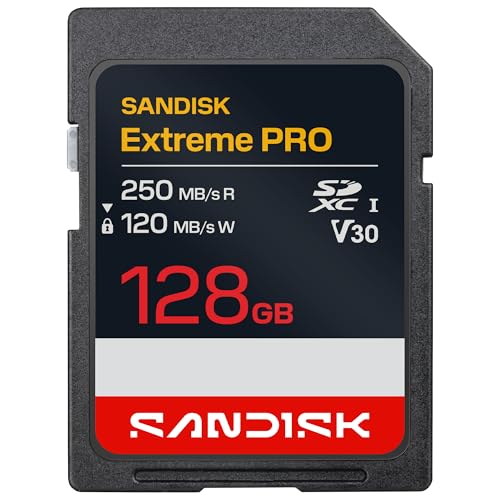
- Up to 250MB/s read speed
- U3 and V30 support for 4K UHD
- Lifetime limited warranty
Best For: Fast transfers and 4K shooting
Compact Budget Pick

- Up to 90MB/s write speed
- U3 and V30 4K support
- Up to 200MB/s read speed with compatible gear
Best For: Short 4K shoots and burst photography
Best All-Around SD Card – SanDisk Extreme 256GB SD Card
For cameras and camcorders, the SanDisk Extreme 256GB is a strong all-around choice among memory cards for 4k video. Its U3 and V30 ratings support 4K UHD recording on compatible devices, while the large capacity helps reduce card changes during a shoot.
Best For: Camera users who want ample capacity, dependable 4K-oriented speed ratings, and faster media offloads.
Pros:
- 256GB capacity provides room for extended recording and photo sessions.
- U3 and V30 ratings are designed to support 4K UHD video recording.
- Up to 180MB/s read and 130MB/s write speeds with compatible devices.
- Waterproof, temperature-proof, and X-ray-proof construction.
Cons:
- Maximum advertised speeds require compatible devices and conditions.
- SanDisk Professional PRO-READER is sold separately for maximum offload speeds.
This card balances capacity, video support, and durability well. It is a practical pick for general 4K camera work, provided your device supports the relevant UHS-I performance features.
Best Two-Pack Value – PNY Elite-X 128GB SD Card 2-Pack
The PNY Elite-X two-pack offers a practical way to stock up on memory cards for 4k video. Each 128GB SDXC card carries Class 10, U3, and V30 ratings for compatible 4K UHD cameras, along with durability features for everyday shooting.
Best For: Photographers and videographers who want two cards for camera rotation, backups, or multiple compatible devices.
Pros:
- Two 128GB cards provide flexible storage and convenient swapping.
- Class 10, U3, and V30 ratings support burst photography and 4K UHD video.
- Up to 100MB/s read speed supports transferring content to a computer.
- Magnet-proof, shock-proof, temperature-proof, and waterproof design.
Cons:
- Each card has less capacity than a single 256GB option.
- The supplied notes specify read speed but do not provide a maximum write-speed figure.
This bundle is especially useful when a single card is not enough for a day of shooting. Its two-card format adds flexibility, though users recording especially large 4K files may prefer higher-capacity cards.
Best for Action Cameras – SanDisk Extreme 256GB microSD Card
The SanDisk Extreme 256GB microSDXC card is designed for compact devices such as smartphones, action cameras, and drones. For memory cards for 4k video, its U3 and V30 ratings support uninterrupted 4K UHD recording on compatible devices, while the 256GB capacity suits longer outdoor sessions.
Best For: Action-camera, drone, and smartphone users recording fast-moving outdoor footage.
Pros:
- 256GB capacity supports extended 4K UHD and Full HD recording.
- Up to 190MB/s read and 130MB/s write speeds with compatible devices.
- U3 and V30 ratings are intended for sustained video capture.
- Shockproof, temperature-proof, waterproof, and X-ray-proof design.
Cons:
- Maximum advertised speeds depend on the host device and other conditions.
- Its microSD format is not the direct choice for standard SD-only camera slots.
This is a versatile high-capacity option for compact recording gear. Confirm that your device accepts microSDXC cards and supports the stated video and speed features before buying.
Best for Pro Workflows – Lexar Professional 1667x 128GB SD Card
The Lexar Professional 1667x is a UHS-II SDXC card aimed at photographers and videographers who prioritize fast transfers. Its V60 rating and stated support for 4K video make it a compelling option among memory cards for 4k video when used with compatible professional camera equipment.
Best For: Professional photographers and videographers who need fast file transfers and V60-class video performance.
Pros:
- V60 and U3 ratings support extended 4K video capture on compatible devices.
- UHS-II technology delivers read speeds up to 250MB/s.
- 128GB capacity supports longer shooting sessions than smaller cards.
- Backwards compatible with UHS-I devices and backed by limited lifetime support.
Cons:
- Maximum UHS-II performance requires compatible UHS-II hardware.
- 128GB capacity is smaller than some 256GB alternatives.
- Its professional speed focus may be unnecessary for basic recording needs.
This card stands out for workflow speed and a higher V60 video rating. It is best suited to compatible UHS-II equipment where faster transfers and sustained performance can justify the upgrade.
Top High-Capacity Pick – SanDisk Extreme 512GB
For shoppers comparing memory cards for 4k video, the SanDisk Extreme combines a large 512GB capacity with U3 and V30 ratings for compatible action cameras, drones, and other devices. Its listed read and write speeds also support faster transfers and high-resolution recording workflows.
Best For: Action-camera and drone users who need substantial storage for 5.3K or 4K footage.
Pros:
- 512GB capacity provides room for longer recording sessions.
- U3 and V30 ratings support 5.3K and 4K UHD video capture.
- Listed read speeds up to 245MB/s and write speeds up to 170MB/s.
- Designed with water-, temperature-, shock-, drop-, magnet-, and X-ray-resistant features.
Cons:
- Its microSDXC format may require an adapter for some devices.
- The highest listed speeds may depend on compatible hardware and conditions.
This is the strongest capacity-and-speed option in this group, especially for creators who regularly record high-resolution footage and want durability features for travel or outdoor use.
Camera Workflow Pick – Lexar Professional 256GB SD
The Lexar 256GB PRO is a practical choice among memory cards for 4k video when you use a point-and-shoot camera, mid-range DSLR, or HD camcorder. Its UHS-I design, V30 rating, and 150MB/s listed read speed are aimed at recording and transferring high-quality footage efficiently.
Best For: Camera owners who want a full-size SD card for 4K UHD video and faster computer transfers.
Pros:
- 256GB storage offers useful space for photos and video.
- V30 and U3 ratings are specified for 4K UHD capture.
- Up to 150MB/s read speed can accelerate file transfers.
- Temperature-, shock-, vibration-, and X-ray-proof design with a 10-year limited warranty.
Cons:
- Designed primarily for cameras rather than phones, tablets, or action cameras.
- It has a lower listed read speed and capacity than the SanDisk option.
Choose this Lexar when your equipment uses standard SD cards and your priority is a balanced combination of 4K capability, generous capacity, and a long limited warranty.
Budget 4K Dash-Cam Pick – SIX M100 64GB
For buyers seeking affordable memory cards for 4k video, the SIX M100 offers a compact 64GB microSDXC format with U3 and V30 support. It is positioned for action cameras, drones, dash cams, security cameras, Android devices, and compatible gaming hardware.
Best For: Dash cams, action cameras, and everyday devices needing a modest-capacity 4K-capable card.
Pros:
- U3 and V30 ratings are intended for stable 4K UHD recording.
- Up to 100MB/s read speed supports quicker file transfers.
- Includes an adapter for broader device compatibility.
- Features drop-, water-, magnet-, wearout-, and X-ray-resistant protection.
Cons:
- 64GB capacity is limited for extended 4K recording.
- Not compatible with Switch 2, though the notes list compatibility with Switch 1.
- Listed media speed is 30MB/s, so it is less transfer-focused than the other options.
The SIX M100 is best suited to everyday recording and continuous dash-cam or security-camera use where 64GB is sufficient and a bundled adapter is convenient.
Best Value 4K Card – GIGASTONE 256GB 4K Camera Pro
If you need memory cards for 4k video with generous storage, the GIGASTONE 256GB 4K Camera Pro combines a V30 rating with SDXC capacity for compatible cameras and camcorders. Its listed transfer speed reaches up to 170MB/s, while the included mini case adds convenient storage.
Best For: Camera users who want high capacity, V30-rated 4K recording support, and a five-year manufacturer warranty.
Pros:
- 256GB capacity provides room for extended recording and photo storage.
- V30 and Class 10 ratings are designed for 4K UHD video use.
- Waterproof, temperature-proof, shock-proof, magnetic-proof, and X-ray-proof construction.
- Includes a mini case and five-year limited warranty.
Cons:
- The supplied details list a 100MB/s read speed and 90MB/s media speed, so performance may differ from the headline transfer figure.
- It is a full-size SD card rather than a microSD card.
The GIGASTONE stands out when capacity and practical protection matter more than maximum offload speed. Confirm that your camera supports SDXC and can take advantage of V30 media before purchasing.
Fastest Offload Pick – SanDisk Extreme PRO 128GB
The SanDisk Extreme PRO 128GB is a strong option among memory cards for 4k video when quick transfers are important. It supports 4K UHD recording with U3 and V30 ratings and lists read speeds up to 250MB/s, making it suited to compatible cameras and high-resolution still photography.
Best For: Photographers and videographers who want fast file transfers, reliable 4K support, and a compact 128GB capacity.
Pros:
- U3 and V30 ratings support 4K UHD video recording on compatible devices.
- Up to 250MB/s read speed is useful for transferring footage.
- Designed to withstand water, dust, temperature extremes, wear, and X-ray exposure.
- Backed by a lifetime limited warranty.
Cons:
- 128GB offers less recording capacity than the 256GB GIGASTONE option.
- The highest listed speeds depend on compatible devices and conditions.
This card is a sensible performance-focused choice for users who regularly move large video files. Check host-device compatibility because actual results can vary from the advertised maximums.
Compact Budget Pick – SanDisk Extreme PRO 64GB
SANDISK 64GB Extreme PRO SDXC UHS-I Memory Card - C10, U3, V30, 4K UHD, SD Card - SDSDXXU-064G-GN4IN
Check Price On AmazonFor shoppers seeking memory cards for 4k video at a smaller capacity, the SanDisk Extreme PRO 64GB offers V30 and U3 ratings with up to 90MB/s write speed. It is designed for 4K UHD video and burst photography, while QuickFlow technology can support faster offloading with a compatible reader.
Best For: Shorter shoots, burst photography, and users who prefer a smaller card with fast transfer and write-speed specifications.
Pros:
- Up to 90MB/s write speed is listed for 4K UHD video capture.
- Up to 200MB/s read speed supports efficient file offloading with compatible equipment.
- U3 and V30 ratings are designed for 4K UHD recording on enabled UHS hosts.
- Waterproof, temperature-proof, shockproof, and X-ray-proof design with lifetime limited warranty.
Cons:
- 64GB capacity may fill quickly during lengthy 4K recordings.
- QuickFlow’s maximum offload speed requires a compatible reader sold separately.
- Actual recording and transfer performance varies by host device and conditions.
This SanDisk is a practical choice when you value speed ratings and durability but do not need the capacity of a larger card. Consider carrying a spare for extended 4K sessions.
How We Picked the Best Memory Cards for 4K Video
We focused on cards with video-oriented speed ratings, including V30 and V60, plus U3 or comparable sustained-write classifications. These ratings are more useful for recording than headline read speeds alone. We also considered capacity, SD versus microSD compatibility, advertised durability, included adapters, and the different demands of cameras, drones, phones, and action cameras.
Advertised performance can vary by reader, host device, firmware, file size, and operating conditions. Before buying, confirm that your camera supports the card’s capacity and format.
Quick Comparison
- Best all-around SD options: SanDisk Extreme and Extreme PRO, Lexar 800x PRO, and GIGASTONE 4K Camera Pro.
- Best for higher-performance cameras: Lexar Professional 1667x, a UHS-II V60 card designed for demanding workflows.
- Best microSD options: SanDisk Extreme microSD cards for action cams, drones, phones, and other compact devices.
- Best value or backup choice: PNY’s two-card pack, which provides spare media for compatible UHS-I devices.
Key Buying Factors for Memory Cards for 4K Video
Check the Sustained-Write Rating
For 4K recording, prioritize a card marked V30 or higher when your camera recommends it. V30 indicates a minimum sustained write speed of 30MB/s under the relevant standard, while V60 is intended for heavier data rates. U3 is also commonly associated with 4K-capable cards, but the device manufacturer’s recommendation takes priority.
Match the Card Format to Your Device
Standard SDXC cards fit many mirrorless cameras, DSLRs, camcorders, and cinema accessories. microSDXC cards are designed for phones, drones, action cameras, and compact devices, often with an SD adapter for compatible readers. An adapter does not increase the card’s native performance or make an incompatible device support it.
Choose Capacity Realistically
4K files consume storage quickly, especially at high frame rates, high bit rates, or advanced codecs. A 64GB card can suit short sessions, while 128GB or 256GB cards offer a practical balance for many users. Choose 512GB only if the host device supports it and you regularly record long sessions; larger cards can also increase the cost of replacing lost footage.
Consider Workflow Speed and Reliability
Fast read speeds shorten transfers, but your card reader and computer must support those rates. For professional work, buy from a reputable seller, format the card in the camera, carry a spare, and back up footage promptly. Recovery guarantees may provide extra reassurance, but they are not a substitute for backups.
Who Should Buy Which Memory Cards for 4K Video?
Camera owners recording standard 4K: choose a reputable UHS-I V30 or U3 SDXC card in 128GB or 256GB. High-bitrate or burst-heavy shooters: consider a UHS-II V60 card only if your camera supports UHS-II. Action-cam, drone, and smartphone users: select a compatible microSDXC card with V30 or better, checking the manufacturer’s approved-capacity list. Travelers and event shooters: prioritize two or more moderately sized cards instead of relying on one large card. This approach limits the amount of footage at risk if a card fails or is misplaced.