
Choosing the right audio mixer for church sound affects everything from vocal clarity and sermon intelligibility to how easily volunteers can run services. The best option depends on your channel count, room size, monitor needs, and whether you want hands-on controls or tablet-based mixing.
Our roundup spans compact mixers for small congregations, powered and Bluetooth-equipped models for flexible setups, and full-featured digital consoles for larger worship productions. Use the guide below to narrow the choices by capability, workflow, and budget.
Best 10 Audio Mixer for Church Sound Picks for 2026
Flexible Digital Control
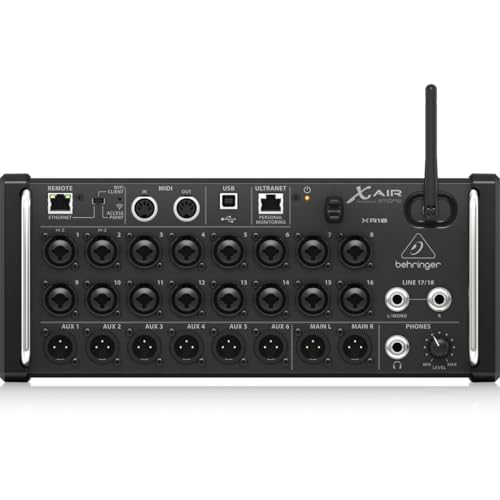
- 18-channel digital mixer with 12 buses
- Tablet control with built-in Wi-Fi
- 16 MIDAS preamps and 18 x 18 USB
Best For: Tablet-based church sound and multitrack recording
Familiar Analog Workflow
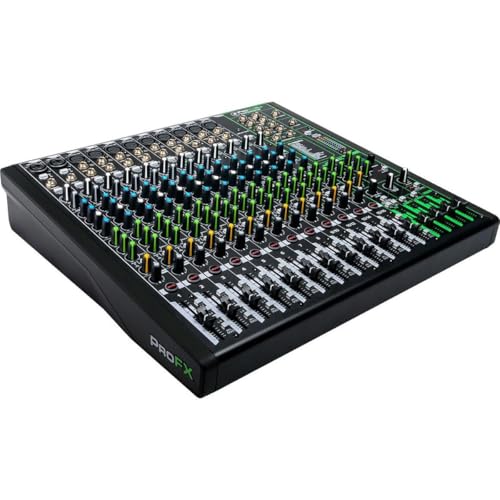
- 16-channel analog mixer
- 60 dB Onyx preamp gain
- USB multitrack recording and 24 effects
Best For: Church teams wanting hands-on controls
Large-Scale Mixing

- 40 inputs and 25 buses
- 32 programmable MIDAS preamps
- 25 motorized faders for scene management
Best For: Large worship systems with complex routing
Powered Event System

- 6000W peak powered mixer
- 14 mic preamps with phantom power
- USB, SD, Bluetooth, effects, and EQ
Best For: Large events needing integrated amplification
Flexible 8-Channel Control

- Eight XLR and line inputs for versatile setups
- 320 DSP and 7-band master EQ
- Bluetooth, USB, and headphone monitoring
Best For: Small church services and worship PA systems
Large-Team Mixing Power
W IN-MIX DX16 16-Channel Mixer

- Sixteen channels with 14 combo inputs
- 99 DSP effects and 7-band master EQ
- Bluetooth and USB recording included
Best For: Large worship teams and church sound teams
Compact Everyday Mixing

- Slim 1.4-inch profile for space-limited setups
- Bluetooth, USB, 48V phantom power, and effects
- PFL and headphone monitoring for real-time checks
Best For: Small worship spaces and compact church PA systems
Feature-Rich Church Mixing

- 12 channels with eight XLR/combo inputs
- Bluetooth and USB computer audio interface
- 16 DSP effects, phantom power, and 7-band EQ
Best For: Larger worship setups needing flexible inputs and effects
Flexible Small-Church Control

- Eight XLR and 1/4-inch input channels
- USB, Bluetooth, and flash-drive recording features
- 3-band EQ, PFL, reverb, delay, and headphone monitoring
Best For: Small worship spaces and multipurpose church events
Compact Worship Setup

- Eight channels with 48V phantom power
- Bluetooth 5.0, MP3 playback, and USB recording
- Slim 1.57-inch design with LED display
Best For: Space-conscious churches and small live-event systems
Flexible Digital Control – Behringer X AIR XR18
For churches seeking an audio mixer for church sound that can be operated from a tablet, the Behringer X AIR XR18 combines 18 channels with wireless iPad and Android control. Its 16 programmable MIDAS-designed preamps, built-in Wi-Fi router, and USB interface suit live sound and recording workflows.
Best For: Churches that want compact tablet-based control and multichannel USB recording.
Pros:
- 18-channel, 12-bus digital format for live or studio use
- 16 programmable MIDAS-designed mic preamps
- Built-in Wi-Fi router eliminates the need for an external router
- 18 x 18 bidirectional USB interface supports direct recording
Cons:
- Tablet control may require a learning curve for teams accustomed to physical faders
- Future-firmware Auto-mixing functionality is noted rather than currently established
The XR18 is a strong choice when flexible remote operation matters more than having a traditional control surface. Its channel count and USB connectivity give a church room to manage multiple microphones and recording tasks.
Familiar Analog Workflow – Mackie ProFX16v3
The Mackie ProFX16v3 is a practical audio mixer for church sound teams that prefer hands-on analog operation. It provides 16 channels, Onyx preamps with 60 dB of gain, built-in effects, and USB multitrack recording without requiring a separate interface.
Best For: Churches and small venues that need straightforward physical controls plus USB recording.
Pros:
- 16-channel layout without a digital learning curve
- Onyx preamps provide up to 60 dB of clean gain
- 24 built-in GigFX effects
- USB interface records multitrack while mixing the room
Cons:
- Analog operation offers less remote-control flexibility than a tablet mixer
- At 19.7 pounds, it is less portable than a compact digital rack mixer
Choose the ProFX16v3 when volunteer operators benefit from visible controls and a familiar mixing format. Its USB recording and integrated effects add useful functionality while keeping the setup relatively direct.
Large-Scale Mixing – Behringer X32
For larger worship setups, the Behringer X32 offers the extensive routing and control expected from a church-focused audio mixer for church sound. It provides 40 inputs, 25 buses, 32 programmable MIDAS preamps, and 25 motorized faders for scene management and live operation.
Best For: Larger churches and production teams managing many inputs, buses, and motorized mix scenes.
Pros:
- 40-input, 25-bus digital mixing console
- 32 programmable MIDAS-designed mic preamps
- 25 motorized 100 mm faders support fast overview and scene management
- 16 XLR outputs plus additional line inputs and outputs
Cons:
- Its 45.4-pound weight and large dimensions make installation and transport more demanding
- The broad routing and automation feature set may be excessive for smaller congregations
The X32 is built for systems that need substantial input capacity and repeatable scenes. It makes the most sense when a trained production team can take advantage of its buses, motorized faders, and extensive connections.
Powered Event System – Rockville RPM1470
The Rockville RPM1470 combines mixing and amplification in one unit, making it a practical powered audio mixer for church sound and larger events. It includes 14 XDR2 mic preamps, 48V phantom power, USB and SD recording, Bluetooth playback, effects, and dual 7-band graphic EQs.
Best For: Churches and event teams needing an integrated powered mixer for large speaker systems and flexible playback.
Pros:
- 6000W peak power rating with 750W RMS per channel at 4 ohms
- 14 XDR2 mic preamps with 48V phantom power
- USB, SD, and Bluetooth playback or recording options
- Dual 7-band graphic EQs and 16 built-in effects presets
Cons:
- Powered design may be more equipment than needed when a church already owns amplifiers
- It has fewer listed channels than the larger digital consoles in this roundup
- At 28.9 pounds, it is not an especially lightweight portable mixer
The RPM1470 is best considered when integrated amplification and media playback are priorities. Its power section, EQ controls, and recording features can simplify a system for events with larger audiences.
Flexible 8-Channel Control – 8-Channel Audio Mixer
If you need an audio mixer for church sound, this 8-channel console provides practical control for microphones, instruments, playback, and effects. Each channel includes gain, 3-band EQ, dual AUX/FX controls, mute, and an independent fader, while the master 7-band graphic EQ can help shape the overall room mix.
Best For: Small church services, worship teams, spoken-word events, and PA setups that need Bluetooth or USB playback.
Pros:
- Eight XLR and eight line inputs support multiple microphones and audio sources.
- Individual +48V phantom power switches accommodate compatible condenser microphones.
- Built-in 320 DSP, dual AUX/FX controls, and a 7-band master EQ offer flexible sound shaping.
- Bluetooth, USB playback, and dedicated headphone monitoring add convenient operating options.
Cons:
- Eight channels may be limiting for larger worship teams or complex stage setups.
- The supplied notes do not specify whether the USB connection supports multitrack recording.
This model is a well-rounded choice when a church needs straightforward channel control, built-in effects, and simple playback connectivity in one console. Its 8-channel layout is best matched to smaller or moderately sized systems.
Large-Team Mixing Power – W IN-MIX DX16 16-Channel Mixer
For church sound systems with several vocalists, instruments, and playback sources, this 16-channel mixer offers more input capacity than a compact console. It combines independent channel EQ and gain controls with 99 DSP effects, a 7-band master EQ, Bluetooth, USB recording, and a metal build.
Best For: Larger worship teams, church sound teams, live events, and installations that need extensive input flexibility.
Pros:
- Fourteen XLR/6.35mm combo inputs plus two stereo channels accommodate full bands and multiple microphones.
- Independent 3-band EQ and gain controls provide hands-on adjustment for each channel.
- Ninety-nine built-in DSP effects include reverb, delay, chorus, and dynamics.
- Per-channel 48V phantom power, Bluetooth playback, USB recording, and a 7-band master EQ expand its versatility.
Cons:
- Its larger 21.85-inch width and 4.92-inch height require more rack, desk, or console space.
- The listed warranty is one year, with a 30-day refund period.
- XLR cables are sold separately.
The DX16 is the strongest fit here for a church that expects a growing or instrument-heavy input list. Its larger footprint is a reasonable tradeoff for the additional channels and effects, but smaller teams may not need all of its capacity.
Compact Everyday Mixing – CT80S 8-Channel Mixer
This slim 8-channel console is a practical audio mixer for church sound when space and simple operation matter. It supports microphones, instruments, Bluetooth and USB playback, while channel-level EQ, effects, PFL monitoring, and a headphone output help operators manage live audio and recording tasks.
Best For: Small worship spaces, church livestreams, spoken-word events, karaoke-style gatherings, and compact home or portable PA systems.
Pros:
- Eight XLR and 1/4-inch inputs connect microphones, instruments, and other audio devices.
- Bluetooth 5.0 and USB support wireless playback, USB playback, and recording functions.
- Each channel offers high, mid, and low EQ, gain, FX, and volume controls.
- Its 1.4-inch profile, sealed knobs, PFL monitoring, and headphone output suit space-conscious setups.
Cons:
- The notes specifically caution that Bluetooth does not connect to a speaker.
- Eight channels may not provide enough capacity for a large worship band.
- The supplied details list a 230-volt specification, so power compatibility should be checked before purchase.
The CT80S emphasizes compact operation and everyday connectivity rather than high channel capacity. It makes sense for smaller church systems, especially where headphone monitoring and a slim footprint are priorities.
Feature-Rich Church Mixing – Pyle PMXU128BT
For churches needing an audio mixer for church sound with plenty of connection flexibility, the Pyle PMXU128BT provides 12 channels, eight XLR/combo inputs, Bluetooth streaming, USB computer connectivity, and built-in DSP effects. Its level meters and independent channel controls can help operators manage vocals, instruments, and playback sources.
Best For: Churches that need multiple inputs, wireless music playback, USB recording, and built-in effects.
Pros:
- 12-channel layout with XLR/combo inputs and multiple line connections
- Bluetooth supports streaming from phones, tablets, and MP3 players
- USB audio interface supports recording and connection to Mac or PC
- Includes +48V phantom power, 16 DSP effects, and a 7-band EQ
Cons:
- Its 21.4-inch depth and 10.6-pound weight may require dedicated setup space
- The many controls and features may be more than a small ministry needs
The PMXU128BT is a versatile option for larger worship setups or churches that want room to add microphones and playback sources. Confirm your preferred output and monitoring connections before purchase.
Flexible Small-Church Control – 8-Channel Professional Mixer
This 8-channel audio mixer for church sound combines XLR and unbalanced 1/4-inch inputs with Bluetooth, USB playback, recording, and headphone monitoring. Its channel gain, fader, 3-band EQ, PFL, and effects controls give operators practical tools for worship services, meetings, and small live events.
Best For: Small churches and multipurpose rooms needing straightforward channel control, playback, and monitoring.
Pros:
- Eight channels accept XLR and unbalanced 1/4-inch connections
- USB and Bluetooth support music playback and recording workflows
- Each channel includes gain, 3-band EQ, FX, PFL, and volume controls
- Built-in reverb and delay effects plus a headphone output
Cons:
- Eight channels may be limiting for larger worship teams or expanded microphone setups
- The supplied details identify the model generically rather than by a specific branded model name
With its combination of input flexibility and hands-on channel controls, this mixer is suited to churches that want useful live-sound features without moving to a larger console. Review the output configuration against your existing sound system.
Compact Worship Setup – FULUODE CT-80S
The FULUODE CT-80S is a compact audio mixer for church sound with eight channels, 48V phantom power, Bluetooth 5.0, an MP3 player, and USB recording. Its slim design and built-in display make it a practical choice where installation space is limited and wireless or digital playback is useful.
Best For: Compact church systems, campus activities, conferences, and small worship or live-music setups.
Pros:
- Eight-channel design supports microphones and instruments
- Bluetooth 5.0, MP3 playback, USB input, and USB recording provide flexible media options
- 48V phantom power supports compatible condenser microphones
- Ultra-thin 1.57-inch design with a large LED display
Cons:
- The eight-channel format offers less expansion room than larger consoles
- The supplied specifications list USB as the output connector, so verify compatibility with your church’s sound system
- It uses a 110V American plug, which may require planning for other electrical setups
The CT-80S emphasizes a small footprint and built-in playback features rather than a large control surface. It can fit space-conscious church installations, provided its USB-oriented connectivity matches your amplifier or powered-speaker setup.
How We Picked the Best Audio Mixer for Church Sound
We focused on the features that matter most in worship environments: sufficient microphone and instrument inputs, dependable gain control, EQ, effects, monitor-routing options, phantom power for condenser microphones and active direct boxes, and practical connectivity. We also considered setup complexity, portability, recording and streaming support, wireless or tablet control, and the needs of volunteer operators.
The selection includes analog, digital, powered, and compact mixer designs so churches can compare different approaches rather than assume one format fits every sanctuary. A mixer should be judged against the room, sound system, worship team, and operator—not by channel count alone.
Quick Comparison
- Best for flexible tablet-controlled mixing: Behringer X AIR XR18.
- Best for hands-on analog operation and recording: Mackie ProFX16v3.
- Best for large, complex productions: Behringer X32.
- Best when built-in amplification is useful: Rockville RPM1470.
- Best for compact, lower-cost setups: the 8-channel mixers and Pyle 12-channel console.
- Best for effects and playback features: the W IN-MIX, FULUODE, and similar DSP-equipped models.
Key Buying Factors for an Audio Mixer for Church Sound
Inputs and Future Capacity
Count every required source: pastor and worship-leader microphones, choir channels, instruments, playback devices, livestream feeds, and guest inputs. Leave room for expansion. A small church may manage with eight channels, while a growing band or choir can quickly outgrow a 12- or 16-channel board.
Analog Versus Digital Workflow
Analog mixers are usually quick to understand and easy to adjust from the front panel. Digital mixers often provide deeper routing, scenes, effects, compression, feedback control, and remote operation, but they require more training. Tablet control is especially useful when the operator needs to hear the mix from different seats in the congregation.
Outputs, Monitors, and Recording
Check the number of aux sends for stage monitors, in-ear monitors, lobby feeds, livestream mixes, and recording. USB connectivity can simplify multitrack or stereo recording, while Bluetooth and media playback are convenient for background music but should not replace reliable wired connections for critical sources.
Phantom Power and Sound Quality
Make sure the mixer supplies 48V phantom power if you use condenser microphones or active DI boxes. Clean preamps, useful EQ, sensible gain controls, and effective feedback management matter more than flashy feature lists.
Who Should Buy Which Audio Mixer for Church Sound?
Small churches and volunteer teams should prioritize intuitive controls, modest channel counts, and simple setup. An eight- or 12-channel mixer can be a practical fit for a few microphones, playback, and occasional instruments.
Churches with bands, choirs, or livestreams should consider at least 16 channels, multiple monitor sends, USB recording, and enough routing flexibility for separate room and broadcast mixes. A compact digital mixer can deliver substantial capability without taking up much booth space.
Larger congregations and production-focused ministries benefit from a digital console with ample buses, scene recall, remote control, and expansion headroom. Choose a model your operators can learn and your installation can support reliably, then budget for training, cabling, and proper speaker-system tuning.