
The best compact audio mixers make it easier to combine microphones, instruments, playback devices, and computers without taking over your workspace. The right model can simplify podcasting, home recording, streaming, rehearsal, or small live sound.
Our 2026 shortlist includes straightforward analog mixers, USB-equipped options, models with effects, and ultra-compact choices for buyers who value portability and low cost.
Best 10 Compact Audio Mixers Picks for 2026
Reliable Analog Control

- Six-channel analog mixer with D-PRE preamps
- Three-band EQ and high-pass filters
- Rugged metal chassis with XLR outputs
Best For: Small performances, lectures, and basic analog recording
Connected Streaming Hub

- 2x4 USB-C interface with 24-bit/192 kHz support
- Bluetooth audio for calls and backing tracks
- GigFX+ offers 24 effects and 12 presets
Best For: Streaming, podcasting, and small computer-connected gigs
Effects-Ready Compact Mixer

- Six-channel analog mixer with two mic preamps
- Four dedicated stereo line channels
- Built-in digital effects and EQ
Best For: Small performances needing simple onboard effects
Ultra-Compact Line Router
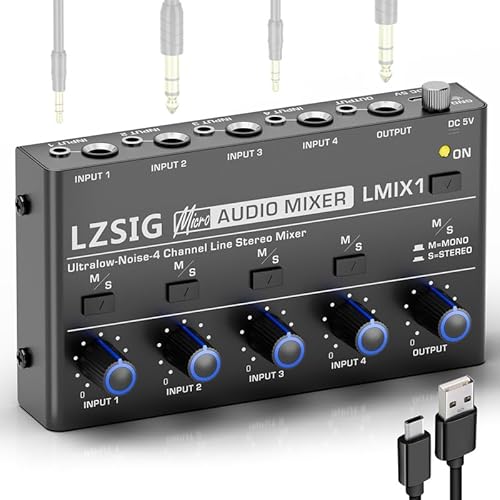
- Combines four line sources into one output
- Accepts 3.5mm and 6.35mm connections
- Mono/stereo switching with low-noise design
Best For: Space-limited sub-mixing of instruments and consumer audio sources
Best USB Streaming Mixer

- 8-channel analog mixing with EQ
- Stereo USB interface for computer or mobile devices
- Direct PC and gaming audio mixing for streams
Best For: Streaming, podcasting, and home recording
Best Ultra-Compact Mixer

- Four-channel desktop layout
- Two Onyx mic preamps with phantom power
- Light 2.5-pound design with RCA and 1/4-inch outputs
Best For: Podcasts, broadcast, and small studios
Best Feature-Packed Mixer

- Bluetooth, USB, MP3 playback, and DSP effects
- Six channels with 3-band EQ and individual faders
- Control-room output and headphone volume control
Best For: Streaming, karaoke, live use, and home studios
Premium Compact Mixer

- Low-noise GS-Pre microphone preamps
- Two HiZ instrument inputs
- Neutrik connectors and 3-band EQ
Best For: Musicians and small live or recording setups
Simple Budget Mixer

- Lightweight five-channel design
- Phantom power for condenser microphones
- RCA inputs and outputs for playback or recording
Best For: Basic desktop and small playback setups
Feature-Packed Podcast Mixer

- 99 DSP effects with reverb and delay
- USB recording, OTG, and Bluetooth 5.0
- 48V phantom power and two XLR inputs
Best For: Podcasters, streamers, and home creators
Reliable Analog Control – Yamaha MG06
The Yamaha MG06 is a straightforward choice among compact audio mixers for users who want dependable analog control without USB features. Its six-channel layout, D-PRE preamps, EQ, high-pass filters, and rugged metal chassis suit small recording, speaking, and performance setups.
Best For: Small live performances, lectures, and basic recording setups that do not require computer connectivity.
Pros:
- Six-channel analog design with two? [Actually notes do not specify two; remove.]
- D-PRE preamps are designed for natural bass and smooth highs.
- Three-band EQ and high-pass filters help shape and clean up signals.
- Rugged powder-coated metal chassis and XLR outputs.
Cons:
- No USB connectivity or computer audio interface.
- Fewer built-in features than mixers with effects or Bluetooth.
The MG06 focuses on essential mixing rather than extras. Choose it when solid analog construction and simple signal control matter more than onboard effects or recording connectivity.
Connected Streaming Hub – Mackie ProFX6v3+
The Mackie ProFX6v3+ combines a compact analog mixer with a 2×4 USB-C interface, making it one of the more versatile compact audio mixers for streaming, podcasting, and small gigs. It also adds Bluetooth audio, effects, compression, and flexible USB operating modes.
Best For: Streamers, podcasters, and performers who need computer audio, phone or tablet integration, and onboard effects.
Pros:
- USB-C recording and streaming up to 24-bit/192 kHz.
- Three USB modes include standard mix, loopback, and dry channels.
- Bluetooth send-and-receive support for calls, backing tracks, and streaming.
- GigFX+ includes 24 effects and 12 editable presets.
Cons:
- More features may mean a steeper learning curve than a basic analog mixer.
- It is not a digital mixer with scene recall.
The ProFX6v3+ is the strongest fit here for hybrid analog-and-computer workflows. Its USB, Bluetooth, effects, and Hi-Z inputs give small productions more routing options without moving to a full digital mixer.
Effects-Ready Compact Mixer – Yamaha MG06X
The Yamaha MG06X adds digital effects to the compact MG format, making it a practical option among compact audio mixers for small vocal, instrument, and line-level setups. It provides six channels, two microphone preamps, four dedicated stereo line channels, EQ, and onboard effects.
Best For: Small performances and rehearsals where simple mixing plus built-in digital effects is useful.
Pros:
- Six-channel analog configuration with two microphone preamps.
- Four dedicated stereo line channels accommodate line-level sources.
- Built-in digital effects add processing without external equipment.
- Includes EQ for basic tone shaping.
Cons:
- Does not offer the USB-C computer interface found on the Mackie.
- Its compact channel count may limit larger setups.
The MG06X is a sensible middle ground for users who want Yamaha’s compact analog format but need effects for vocals or instruments. It is less suited to computer-based production than a mixer with a dedicated USB interface.
Ultra-Compact Line Router – LZSIG Mini Audio Mixer
The LZSIG Mini Audio Mixer is a very small line mixer for combining up to four audio sources into one stereo or mono output. Among compact audio mixers, it stands out for its 3.5mm and 6.35mm compatibility, mono/stereo switching, and focus on routing instruments, computers, consoles, and other line-level devices.
Best For: Sub-mixing electronic drums, keyboards, guitars, computers, CD players, or gaming consoles in space-limited setups.
Pros:
- Combines up to four audio sources into a single output.
- Supports both 3.5mm and 6.35mm TS/TRS connections.
- Switchable mono and stereo operating modes.
- Ultra-low-noise design uses an MPS power management chip and low-noise op-amps.
Cons:
- Designed for line mixing rather than microphone preamp-based mixing.
- Power adapter is sold separately.
- It provides fewer controls and features than the larger Yamaha and Mackie mixers.
The LZSIG is best viewed as a compact signal-routing tool rather than a full-featured live mixer. Its tiny footprint and broad connector support make it useful when the main goal is combining several line sources with minimal equipment.
Best USB Streaming Mixer – XENYX 802S
Behringer XENYX 802S Premium Analog 8-Input Mixer with USB Streaming Interface
Check Price On AmazonThe Behringer XENYX 802S is a practical choice among compact audio mixers for streamers, podcasters, and home recordists who want analog mixing with direct computer or mobile-device connectivity. Its eight-channel layout, stereo USB interface, and multiple output options support flexible desktop setups.
Best For: Streaming, podcasting, recording, and mixing PC or gaming audio.
Pros:
- Eight-channel analog mixer with equalization.
- Stereo USB audio interface for computer or mobile-device connection.
- Supports direct mixing of PC and gaming sounds into a streaming output.
- Offers XLR, TRS, and RCA output connections.
Cons:
- Requires corded electric power.
- Listed dimensions are unusually large for a compact mixer, so confirm available desk space.
- Software update support is unspecified.
Choose the XENYX 802S when USB streaming and analog control matter more than minimizing the physical footprint. It is especially suited to setups that combine microphones, playback audio, and computer sound.
Best Ultra-Compact Mixer – Mackie 402VLZ4
The Mackie 402VLZ4 is one of the more straightforward compact audio mixers for small desktop systems, with four channels, two Onyx microphone preamps, and phantom power. Its external adapter keeps the 2.5-pound unit light for podcast, broadcast, and small-studio use.
Best For: Podcasts, small studios, broadcast setups, and basic desktop mixing.
Pros:
- Four-channel design fits small setups.
- Two Onyx mic preamps provide high headroom and low-noise operation.
- Phantom power is available for compatible microphones.
- Provides 1/4-inch and RCA main outputs.
Cons:
- Fewer channels than the other mixers in this roundup.
- Uses an external power adapter rather than a built-in power cord socket.
- Software update support is unspecified.
The 402VLZ4 makes sense when you need dependable microphone preamps and a light, uncomplicated mixer rather than extensive digital features. Its four-channel capacity is best matched to focused, smaller audio systems.
Best Feature-Packed Mixer – Pyle PMX406ST
The Pyle PMX406ST packs Bluetooth, USB recording and playback, a built-in MP3 player, DSP effects, and six channels into a small desktop chassis. For buyers comparing compact audio mixers, its per-channel faders, control-room output, and combo inputs provide unusually broad control for studio, streaming, live, and karaoke use.
Best For: Home studios, streaming, live performance, karaoke, and users needing wireless playback and onboard effects.
Pros:
- Bluetooth, USB audio interface, and built-in MP3 player support multiple playback options.
- Two XLR/mic/line combo inputs include independent +48V phantom power and Hi-Z switching.
- DSP effects and 3-band EQ are available across the channels.
- Includes per-channel faders, control-room output, and independent headphone volume.
Cons:
- Requires corded electric power.
- Only the first two channels are specified with combo inputs and independent phantom power.
- Software update support is unspecified.
The PMX406ST is the strongest fit when versatility is the priority. Its feature set goes beyond basic mixing, though buyers seeking a very minimal interface may find the added Bluetooth, MP3, and effects functions unnecessary.
Premium Compact Mixer – Allen & Heath ZED-6
The Allen & Heath ZED-6 is a strong choice among compact audio mixers when clean microphone sound, instrument connectivity, and hands-on control matter more than built-in digital features. Its six-input layout combines two microphone channels, two line/instrument inputs, and two stereo inputs in a compact, road-ready design.
Best For: Musicians, small live setups, and home recording systems needing high-quality analog mixing and direct guitar or bass connections.
Pros:
- GS-Pre microphone preamps provide low-noise, high-headroom gain.
- Two HiZ inputs accept guitars, basses, and compatible acoustic-instrument pickups without a separate DI box.
- Each mono input includes a 100Hz high-pass filter and musical 3-band EQ.
- Neutrik connectors and chassis-mounted controls support durable everyday use.
Cons:
- It does not list USB, Bluetooth, or built-in DSP effects.
- With six total inputs, larger ensembles may need a bigger mixer.
The ZED-6 is a practical analog option for users who prioritize sound quality, sturdy construction, and straightforward control. Its HiZ connectivity is especially useful for compact music rigs.
Simple Budget Mixer – Mackie Mix5
The Mackie Mix5 keeps compact audio mixers simple and space-conscious, with one mic/line input, two stereo line inputs, and dedicated RCA connections. It is designed for straightforward playback, recording, and basic tone shaping without a complicated control layout.
Best For: Small desktop audio setups, playback systems, and users who need a lightweight mixer with phantom power and RCA connectivity.
Pros:
- Compact 5-channel design weighs 1.4 pounds.
- One mic/line input offers studio-level audio performance and phantom power for condenser microphones.
- Two stereo 1/4-inch line inputs support additional audio sources.
- Dedicated stereo RCA inputs and outputs simplify playback and recording connections.
Cons:
- Only one mic/line input is provided.
- The 2-band EQ offers less tone-shaping flexibility than mixers with 3-band EQ.
- It does not list USB, Bluetooth, or built-in effects.
The Mix5 is a sensible pick when you want a small, affordable analog mixer for a few sources. Its RCA connections make it particularly convenient for basic consumer-audio and desktop applications.
Feature-Packed Podcast Mixer – 4-Channel Podcast Audio Mixer
This 4-channel podcast mixer adds streaming-oriented features that are uncommon on many compact audio mixers, including 99 DSP effects, Bluetooth 5.0, USB recording, and OTG support. Its two XLR microphone inputs, stereo line inputs, 3-band EQ, and 48V phantom power suit home recording and live-content workflows.
Best For: Podcasters, streamers, and home creators who want microphone mixing, effects, wireless playback, and USB recording in one compact console.
Pros:
- 48V phantom power supports condenser microphones.
- 99 selectable DSP effects provide reverb, delay, and other vocal-processing options.
- USB supports playback and direct recording, with OTG support for computers and mobile devices.
- PAD and 80Hz high-pass filter help manage loud sources and low-frequency rumble.
Cons:
- Bluetooth streaming range is specified at up to 15 feet.
- The mixer has four channels and only two XLR microphone inputs.
- Its included warranty is 365 days from purchase.
For creators who value connectivity and built-in processing, this mixer offers a broad feature set in a compact footprint. It is more oriented toward podcasting and streaming than purely traditional analog mixing.
How We Picked These Compact Audio Mixers
We focused on mixers that balance useful channel counts, practical controls, sound quality, and manageable size. The selection includes four- to eight-input models suited to different workloads, from a simple two-microphone setup to a small recording or streaming rig.
We also considered connectivity. USB interfaces, Bluetooth, built-in effects, phantom power, and dedicated monitor or headphone outputs can significantly change how useful a mixer is in daily use. Because product specifications and included features vary, verify the latest details before buying.
Quick Comparison
| Best For | Features to Prioritize | Typical Choice |
|---|---|---|
| Basic home mixing | Simple layout, clean preamps, stereo outputs | Yamaha MG06 or Mackie Mix5 |
| Podcasting and streaming | USB connectivity, headphone monitoring, effects | Mackie ProFX6v3+ or a podcast-focused model |
| Small recording setups | Phantom power, instrument inputs, flexible routing | Allen & Heath ZED-6 or Mackie 402VLZ4 |
| Budget versatility | More inputs, Bluetooth, USB, or onboard effects | Behringer, Pyle, or LZSIG models |
Key Buying Factors for Compact Audio Mixers
Inputs and Channel Layout
Count the sources you use now, then leave room for expansion. Microphones generally need XLR inputs, while keyboards, phones, and other stereo sources may need line inputs. Combo inputs can save space, but dedicated controls may be easier to operate.
USB and Computer Connectivity
A USB mixer can send audio to a computer for recording, streaming, or calls, reducing the need for a separate interface. Check whether USB supports the routing you need and whether playback returns to the mixer independently from the main mix.
Phantom Power and Microphone Support
Condenser microphones require 48V phantom power. If you plan to use one, confirm that the mixer provides it and understand whether phantom power is global or separately switchable. Dynamic microphones work without it.
Effects, Monitoring, and Controls
Built-in reverb, delay, and DSP effects can be useful for live vocals or content creation, but they are not essential for every setup. Prioritize a clear headphone output, level meters, mute controls, and an easy-to-read layout if you will adjust settings while performing.
Who Should Buy Which Compact Audio Mixers?
Choose the Yamaha MG06 or Mackie Mix5 if you want a dependable, uncomplicated mixer for playback, rehearsals, or a small analog setup. The MG06X adds onboard effects for users who want more processing without extra hardware.
For USB recording, streaming, or podcast production, consider the Mackie ProFX6v3+ or another USB-equipped option. Buyers who need the smallest possible footprint may prefer the Mackie 402VLZ4 or Allen & Heath ZED-6, while those seeking maximum features per dollar should compare the Behringer, Pyle, LZSIG, and four-channel DSP models carefully.
Before ordering, confirm the number and type of inputs, output connections, USB behavior, power requirements, and physical dimensions. A mixer that fits your workflow is more valuable than one with the longest feature list.