
The right external recorder can give your DSLR cleaner audio, longer recording options, better monitoring, or higher-quality codecs than the camera alone.
These 10 picks cover HDMI monitor-recorders, dedicated audio units, SDI and HDMI displays, and compact video capture tools for different budgets and workflows.
Best 10 Camera External Recorders for Dslr Cameras Picks for 2026
Best 4K Recorder
Atomos Ninja 5.2-inch Recording Monitor

- 4Kp60 HDMI recording
- 240GB SSD included
- Monitor with recording tools
Best For: DSLR, cinema, and mirrorless video kits
Best Audio Recorder
TASCAM FR-AV2 32-Bit Float Field Recorder

- 32-bit float audio capture
- Dual XLR/TRS inputs
- Built-in timecode generation
Best For: Dedicated audio and timecode for videographers
Best Bright Monitor
VILTROX DC-550 5.5-inch Camera Monitor

- 1200-nit daylight display
- HDMI Full HD monitoring
- Scopes and custom 3D LUTs
Best For: Bright outdoor monitoring and exposure control
Best Analog Capture Option

- AV-to-digital capture
- SD recording up to 60 fps
- Compact 2.4-inch LCD
Best For: Analog video, camcorder, VCR, and FPV sources
Premium RAW Workflow

- ProRes and ProRes RAW recording
- 1500-nit HDR touchscreen
- Camera control and professional scopes
Best For: RAW-capable field production
Broadcast-Style Monitoring

- Monitor, recorder, scope, and viewfinder
- Full HD LCD with HDR and 3D LUTs
- Professional scopes and focus assist
Best For: All-in-one on-set monitoring
Flexible SDI Field Recording
FEELWORLD CUT6S 6-inch Monitor

- MP4 recording to FAT32 USB drives
- 3G-SDI and HDMI connectivity
- Waveform, scopes, and LUT output
Best For: SDI/HDMI field monitoring
Premium HDR Workflow
Atomos Ninja TX GO 5" Monitor Recorder

- Captures up to 6K RAW with multiple preloaded codecs
- 5-inch HDR touchscreen with professional monitoring tools
- Includes power kit, carry case, cables, and hot-shoe mounts
Best For: Advanced DSLR and mirrorless video workflows
Professional DSLR Audio
Tascam DR-701D 6-Track Recorder

- Records four microphone inputs plus a stereo mix
- HDMI control and video clock support audio-video synchronization
- Timecode generator and flexible tripod mounting
Best For: Multi-microphone DSLR filmmaking and documentary work
Compact Unlimited Capture
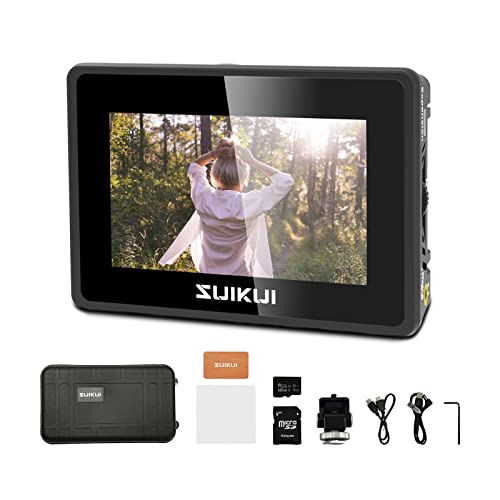
- Records H.264 1080p30 video without a stated limit
- 3.5-inch, 120g monitor with HDMI input/output
- Provides waveform, zebra, peaking, and focus-assist tools
Best For: Lightweight 1080p DSLR and HDMI capture setups
Best 4K Recorder – Atomos Ninja 5.2-inch Recording Monitor
For shoppers comparing camera external recorders for DSLR cameras, the Atomos Ninja combines a 5.2-inch monitor with HDMI recording and a bundled 240GB SSD. It supports recording up to 4K at 60 fps in several formats, including Apple ProRes, Avid DNxHD, and H.265.
Best For: DSLR, cinema, and mirrorless users who want an on-camera monitor and high-quality external recording in one device.
Pros:
- Records HDMI video up to 4Kp60 and supports up to 6Kp30 ProRes RAW.
- Includes a 240GB 2.5-inch SSD for getting started quickly.
- Offers a modern interface, RecordAssist, PlayBackAssist, and wireless RemoteView features.
Cons:
- It requires an HDMI-output camera and an appropriate power setup.
- The supplied notes do not specify the supported software-update date.
The Ninja is the most complete video-focused option here, especially if you need both monitoring and flexible recording formats. Its included SSD adds convenience for DSLR and mirrorless production kits.
Best Audio Recorder – TASCAM FR-AV2 32-Bit Float Field Recorder
Although it is not a video recorder, the TASCAM FR-AV2 is a useful companion when evaluating camera external recorders for DSLR cameras. It provides dual XLR/TRS inputs, 32-bit float recording, and timecode functions for cleaner, more manageable production audio.
Best For: Videographers who need dedicated external audio capture and timecode synchronization alongside their DSLR camera.
Pros:
- Uses dual ADCs and 32-bit float recording for worry-free audio capture.
- Provides two XLR/TRS combo inputs with Ultra HDDA preamps plus a 3.5mm input.
- Includes timecode input, output, generation, and synchronization functions.
Cons:
- It records audio rather than video, so it cannot replace an HDMI video recorder.
- Wireless monitoring requires the optional AK-BT2 adapter.
- Requires three AA batteries.
The FR-AV2 makes sense as part of a DSLR recording setup rather than as a standalone camera recorder. Its 32-bit float capture and built-in timecode can simplify demanding shoots where reliable sound matters.
Best Bright Monitor – VILTROX DC-550 5.5-inch Camera Monitor
For camera external recorders for DSLR cameras, the VILTROX DC-550 is best viewed as a monitoring upgrade rather than a recorder. Its 5.5-inch 1200-nit display connects over HDMI and adds exposure, focus, framing, and LUT tools for more controlled shooting.
Best For: DSLR and mirrorless shooters who prioritize daylight-visible monitoring and on-set image-assistance tools.
Pros:
- Bright 1200-nit, 1920 x 1080 display is designed for visibility in intense lighting.
- Includes waveform, parade, vectorscope, histogram, false color, zebra, and focus peaking tools.
- Supports custom 3D LUTs, Log-to-Rec.709 viewing, and anamorphic de-squeeze monitoring.
Cons:
- It is an HDMI monitor, not an external video recorder.
- The display is limited to Full HD 1920 x 1080 resolution.
- Its single HDMI connection may require the right cable for a particular camera.
The DC-550 is a practical choice when better viewing and exposure control matter more than recording to an external drive. The included battery, cables, sunshade, and mounting adapter make it useful as a ready-to-mount monitor.
Best Analog Capture Option – PowerPlay DVR Video Recorder
The PowerPlay DVR is a specialized analog capture device, not a typical HDMI recorder for DSLR cameras. It accepts AV input and records SD video to a microSD card, making it more suitable for FPV feeds, camcorders, VCRs, and tape digitization.
Best For: Users converting analog video sources or recording compatible FPV and camcorder feeds on the go.
Pros:
- Captures PAL at 720 x 576 and NTSC at 720 x 480, up to 50 or 60 fps respectively.
- Supports microSD cards up to 512GB Class 10 according to the product notes.
- Compact design includes a 2.4-inch LCD, clip mount, AV cable, and rechargeable-battery support.
Cons:
- Uses AV/RCA connectivity rather than HDMI, limiting DSLR compatibility.
- Records SD video, not 4K or Full HD footage.
- The battery is not included; the notes suggest using two 18500 lithium-ion cells.
This DVR is worth considering only when your source outputs analog AV. For modern DSLR HDMI workflows, its SD resolution and legacy-oriented inputs make it a niche alternative rather than a general-purpose external recorder.
Premium RAW Workflow – Atomos Ninja RAW
For filmmakers seeking camera external recorders for DSLR cameras, the Atomos Ninja RAW combines a bright HDR monitor with ProRes and ProRes RAW recording. Its HDMI connectivity, camera controls, and professional scopes make it a strong choice for compatible mirrorless and HDMI-equipped cameras.
Best For: Shooters who want RAW-capable recording, detailed monitoring, and camera control in a compact field monitor.
Pros:
- Records ProRes and ProRes RAW directly from the camera sensor.
- Bright 1500-nit, 5.2-inch HDR touchscreen with focus peaking, waveform, and false color.
- Supports CFexpress Type B media or external USB-C storage.
- Runs on NP-F batteries, USB-C power banks, or a DC adapter.
Cons:
- Storage media, network adapter, and some accessories are sold separately.
- ProRes RAW recording depends on camera compatibility and output support.
The Ninja RAW is the most production-focused option here, especially for users who need RAW workflows and extensive monitoring tools. Its 1500-nit display and flexible power options also suit outdoor and mobile production.
Broadcast-Style Monitoring – Blackmagic Video Assist 5 3G
Blackmagic Design Video Assist 5'' 3G Portable Monitor, Recorder, Scope, and Viewfinder
Check Price On AmazonThe Blackmagic Design Video Assist 5” 3G is a practical option among camera external recorders for DSLR cameras when you need a portable monitor, recorder, viewfinder, and scopes in one unit. Its 5-inch Full HD LCD includes HDR and 3D LUT support for on-set monitoring.
Best For: Camera operators who want an all-in-one 5-inch monitor and recording assistant with professional viewing tools.
Pros:
- Combines an LCD monitor, recorder, scope, and viewfinder.
- Full HD 1920×1080 display with HDR and 3D LUT support.
- Includes professional scopes and focus-assist features.
- Provides HDMI connectivity and a 2-year warranty.
Cons:
- The supplied notes do not specify recording formats or storage media.
- At 771 g, it is heavier than some compact field-monitor options.
This Video Assist is suited to creators who value monitoring and exposure tools as much as recording. It is a capable general-purpose assistant, though buyers should confirm camera compatibility and recording details for their setup.
Flexible SDI Field Recording – FEELWORLD CUT6S 6-inch Monitor
The FEELWORLD CUT6S adds a 6-inch touchscreen, SDI connectivity, and USB recording to the lineup of camera external recorders for DSLR cameras. It can record compatible camera output up to 1080p30 in MP4 format while providing waveform, histogram, and other monitoring tools.
Best For: DSLR and video crews needing a larger touchscreen with SDI/HDMI routing, LUT monitoring, and simple USB recording.
Pros:
- Records up to 1080p30 in MP4 to a FAT32 USB flash drive.
- 6-inch 1920×1080 touchscreen provides a larger viewing area.
- Includes 3G-SDI input and output plus HDMI input and output.
- Offers waveform, RGB parade, vectorscope, histograms, and LUT output.
Cons:
- NP-F battery is not included with this package.
- USB recording is limited to compatible signals up to 1080p30.
- Its 450-nit display is less bright than the Atomos Ninja RAW listed here.
The CUT6S is a versatile value-oriented choice for productions that need SDI-to-HDMI conversion and multi-person monitoring. Its included cable and hot-shoe mount help with setup, but plan for separate power and USB storage.
Premium HDR Workflow – Atomos Ninja TX GO 5" Monitor Recorder
For creators seeking camera external recorders for DSLR cameras, the Atomos Ninja TX GO combines a 5-inch HDR touchscreen monitor with HDMI recording, professional monitoring tools, and broad codec support. It can capture up to 6K RAW and records to CFexpress or USB media, while built-in Wi-Fi 6E, NDI 6, and camera-control features add flexibility to advanced productions.
Best For: DSLR and mirrorless users who want a high-end monitor-recorder for HDR monitoring, RAW capture, streaming, and longer shoots.
Pros:
- Supports ProRes, ProRes RAW, DNx, H.265/H.264, and up to 6K RAW capture.
- Bright 5-inch HDR 1080p touchscreen with tools such as professional monitoring and touch control.
- Includes batteries, charger, carry case, locking cables, and hot-shoe mounts.
- Built-in Wi-Fi 6E, NDI 6 streaming, and HDMI connectivity expand production options.
Cons:
- The feature-rich setup may be more than casual DSLR users need.
- The display is 5 inches, so it remains smaller than a dedicated field monitor.
The Ninja TX GO is a versatile choice when monitoring, recording, and connectivity matter equally. Its included power and mounting accessories also make it practical for portable rigs and extended sessions.
Professional DSLR Audio – Tascam DR-701D 6-Track Recorder
The Tascam DR-701D is an audio-focused option among camera external recorders for DSLR cameras. Its four microphone inputs can be recorded individually and mixed to stereo for six-track recording, while HDMI control and video-clock features help coordinate sound and picture during production.
Best For: Filmmakers, documentarians, and production teams needing multi-microphone audio recording with a DSLR camera.
Pros:
- Provides four mic inputs, individual recording, stereo mixing, and six-track capability.
- HDMI input and output can let the DSLR start recording on both devices.
- Video clock helps reduce drift between sound and picture.
- Includes a timecode generator and top-and-bottom tripod mounting points.
Cons:
- Its approximately 3.75-hour battery life may require spare batteries for long sessions.
- It records WAV audio rather than video, so a separate camera remains necessary.
- The unit requires four AA batteries.
The DR-701D is best understood as a dedicated field audio recorder rather than a video recorder. For DSLR productions using several microphones, its track count, HDMI synchronization features, and flexible mounting are particularly useful.
Compact Unlimited Capture – RH35 1080p Camera Monitor
The RH35 is a compact, straightforward choice for shoppers comparing camera external recorders for DSLR cameras. It accepts HDMI up to 1080p60 and records H.264 1080p30 video without a stated recording limit, saving MP4 files to a microSD card or USB flash drive while also providing useful exposure and focus tools.
Best For: DSLR users who want a lightweight 1080p monitor-recorder for basic camera capture, previews, meetings, or other HDMI sources.
Pros:
- Supports HDMI input/output at up to 1080p60 and H.264 recording at 1080p30.
- Compact 3.5-inch design weighs about 120g according to the product description.
- Includes peaking, zebra, waveform, focus assist, exposure assist, and false color.
- Records MP4 video to a microSD card or USB flash drive.
Cons:
- The 800×480 display is lower resolution than the recorded 1080p video.
- Recording is limited to H.264 1080p30 rather than higher-resolution or RAW formats.
- The supplied notes do not list included storage media or power accessories.
The RH35 favors portability and essential capture features over advanced codec support. It is a practical fit for simple HDMI recording setups where a small form factor and monitoring aids are more important than cinematic recording formats.
How We Picked These Camera External Recorders for Dslr Cameras
We evaluated the selected products by looking at recording format, connection compatibility, monitoring features, portability, storage requirements, and the type of production each model suits. The list includes complete monitor-recorders as well as dedicated audio recorders because DSLR workflows often need one or both functions.
Before buying, confirm your camera’s output type, resolution, frame-rate support, audio connections, and whether clean HDMI or timecode is available. A recorder cannot add a feature that the camera does not output.
Quick Comparison
| Recorder type | Best suited for | Features to prioritize |
|---|---|---|
| HDMI monitor-recorder | Video creators and interviews | Codec support, screen brightness, SSD or CFexpress storage |
| Dedicated audio recorder | Documentaries, events, and dialogue | Inputs, preamps, timecode, 32-bit float support |
| SDI/HDMI field monitor | Multi-camera and production setups | Signal compatibility, scopes, recording options |
| AV/RCA capture recorder | Legacy and analog sources | Input format, frame-rate handling, storage workflow |
Key Buying Factors for Camera External Recorders for Dslr Cameras
Connection and Signal Compatibility
HDMI is common on DSLRs, but ports may be micro, mini, or full-size. Check the required cable and verify whether the recorder accepts your camera’s resolution and frame rate. SDI models generally require a camera or converter with SDI output.
Recording Format and Storage
ProRes and ProRes RAW can simplify editing and preserve more image data, but they require substantial storage. Check whether the unit uses 2.5-inch SSDs, proprietary media, CFexpress, SD cards, or external drives, and budget for reliable, fast media.
Monitoring and Power
A bright screen, focus tools, waveform, false color, zebras, and scopes can make exposure and focus much easier outdoors. Also consider battery type, runtime, charging, weight, and cable strain when the recorder is mounted on a small DSLR rig.
Audio and Synchronization
For production sound, prioritize balanced XLR or TRS inputs, headphone monitoring, low-noise preamps, and timecode support. A dedicated audio recorder may be more practical than an HDMI unit when the camera’s built-in audio is limited.
Who Should Buy Which Camera External Recorders for Dslr Cameras?
Choose an Atomos Ninja or similar HDMI monitor-recorder if you want an all-in-one screen and high-quality video recording for interviews, commercial work, or narrative projects.
Choose Blackmagic Video Assist or a 3G SDI monitor if your workflow benefits from professional scopes, SDI connectivity, or more advanced on-set monitoring.
Choose a TASCAM field recorder when clean dialogue, multiple microphones, timecode, or dependable standalone audio matters more than external video recording.
Choose a compact monitor or capture device for lightweight rigs, streaming, legacy-video transfers, or basic HDMI recording. These options can be easier to carry, but check their resolution, frame-rate, codec, and storage limitations carefully.