
Finding the right first synthesizer can make learning music production, sound design, and keyboard technique much easier. The best beginner options balance approachable controls, useful sounds, portability, and a price that leaves room to grow.
This roundup includes compact standalone instruments, playful entry-level synths, and versatile MIDI controllers for computer-based production. Use the guide below to match each type to your goals, workflow, and available gear.
Best 10 Synthesizers for Beginners Picks for 2026
Best Pocket Synth

- Stylus-controlled touch surface
- Three octaves with vibrato
- Battery-powered with headphone output
Best For: Beginners and portable retro-sound experimentation
Best Compact Analog Option

- Compact, lightweight analog design
- Intuitive sound-shaping interface
- Extra modulation control
Best For: Portable analog sound exploration
Best Beginner Production Controller

- 37-key, three-octave layout
- Pads, knobs, and built-in sequencer
- USB, MIDI, and CV/Gate connectivity
Best For: Laptop-based music production beginners
Best for Experimental Sounds
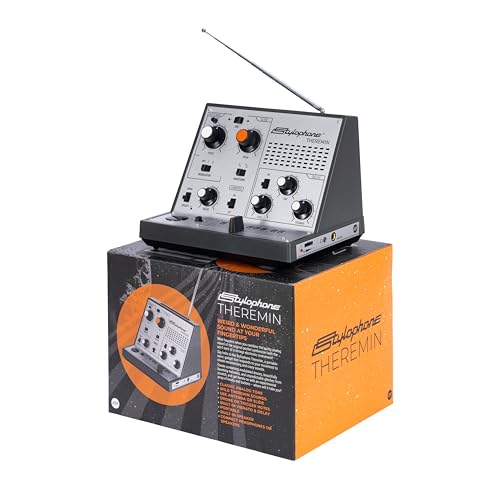
- Touch slider and theremin-style control
- Built-in delay and vibrato
- Headphone and audio outputs
Best For: Drones, glides, and cinematic sound experiments
Best Controller

- 25 velocity-sensitive mini keys with pitch and modulation control
- Eight pads, knobs, and a built-in arpeggiator
- Includes MPC Beats, instruments, and sound content
Best For: Computer-based beginners learning software synthesizers and beat production
Best Portable Synth

- Portable battery-powered design with built-in speaker
- Six-operator FM engine with 32 algorithms and 128 presets
- Effects, arpeggiator, sequencer, and multiple MIDI options
Best For: Beginners wanting standalone FM synthesis they can use anywhere
Best Standalone Controller

- Built-in speaker and over 100 internal sounds
- USB MIDI, battery operation, pads, knobs, and arpeggiator
- Includes production software and Melodics lessons
Best For: Beginners seeking both standalone play and computer-based production
Best Portable Pick
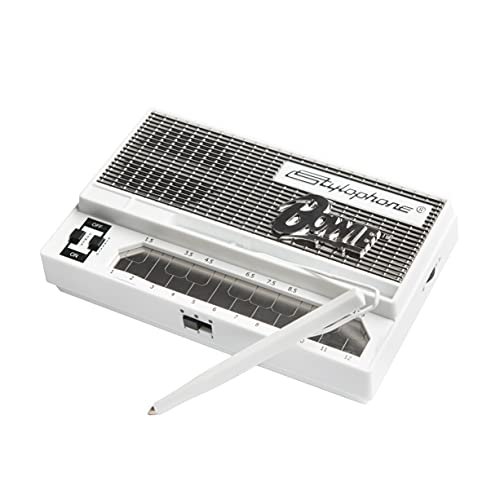
- Simple stylus interface
- Battery-powered compact design
- Three analog-style sound modes
Best For: Casual beginners and portable sound exploration
Best All-Around Controller

- 25 velocity-sensitive mini keys
- Eight MPC pads and assignable knobs
- Includes instruments and learning tools
Best For: Beginners building a compact music-production setup
Best Learning-Focused Option

- Smart scales and chord functions
- Includes 40 teaching courses
- Works with computers and compatible mobile devices
Best For: New producers who want guided learning and scale assistance
Best Pocket Synth – Stylophone Original
For shoppers seeking synthesizers for beginners, the original Stylophone offers an approachable way to explore electronic sound. Its touch-sensitive metal surface, stylus control, built-in speaker, and compact battery-powered design make it easy to start playing without a complex setup.
Best For: Beginners, casual experimentation, portable practice, and retro-sound fans.
Pros:
- Simple stylus-and-touch-surface playing method.
- Three octaves with optional vibrato effect.
- Built-in speaker, headphone socket, and auxiliary connectivity.
- Compact design runs on three AA batteries.
Cons:
- Its miniature format offers less conventional keyboard control.
- Warranty coverage is listed as 30 days for parts.
The Stylophone is more of a playful, focused sound instrument than a full production keyboard. It is a strong beginner pick if portability, simplicity, and distinctive vintage character matter most.
Best Compact Analog Option – Korg monotron DUO
The Korg monotron DUO is a compact analog ribbon synthesizer suited to beginners who want quick, hands-on sound shaping. Its lightweight design and intuitive interface make it convenient for experimenting with modulation and portable electronic sounds.
Best For: Beginners interested in compact analog experimentation and modulation.
Pros:
- Compact and lightweight for transport.
- Simple interface supports quick adjustments.
- Adds modulation options for more dynamic sounds.
- Auxiliary connectivity supports integration with other gear.
Cons:
- Its ribbon-synth format may feel less familiar than a traditional keyboard.
- The supplied notes describe it as an enhancement-oriented instrument, so capabilities may be more focused than those of a full keyboard synthesizer.
The monotron DUO makes sense for buyers prioritizing tactile exploration over a broad keyboard layout. Its focused controls can provide an accessible entry point into analog sound design.
Best Beginner Production Controller – Akai MPK Mini Plus
For beginners who want synthesizers for beginners alongside computer-based production, the Akai MPK Mini Plus provides a broader control setup than a pocket instrument. Its 37-key layout, pads, knobs, sequencer, and USB MIDI connection support playing, arranging, and DAW control.
Best For: New producers working with a laptop, DAW, software instruments, or external MIDI and modular gear.
Pros:
- 37 keys provide three full octaves for melodic and harmonic parts.
- Includes eight RGB pads, eight assignable knobs, and transport controls.
- Built-in 64-step sequencer supports drum and melodic or chord tracks.
- Offers USB, MIDI, and CV/Gate connectivity for varied setups.
Cons:
- It is a MIDI keyboard controller rather than a standalone synthesizer with built-in sound generation.
- Its feature-rich design may require more setup than a simple battery-powered instrument.
The MPK Mini Plus is the most suitable choice here for beginners building a computer-centered music setup. Choose it when hands-on DAW control and connection flexibility are more important than standalone portability.
Best for Experimental Sounds – Stylophone Theremin
The Stylophone Theremin gives beginners an unusual way to explore pitch, drones, and modulation. Its touch slider, theremin-style antenna, built-in effects, speaker, and headphone output create an accessible platform for experimental electronic sound.
Best For: Beginners drawn to drones, moving melodies, cinematic textures, and theremin-inspired performance.
Pros:
- Slider control enables notes, smooth glides, and more precise pitch movement.
- Built-in delay and vibrato add depth and character.
- Battery-powered design includes a speaker and headphone output.
- Audio outputs connect to amps, pedals, or recording gear.
Cons:
- Its experimental focus may be less suitable for conventional keyboard playing.
- The listed weight is 896 g, making it less pocket-friendly than the original Stylophone.
This is a distinctive beginner instrument for sound exploration rather than a general-purpose keyboard. It is especially appealing if you want expressive glides, sustained drones, and built-in effects in a portable format.
Best Controller – Akai MPK Mini MK3
For beginners shopping for synthesizers for beginners, the Akai Professional MPK Mini MK3 is a compact USB MIDI controller designed to operate virtual instruments and synthesizers through a compatible computer and DAW. Its mini velocity-sensitive keys, pads, knobs, arpeggiator, and included software make it a practical starting point for home production.
Best For: Beginners who want hands-on control of software synthesizers, beats, and DAW effects.
Pros:
- 25 velocity-sensitive keys with pitch and modulation control.
- Eight MPC-style pads support drum programming, sample triggering, Note Repeat, and Full Level.
- Eight assignable knobs and a built-in arpeggiator provide useful synth-control options.
- Includes MPC Beats, virtual instruments, sound content, and a complimentary NKS bundle option.
Cons:
- It is a MIDI controller, so it requires a USB-compatible device and software to produce sound.
- The mini keys may feel less familiar than full-size piano keys.
- It has no built-in speaker or standalone sounds listed in the supplied specifications.
The MPK Mini MK3 is a strong beginner choice when computer-based production is the goal. It offers more performance and beat-making controls than a basic keyboard while staying compact and USB-powered.
Best Portable Synth – M-VAVE FM Synthesizer
The M-VAVE FM Synthesizer is a self-contained option for beginners exploring synthesizers for beginners without needing a computer. Its battery operation, built-in speaker, piano-style silicone keys, presets, and FM engine let you play and experiment almost anywhere.
Best For: Beginners who want a portable standalone synthesizer with classic FM sounds and built-in sequencing tools.
Pros:
- Battery-powered design with a built-in speaker supports portable play.
- Six FM operators and 32 algorithms offer hands-on sound-design possibilities.
- Includes 128 presets, six effects, an arpeggiator, and a 16-step sequencer.
- Supports USB MIDI, wireless Bluetooth MIDI, and 3.5mm MIDI connections.
Cons:
- The silicone keys may provide a different playing feel from conventional piano keys.
- Its FM-focused architecture may be less immediately intuitive than a simpler preset-based keyboard.
- The compact controls and 27-key layout may limit extended two-handed playing.
With built-in sounds and amplification, the M-VAVE is more immediately playable than a computer-dependent MIDI controller. It is a particularly appealing introduction to FM synthesis, though learners should expect a more specialized sound engine.
Best Standalone Controller – Akai MPK Mini Play MK3
The Akai Professional MPK Mini Play MK3 combines a USB MIDI controller with built-in sounds and a speaker, making it a flexible pick among synthesizers for beginners. It can introduce new players to software production while also supporting battery-powered standalone practice and performance.
Best For: Beginners who want one compact keyboard for built-in sounds, beat pads, and computer-based music making.
Pros:
- Built-in speaker and over 100 internal drum and instrument sounds enable standalone play.
- Includes 25 dynamic keys, eight velocity-sensitive MPC pads, four encoder knobs, and an arpeggiator.
- Battery operation supports portable use, while USB connects it to a computer.
- Includes MPC Beats, AIR Music Tech instruments, NKS integration, and Melodics lessons.
Cons:
- Batteries are required for portable operation but are not included.
- The 25-key mini format is compact rather than suited to full-range piano technique.
- Its built-in sounds and speaker are convenient, but the supplied notes do not indicate extensive onboard synthesis editing.
The MPK Mini Play MK3 is a well-rounded entry point for learners who do not want to choose between a standalone keyboard and a computer controller. Its built-in sounds make practice immediate, while the USB features leave room to expand into DAW-based production.
Best Portable Pick – Bowie Stylophone
For beginners seeking synthesizers for beginners that are simple, portable, and distinctive, the Bowie Stylophone offers an approachable way to explore classic analog-style sounds. Its stylus interface, battery-powered design, and compact size make it easy to start experimenting without a full studio setup.
Best For: Casual beginners, Bowie fans, and portable sound experimentation.
Pros:
- Simple stylus-based design is approachable for first-time players.
- Battery-powered and compact for convenient portable use.
- Three modes provide classic analog synth and bass sounds.
- Distinctive limited-edition white design with an embossed Bowie logo.
Cons:
- More limited in controls and sounds than a full MIDI keyboard or synthesizer.
- Designed for Stylophone play rather than piano-style performance.
The Bowie Stylophone is best viewed as a fun, focused entry point rather than a complete production controller. Choose it if simplicity, portability, and character matter more than extensive software control.
Best All-Around Controller – Akai MPK Mini IV
The Akai MPK Mini IV is a versatile choice for beginners comparing synthesizers for beginners with broader music-production tools. Its 25 velocity-sensitive mini keys, MPC pads, assignable knobs, display, and included software support both first projects and more hands-on beat-making.
Best For: Beginners who want one compact controller for keys, beats, DAW control, and learning.
Pros:
- 25 velocity-sensitive keys support piano-style playing, leads, and sample triggering.
- Eight velocity- and pressure-sensitive MPC pads provide expressive finger drumming.
- Assignable knobs, full-color screen, arpeggiator, Chord mode, and Scale mode offer practical control.
- Includes a broad virtual instrument collection, DAW integration, Melodics trial, and Splice trial.
Cons:
- It is a USB MIDI controller, so it requires compatible software or equipment to generate sounds.
- Mini keys may feel less natural than full-size keys for some players.
With USB-C, full-size MIDI Out, and Mac, Windows, and mobile compatibility, the MPK Mini IV is a strong long-term beginner controller. It offers substantially more production flexibility than a standalone novelty instrument.
Best Learning-Focused Option – Donner DMK 25 Pro
The Donner DMK 25 Pro suits beginners looking for synthesizers for beginners in a portable MIDI-controller format with built-in guidance features. Smart scales, chord and arpeggio functions, an OLED display, and 40 teaching courses are designed to make early experimentation more structured.
Best For: New producers who want scale assistance, mobile compatibility, and guided lessons.
Pros:
- Smart Dynamic Scale Mode and 16 scale options help beginners play melodies and bass lines.
- Arpeggio, note repeat, chord functions, touch bar, and four control wheels expand creative options.
- Includes four DAW software offerings and 40 keyboard-teaching courses.
- USB-C connectivity and an adapter support compatible computers and mobile devices.
Cons:
- It does not produce sound on its own and requires a phone or computer with DAW software.
- Mobile use may require an additional compatible OTG adapter depending on the device.
- Its 25-key mini format is less suited to full-range piano performance.
The DMK 25 Pro is appealing when learning support and scale assistance are priorities. Just factor in the software connection requirement and verify your mobile device’s adapter compatibility before buying.
How We Picked These Synthesizers for Beginners
We focused on instruments that are approachable for first-time players while still offering enough flexibility to remain useful as skills develop. Selection factors included control layout, sound creation features, portability, connectivity, built-in speakers or battery power, and compatibility with common music software.
The list includes two broad categories: standalone synthesizers that can make sound without a computer, and USB MIDI controllers that typically require a virtual instrument or production app. That distinction is important because a controller may offer better keys and software control, but it does not generate sound by itself unless it includes an internal engine.
Quick Comparison
| Type | Best for | What to expect |
|---|---|---|
| Pocket or ribbon synth | Experimenting and portability | Compact controls, distinctive sounds, limited traditional keyboard technique |
| Standalone mini synth | Playing anywhere | Built-in sounds and speakers, often with fewer full-size controls |
| 25-key MIDI controller | Computer-based production | Software instruments, pads, knobs, and portable keyboard control |
| 37-key MIDI controller | More comfortable melody and chord playing | Extra range and controls, with a larger footprint |
Key Buying Factors for Synthesizers for Beginners
Standalone Sound or Computer Control
Choose a standalone synthesizer if you want to switch it on and play immediately, practice away from a desk, or avoid depending on a laptop. Select a MIDI controller if you already use music software and want better control over virtual synthesizers, effects, and recording instruments.
Key Count and Playing Feel
Twenty-five keys are portable and suitable for bass lines, short melodies, and basic chords. A 37-key model provides more range and can feel less restrictive when playing with both hands. Pocket and ribbon instruments are excellent for experimentation but are not substitutes for a conventional keyboard if you want to build traditional technique.
Connectivity and Software
Check whether the instrument uses USB-C, USB-A, MIDI, or wireless connections, and confirm that your computer or mobile device supports the required connection. Controllers often work best when bundled software, mapping, and setup instructions are considered alongside the hardware.
Features That Support Learning
Drum pads, arpeggiators, scales, preset sounds, displays, and onboard speakers can shorten the learning curve. However, more features are not automatically better; clear controls and an easy workflow matter more than a long specification list.
Who Should Buy Which Synthesizers for Beginners?
For casual exploration and maximum portability, choose a pocket or ribbon-style synth. For immediate, computer-free play, a battery-powered standalone model with a speaker is the most convenient option. Beginners focused on beat-making and software production should consider a 25-key MIDI controller with pads and knobs.
If you want more room for chords and melodies, a 37-key controller is the stronger long-term choice. Buyers who value a distinctive appearance or collectible appeal can choose a themed limited-edition instrument, provided its playing features match their needs. Before purchasing, decide whether you need an instrument that makes its own sound or a controller that serves as the hands-on interface for software synthesizers.