
The best camera external recorders for studio filming can improve recording quality, simplify live production, and give you more control than a camera’s built-in storage alone. The right choice depends on whether you need a dedicated video deck, a streaming camera, or reliable multichannel audio capture.
Our roundup covers professional studio recorders, compact production cameras, camcorders, and portable audio-video tools for creators, filmmakers, musicians, and streaming teams.
Best 10 Camera External Recorders for Studio Filming Picks for 2026
Studio 4K Deck

- 12G-SDI and HDMI 2.0 connectivity
- Records to SSDs or SD cards
- Supports ProRes, DNxHD, H.264/H.265, and uncompressed video
Best For: Professional 4K studio recording and signal workflows
Compact HD Recorder
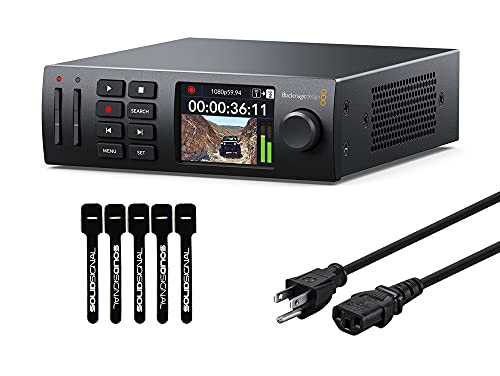
- Records up to 1080p60
- Compact 1/3-rack form factor
- Includes 3G-SDI, HDMI, timecode, reference, and USB-C
Best For: Space-conscious HD studio recording and streaming
4K Camcorder Recorder

- 4K UHD capture with 20x optical zoom
- Dual SD slots for relay or redundant recording
- HDMI output for monitors and external recorders
Best For: Zoom-heavy interviews, events, and studio video production
Studio Playback Pick
Blackmagic HyperDeck Studio HD Mini

- HDMI, USB, 3G-SDI, and RCA connectivity
- Records digital video to SD cards
- Compact 2.3-pound studio recorder
Best For: Established studios needing flexible recorder connections
Flexible Streaming Camera
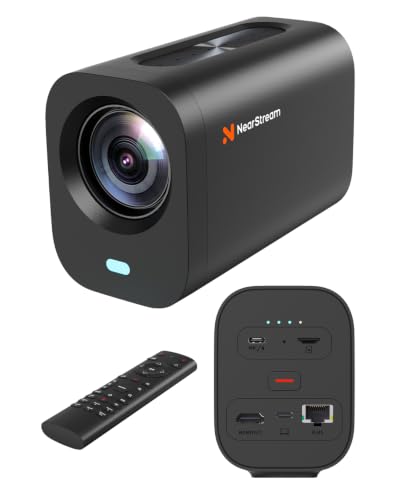
- 4K USB-C and microSD recording
- 10x optical zoom with 40x hybrid zoom
- RJ45, HDMI, and external mic support
Best For: Small studios and multi-output streaming setups
Live Production Camera
Blackmagic Studio Camera 4K Plus G2
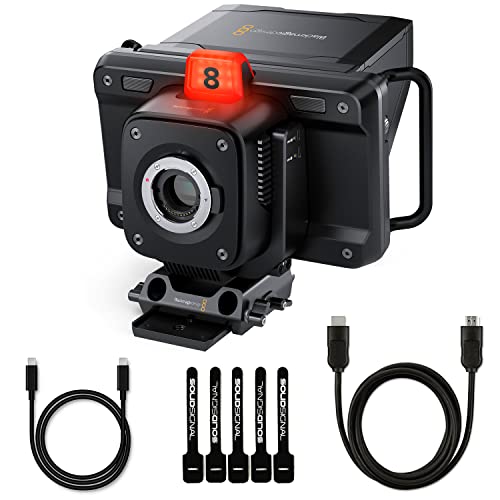
- 4K and Blackmagic RAW recording to USB disks
- 12G-SDI and HDMI connectivity
- 7-inch LCD with 13 stops of dynamic range
Best For: Broadcast and live-production studio systems
Best All-in-One Camera

- 4K video at 30fps
- Up to four audio tracks
- Two XLR inputs with phantom power
Best For: Solo creators, musicians, streamers, and filmmakers needing video plus multi-source audio
Best Dedicated Audio Recorder

- Up to six tracks plus stereo mix
- 32-bit float recording
- Microphones handle up to 140dB SPL
Best For: Multi-track film, music, and location recording
Best Compact XLR Recorder

- Two locking XLR/TRS inputs
- 32-bit/96kHz recording
- Compact 6.4-ounce design
Best For: Portable two-channel recording for interviews, podcasts, music, and film
Studio 4K Deck – HyperDeck Studio 4K Pro
For camera external recorders for studio filming, the Blackmagic Design HyperDeck Studio 4K Pro is a full-featured 1 RU deck built for demanding Ultra HD workflows. It records to SD cards or SSDs in formats including ProRes, DNxHD, H.264/H.265, and uncompressed 10-bit 4:2:2, with extensive SDI, HDMI, timecode, reference, and control connectivity.
Best For: Studio teams needing a versatile 4K recorder with multiple media options and professional signal-management features.
Pros:
- Supports 12G-SDI, HDMI 2.0, and up to 4K recording workflows.
- Offers two SSD slots plus two SD card slots.
- Includes timecode, reference, RS-422 control, and a built-in display and jog wheel.
- Works with common editing and streaming platforms.
Cons:
- Its rack-style feature set may be more than a simple studio setup requires.
- Power cord is not included.
This is the strongest choice here for a dedicated studio rack when format flexibility, redundant media options, and advanced integration matter more than compact size.
Wireless Streaming Camera – Mevo Start
Although it is a camera rather than a conventional deck, the Logitech for Creators Mevo Start is a practical option for camera external recorders for studio filming when wireless streaming and simple production control are priorities. It captures 1080p video, records MP4 files, and supports Wi-Fi, Ethernet, smartphone LTE, RTMP, NDI|HX, and webcam modes.
Best For: Creators who want a compact, app-controlled camera for wireless studio streams, single-camera recording, or simple multicamera setups.
Pros:
- Streams and records in 1080p HD.
- Can be controlled wirelessly from a smartphone with Auto-Director features.
- Supports up to three Mevo Start cameras for multicamera production.
- Offers built-in audio plus external audio support, RTMP, NDI|HX, and webcam mode.
Cons:
- It is limited to 1080p rather than 4K capture.
- Fixed-focus optics and digital zoom are less flexible than a dedicated interchangeable-lens setup.
The Mevo Start is best viewed as an all-in-one streaming camera, not a traditional external recorder. Its compact design and wireless control can simplify studio content where portability and fast setup outweigh advanced recording formats.
Compact HD Recorder – HyperDeck Studio HD Mini
For camera external recorders for studio filming in HD, the Blackmagic Design HyperDeck Studio HD Mini provides a compact 1/3-rack solution. It records H.264, ProRes, or DNxHD to SD or UHS-II cards, supports formats up to 1080p60, and includes 3G-SDI, HDMI output, timecode, reference, and USB-C webcam or external-recording functionality.
Best For: Small studios and production desks that need a space-saving HD deck with broadcast-oriented connections.
Pros:
- Records common H.264, ProRes, and DNxHD formats up to 1080p60.
- Compact 1/3-rack design fits tighter production spaces.
- Includes 3G-SDI input/output, HDMI output, timecode, and reference connections.
- USB-C supports webcam use and external recording with compatible software.
Cons:
- It is designed for SD and HD workflows rather than 4K recording.
- Only one SD card slot is listed.
This bundle is a sensible middle ground for HD studio work: more production-focused than a basic capture device, but smaller and less demanding than a full 4K rack deck.
4K Camcorder Recorder – Canon VIXIA HF G70
The Canon VIXIA HF G70 is a 4K camcorder with recording features that can fit camera external recorders for studio filming setups, particularly when you need an integrated lens and straightforward HDMI output. It combines UHD capture, a 20x optical zoom, manual and autofocus options, dual SD slots, and clean 4K output for monitors or external recorders.
Best For: Interviews, events, performances, and studio shoots that benefit from long optical reach and an integrated camcorder design.
Pros:
- Captures 4K UHD video using a 1/2.3-inch CMOS sensor and DIGIC DV 6 processing.
- 20x optical zoom provides flexible framing without relying on digital zoom.
- Dual SD slots support relay recording or redundant recording workflows.
- HDMI output can feed monitors or external recorders.
Cons:
- It is a camcorder, not a standalone rackmount recording deck.
- The supplied notes specify MP4 capture rather than a range of broadcast recording codecs.
The HF G70 makes sense when the camera, lens, and internal recording need to remain simple and mobile. Pairing its HDMI output with a suitable recorder can extend its usefulness in a studio chain.
Studio Playback Pick – Blackmagic HyperDeck Studio HD Mini
For camera external recorders for studio filming, the Blackmagic Design HyperDeck Studio HD Mini is a dedicated studio recorder built around flexible HDMI, USB, 3G-SDI, RCA, and SD-card connectivity. Its compact 2.3-pound design and included two-year warranty make it a practical fit for established studio workflows.
Best For: Studios that need a dedicated digital video recorder with broad connection support.
Pros:
- Supports HDMI, USB, 3G-SDI, and RCA connections.
- Records digital video to SD cards.
- Compact 2.3-pound design with a two-year warranty.
Cons:
- The supplied notes do not specify supported recording resolutions or frame rates.
- Only one USB port is listed.
The HyperDeck Studio HD Mini is best suited to users who already understand their studio’s signal and media requirements. Its connection variety is the main advantage, while the unspecified format details are worth confirming before purchase.
Flexible Streaming Camera – NearStream VM20 Pro 4K
The NearStream VM20 Pro combines camera capture and recording features for camera external recorders for studio filming. It offers 4K USB-C output, network streaming over RJ45, 1080p HDMI, and standalone 4K microSD recording, along with a 10x optical zoom and built-in audio features.
Best For: Small studios, classrooms, churches, and creators needing multiple output and recording options.
Pros:
- Provides 4K USB-C output and 4K recording to microSD cards up to 1TB.
- Offers 10x optical zoom and up to 40x hybrid zoom.
- Includes RJ45 RTSP streaming, 1080p HDMI, and an external microphone input.
- Built-in 8-microphone array includes AI noise reduction and beamforming.
Cons:
- The optional NA20 wireless AV transceiver is sold separately.
- HDMI output is limited to 1080p.
- A compatible UHS-I U3/V30 or faster microSD card is required for recording.
This is a versatile all-in-one option when a studio needs both camera functionality and backup recording. Its multiple outputs are useful for varied setups, but buyers should budget for suitable media and any optional wireless hardware.
Live Production Camera – Blackmagic Studio Camera 4K Plus G2
For camera external recorders for studio filming, the Blackmagic Studio Camera 4K Plus G2 is a broadcast-oriented camera that records to USB disks and supports Blackmagic RAW. This bundle adds a 10-foot HDMI 2.0 cable, a six-foot USB-C cable, and cable ties for a more ready-to-use studio setup.
Best For: Live production, broadcast, education, conferences, concerts, and other controlled studio environments.
Pros:
- Supports 4K capture, Blackmagic RAW recording, and recording to USB disks.
- Includes HDMI 2.0, 12G-SDI input and output, and 3.5mm audio connections.
- Features a 7-inch LCD with sunshade, 13 stops of dynamic range, and dual native ISO.
- Includes a 10-foot HDMI cable, six-foot USB-C cable, and five cable ties.
Cons:
- The bundle does not include a lens.
- Zoom Demand and Focus Demand accessories are not included.
- The camera is not water resistant.
This camera is the strongest fit for users building a live-production system around SDI and professional monitoring. Its included cables add convenience, while lens and accessory requirements mean it is better for planned studio builds than casual plug-and-play use.
Best All-in-One Camera – Zoom Q8n-4K
The Zoom Q8n-4K is a practical choice among camera external recorders for studio filming when you want 4K video and multi-source audio in one compact device. It records 4K video at 30fps, supports up to four audio tracks, and includes two XLR inputs with phantom power.
Best For: Musicians, streamers, filmmakers, and solo creators who need video recording, professional audio inputs, and local or live streaming capability.
Pros:
- Records 4K video at 30fps with five field-of-view settings.
- Captures up to four simultaneous audio tracks.
- Two XLR inputs include phantom power for microphones, instruments, or mixer feeds.
- Can stream over USB while recording locally to SD cards up to 512GB.
Cons:
- It is a complete video camera rather than an audio-only recorder.
- The wide-angle 2.3mm lens may not suit shoots requiring a narrow perspective.
- Its 680g body is less pocketable than a small dedicated audio recorder.
Choose the Q8n-4K when simplifying a studio or streaming setup matters as much as recording quality. Its integrated lens, flip-out screen, XLR connectivity, and remote-control support make it especially useful for solo productions.
Best Dedicated Audio Recorder – Zoom H6 Studio
The Zoom H6 Studio is a strong option for camera external recorders for studio filming when your priority is flexible, high-quality audio captured separately from the camera. It records up to six individual tracks plus a stereo mix and uses 32-bit float recording to provide broad dynamic range.
Best For: Filmmakers and musicians who need multiple tracks, high sound-pressure handling, and dependable recording for studio or location sessions.
Pros:
- Records six individual tracks plus a stereo mix in 32-bit float.
- 19.4mm microphones handle sound levels up to 140dB SPL.
- Look-ahead limiters help prevent overload distortion.
- Supports sample rates from 44.1kHz through 192kHz.
Cons:
- It records audio rather than video, so it must be paired with a camera for filming.
- Its 1.05-pound weight and 11-inch length make it less compact than smaller recorders.
- It requires four AA batteries.
The H6 Studio makes sense for productions that need several isolated audio sources and extra protection against clipping. Its six-track capacity and selectable high-resolution recording formats offer room to build more advanced sound workflows.
Best Compact XLR Recorder – Zoom H1 XLR
The Zoom H1 XLR is a compact pick among camera external recorders for studio filming when you need a straightforward way to capture clean audio alongside a camera. Its two locking XLR/TRS combo inputs support microphones and instruments, while 32-bit recording helps preserve detail.
Best For: Interviews, podcasts, filmmakers, musicians, and creators who want a small two-channel recorder with flexible connectivity.
Pros:
- Records at up to 32-bit/96kHz.
- Two locking XLR/TRS combo inputs accommodate microphones and instruments.
- OLED waveform display provides a quick view of recording levels.
- Supports SDXC cards up to 1TB and includes 3.5mm input and headphone output.
Cons:
- Two-channel recording offers less expansion than the H6 Studio.
- Its 0.96-inch screen is compact and may provide limited viewing space.
- It requires two AA batteries.
For small crews and straightforward dual-source recording, the H1 XLR keeps the setup light without giving up XLR/TRS connectivity. It is particularly suitable when portability and simple level monitoring matter more than a high track count.
How We Picked the Best Camera External Recorders for Studio Filming
We compared these 10 products by recording role rather than treating every device as interchangeable. Key considerations included video resolution, supported inputs and outputs, storage workflow, monitoring, portability, audio capability, streaming features, and suitability for continuous studio use. We also considered whether each model works best as a primary recorder, a camera with recording functions, or a supporting audio device.
Before buying, confirm your camera’s output format and connector type. HDMI, SDI, USB, and XLR are not automatically compatible, and some workflows require converters, capture hardware, or separate storage media.
Quick Comparison
| Best For | Look For | Product Types |
|---|---|---|
| Broadcast-style studio recording | SDI, timecode, rack-friendly design, dependable media support | Dedicated HyperDeck recorders |
| Live streaming and simple production | Wireless connectivity, remote control, integrated camera functions | Mevo and NearStream cameras |
| Flexible studio video capture | 4K recording, optical zoom, clean HDMI output | Canon and Zoom video cameras |
| Professional audio recording | XLR inputs, gain control, multitrack or high-quality WAV support | Zoom portable recorders |
Key Buying Factors for Camera External Recorders for Studio Filming
Video Inputs, Outputs, and Formats
Match the recorder to your camera and production switcher. HDMI is common in smaller studios, while SDI is preferred for longer cable runs and more robust professional installations. Check maximum resolution, frame rates, chroma formats, and whether the device records the signal you actually plan to send.
Storage and Recording Reliability
Look for supported media types, maximum card or disk capacity, recording codecs, and file-system compatibility. For extended sessions, choose equipment with dependable cooling, continuous recording support, and easy media replacement. A recorder that uses familiar storage can reduce transfer time and simplify backups.
Audio Connectivity
Built-in microphones may be adequate for basic content, but studio filming often benefits from XLR inputs, phantom power, headphone monitoring, and independent level control. If dialogue, music, or interviews matter, verify channel count and whether audio can be recorded separately or embedded with video.
Monitoring, Control, and Power
A clear display, scopes, recording indicators, remote control, and tally or timecode support can make a major difference during production. Also check whether the unit runs from AC power, batteries, USB-C, or a combination. Studio equipment should integrate cleanly with your existing power and monitoring setup.
Who Should Buy Which Camera External Recorders for Studio Filming?
Choose a dedicated Blackmagic recorder if you need a stable, professional deck for studio or broadcast workflows. Choose a Mevo or NearStream model if fast streaming, remote operation, and an integrated camera are more important than modular connectivity. A Canon camcorder is a practical fit for operators who want optical zoom and a familiar all-in-one camera design.
Zoom’s video recorders suit creators who need a compact camera with stronger production flexibility, while the Zoom H6 Studio and H1 XLR are better choices when clean, separately controlled audio is the priority. For the best result, treat the recorder as part of a complete chain: camera, cables, storage, microphones, lighting, and backup plan should all support the same resolution and workflow.