
The best document cameras for beginners make it easy to show books, worksheets, handwriting, artwork, and small objects on a larger screen. The models in this roundup combine simple USB setup with useful features such as autofocus, built-in lighting, microphones, and flexible positioning.
We selected options for classrooms, remote teaching, video conferencing, and home learning, with choices ranging from compact handheld cameras to 4K models designed for larger pages and demonstrations.
Best 10 Document Cameras for Beginners Picks for 2026
Best Image Quality
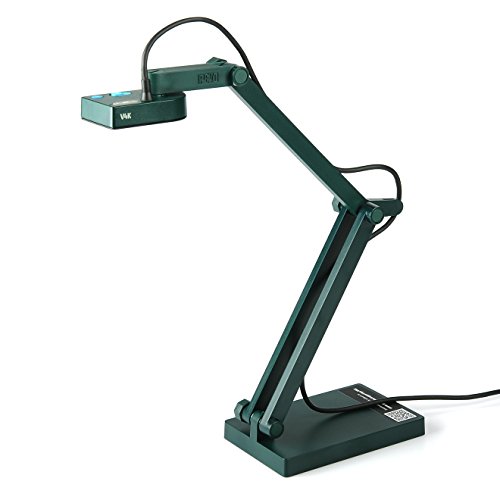
- 8MP Sony CMOS sensor
- Up to 30 fps in Full HD
- Mac, Windows, and Chromebook compatible
Best For: Beginners who want sharp, detailed live demonstrations
Best Feature Set

- Built-in LED and microphone
- Autofocus with macro capability
- Annotation and recording software included
Best For: Beginners wanting lighting, audio, and software controls
Best Portable Option

- Compact 8MP Sony Exmor R camera
- Physical focus and exposure controls
- Includes OKIOPoint AI visual pointer
Best For: Teachers needing portability and interactive presentation tools
Best for Large Materials

- Covers materials up to A3 size
- Three-level adjustable LED lighting
- Foldable design with dual microphones
Best For: Beginners showing large documents or objects
Best Large-Format Pick

- 8MP Sony sensor with high-resolution capture
- Ledger-size viewing area for books and maps
- Plug-and-play software support with annotation tools
Best For: Teachers and presenters capturing large, detailed materials
Best All-Around Starter
THUSTAR 8MP 4K Document Camera
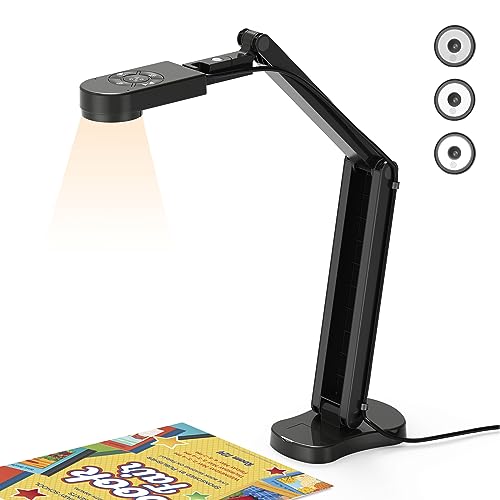
- Foldable A3-size design for classrooms and travel
- Three-level LED lighting and brightness buttons
- Dual microphones for video calls and lessons
Best For: First-time users needing flexible classroom and video-call use
Best Feature-Rich Option

- 10MP lens with 2160p, 1080p, and 720p modes
- Foldable A3-size arm for documents and 3D objects
- Autofocus, zoom, LED, reversal, and USB hub controls
Best For: Users wanting higher resolution and hands-on control
Best Value Beginner Pick
Compact 1944P USB Document Camera

- 3-in-1 document camera, visualizer, and webcam
- Three LED levels plus five exposure settings
- Foldable design with Windows, Mac, and Chromebook support
Best For: Teachers and remote presenters needing a compact, adjustable USB camera
Best for A3 Pages
8MP Autofocus Classroom Document Camera

- Covers materials up to A3 size
- 2448P capture with one-button autofocus
- Foldable stand with physical image-reversal controls
Best For: Classrooms displaying large documents and hands-on objects
Best for Hands-On Demos
INS-3 Handheld USB Document Camera

- Handheld design for flexible demonstrations
- 2K capture with dual-mode autofocus and LED light
- Documate software includes annotation, OCR, and 16X digital zoom
Best For: Presenters showing objects, artwork, models, and live demonstrations
Best Image Quality – IPEVO V4K
The IPEVO V4K is a strong choice for beginners seeking high-resolution document cameras for beginners. Its 8MP Sony CMOS sensor, autofocus, and high frame rates produce clear live demonstrations across Mac, Windows, and Chromebook setups.
Best For: Beginners who prioritize sharp image quality for teaching, demonstrations, and video conferencing.
Pros:
- Captures images up to 3264 x 2448 pixels with an 8MP sensor.
- Streams up to 30 fps in Full HD for smoother live demonstrations.
- Autofocus and a multi-jointed stand make frequent material changes easier.
- Works with Mac, PC, and Chromebook software.
Cons:
- Requires a USB connection and specific computer specifications for optimal streaming.
- Does not include optical or digital zoom.
The V4K is a practical beginner-friendly option when image clarity matters most. Its straightforward USB setup and broad compatibility make it suitable for classrooms and remote lessons, provided your computer meets the recommended requirements.
Best Feature Set – INSWAN INS-1
The INSWAN INS-1 gives beginners a flexible starting point among document cameras for beginners, combining 8MP imaging with a built-in LED, autofocus, microphone, and bundled software for annotations and recording.
Best For: New users who want built-in lighting, audio, and presentation tools in one compact setup.
Pros:
- 8MP Sony camera captures up to 3264 x 2448 pixels.
- Built-in LED, anti-glare sheet, and seven-segment brightness control help with difficult lighting.
- Autofocus and macro mode can capture objects as close as 3.9 inches.
- Includes software features such as annotation, digital zoom, rotation, snapshots, and recording.
Cons:
- Uses a USB-A cable, which may require an adapter with newer devices.
- Compatibility details vary by operating system version.
With more controls and accessories than a basic document camera, the INS-1 is approachable for beginners who expect to annotate, record, or show close-up objects. It is especially useful when lighting and built-in audio are important.
Best Portable Option – OKIOCAM S-4K
The OKIOCAM S-4K is a portable pick for beginners comparing document cameras for beginners. It combines an 8MP Sony Exmor R sensor with physical controls, a compact folding-style design, and OKIOPoint AI tracking for more engaging demonstrations.
Best For: Teachers and presenters who need a compact camera with convenient controls and interactive software.
Pros:
- Captures up to 3264 x 2448 pixels and streams Full HD at up to 30 fps.
- Four buttons provide quick focus, exposure, zoom, and image-flip adjustments.
- Can show letter-size materials in landscape orientation.
- Includes OKIOPoint visual-pointer tracking and software for annotation and recording.
Cons:
- Maximum-resolution streaming is limited to up to 15 fps.
- Digital zoom is limited to 6x.
The S-4K stands out when portability and presentation tools matter more than a large shooting area. Its physical controls simplify live adjustments, while OKIOPoint adds an optional interactive element for lessons and demos.
Best for Large Materials – Kitchbai 4K Visualiser
The Kitchbai KB-700 is designed for beginners who need a broad view from document cameras for beginners. Its foldable body, A3 coverage, adjustable lighting, and dual microphones support teaching, conferencing, and demonstrations in varied spaces.
Best For: Beginners who need to display larger documents or objects while keeping the camera portable.
Pros:
- 8MP sensor captures up to 2448p video at up to 30 fps.
- Wide coverage supports materials up to A3 size.
- Three brightness levels help compensate for dark or bright shooting conditions.
- Foldable multi-joint design and dual microphones suit portable setups and conferencing.
Cons:
- The supplied details describe manual zoom rather than a dedicated optical zoom.
- USB-C connectivity may require an adapter for some older computers.
- Brightness adjustment is described as three levels, offering less fine control than some models.
The KB-700 is a sensible beginner option when coverage and portability are priorities. Its large shooting area and adjustable lighting are useful for classrooms, while the foldable design helps conserve desk or storage space.
Best Large-Format Pick – OKIOCAM T-4K
For beginners comparing document cameras for beginners, the OKIOCAM T-4K is a compact USB option that prioritizes detailed capture and broad coverage. Its 8MP Sony sensor records up to 3264 × 2448 resolution, while the large viewing area can show ledger-size materials or an open book spread.
Best For: Teachers, tutors, and presenters who need portable, detailed capture of large documents, maps, artwork, or books.
Pros:
- Captures ledger-size materials with a maximum viewing area of 13.86 × 18.11 inches.
- 8MP Sony Exmor R sensor supports high-resolution images and improved low-light performance.
- Offers up to 30fps Full HD streaming and plug-and-play compatibility with Windows, Mac, iOS, and Chrome.
- Includes software features such as annotation, recording, snapshots, time-lapse, and OKIOPoint tracking.
Cons:
- Its maximum-resolution frame rate is up to 25fps rather than 30fps.
- Digital zoom is provided, with no optical zoom listed.
- The protective carrying pouch is optional.
The T-4K is a strong beginner-friendly choice when size, image detail, and software tools matter more than built-in audio or a standalone display.
Best All-Around Starter – THUSTAR 8MP 4K Document Camera
The THUSTAR is a practical entry point for people shopping for document cameras for beginners because it combines a foldable design with lighting, brightness controls, and built-in microphones. It supports high-definition live output and covers A3-size materials for classroom demonstrations or online teaching.
Best For: Beginners who want one foldable camera for documents, 3D objects, video calls, and distance learning.
Pros:
- 8MP camera supports up to 2448P output and 30fps live transmission.
- Three-level LED lighting and manual brightness controls help with uneven lighting.
- Foldable, multi-joint design supports flexible angles and easier storage.
- Built-in dual microphones are designed to reduce noise and improve sound quality.
Cons:
- Uses a USB 2.0 connection, which may offer less bandwidth than newer USB standards.
- The listed maximum coverage measurement is presented inconsistently in the specifications, though the product is described as supporting A3 paper.
- At approximately 0.84 kg, it is heavier than some compact document cameras.
With physical brightness controls, adjustable image reversal, integrated lighting, and broad software compatibility, the THUSTAR keeps setup approachable for first-time users.
Best Feature-Rich Option – TreasLin 10MP Document Camera
The TreasLin gives beginners choosing document cameras for beginners a flexible setup with a 10MP lens, multi-angle adjustment, and both autofocus and fixed-focus modes. It supports 4K-class output and includes controls for zoom, ISO, lighting, image reversal, and USB accessories.
Best For: Teachers, online instructors, and presenters who want higher-resolution capture plus extensive manual controls.
Pros:
- 10MP camera supports resolutions including 2160p, 1080p at 30fps, and 720p at 30fps.
- Foldable multi-joint arm covers A3-size materials and accommodates 2D or 3D objects.
- Supports Windows, Mac, Chromebook, Zoom, Teams, Google Meet, OBS, and other listed software.
- Provides autofocus and fixed-focus modes, image reversal, LED control, smooth zoom, and a USB 2.0 hub.
Cons:
- The highest listed 2160p mode is specified at 15fps, while 30fps is listed for lower resolutions.
- It connects through USB and may require more adjustment than a simpler fixed-function camera.
- The listed warranty is one year.
The TreasLin is appealing if you expect to move beyond basic document showing and want controls that can accommodate classroom demonstrations, art projects, live streams, and mixed media.
Best Value Beginner Pick – Compact 1944P USB Document Camera
If you’re choosing document cameras for beginners, this compact THUSTAND model offers a straightforward way to show papers, objects, and your face during online lessons. Its foldable, multi-jointed design, manual focus, and built-in lighting give new users useful control without requiring a large setup.
Best For: Teachers and remote presenters who want a space-saving USB camera with adjustable lighting and focus.
Pros:
- Combines a document camera, visualizer, and PC webcam in one device.
- Supports up to 1944P capture at up to 30 fps.
- Offers three LED brightness levels, five fill-light exposure levels, and image mirroring.
- Works with Windows, Mac, Chromebook, Zoom, and Google Meet.
Cons:
- Uses USB 2.0 connectivity.
- Manual focus may require more adjustment than a fully autofocus model.
- It is not water resistant.
This is a practical starting point for beginners who need versatile classroom or video-conferencing coverage in a compact body. The lighting controls and broad software compatibility add flexibility, while the manual-focus option rewards users who want precise image control.
Best for A3 Pages – 8MP Autofocus Classroom Document Camera
For beginners comparing document cameras for beginners, the PAKOTOO KB700 is designed for larger teaching materials and simple button-based control. It covers up to A3 paper, folds for storage, and includes autofocus, brightness adjustment, and image reversal features.
Best For: Classroom users who need to display large worksheets, books, artwork, or 3D objects.
Pros:
- Captures an area up to 16.5 by 11.6 inches, suitable for A3 materials.
- Provides 2448P resolution and one-button autofocus.
- Foldable, multi-joint design supports multiple viewing angles.
- Includes three brightness levels and ten exposure levels.
Cons:
- Not plug and play; users must select USB Camera in their computer settings.
- Does not support zoom or HDMI.
- Not compatible with iPad.
The KB700 makes a strong beginner option when coverage area matters more than advanced connectivity. Its autofocus and physical controls are approachable, but the setup step and lack of HDMI or iPad support should be considered before buying.
Best for Hands-On Demos – INS-3 Handheld USB Document Camera
If you want a flexible entry point into document cameras for beginners, the handheld INS-3 is built for demonstrations from different positions rather than fixed desk use. It combines 2K imaging, autofocus, a built-in microphone, lighting controls, and software tools for teaching and presentations.
Best For: Instructors and presenters who frequently show small 2D or 3D objects, models, artwork, or live demonstrations.
Pros:
- Handheld design allows demonstrations from almost any location.
- Captures 2560 by 1920 images and video at up to 30 fps.
- Includes LED lighting, anti-glare sheet, dual-mode autofocus, and seven-segment brightness control.
- Documate software adds 16X digital zoom, annotation, recording, OCR, scanning, and whiteboard tools.
Cons:
- Requires downloading the Documate software for its advanced tools.
- Digital zoom is provided rather than optical zoom.
- Its handheld format may require more active positioning than a fixed stand.
The INS-3 is the most demonstration-focused choice in this group. Beginners who want plug-and-play compatibility and room to expand into annotation, OCR, or recording will find it versatile, while users seeking a permanently positioned desk camera may prefer a stand-based design.
How We Picked the Best Document Cameras for Beginners
We focused on features that reduce setup time and make live demonstrations easier: USB compatibility, image quality, autofocus behavior, lighting, microphone support, portability, and physical flexibility. Because beginners may use different computers and teaching platforms, compatibility with Windows, macOS, Chromebooks, and common video apps was also important.
Resolution matters, but it is not the only measure of performance. A camera with dependable autofocus, even lighting, and a stable arm can be more useful than a higher-resolution model that is difficult to position. We also included models with A3 capture areas for larger worksheets, maps, artwork, and classroom materials.
Quick Comparison
| Feature | What to look for | Best for |
|---|---|---|
| Resolution | 8MP or 4K-class video | Readable text and detailed demonstrations |
| Capture area | A3 support when possible | Large pages, artwork, and objects |
| Focus | Autofocus with quick refocusing | Moving between pages and close-ups |
| Lighting | Built-in LED illumination | Dim rooms and consistent image quality |
| Connectivity | USB plug-and-play support | Beginners and multi-device use |
Key Buying Factors for Document Cameras for Beginners
Resolution and Image Clarity
Choose at least an 8MP camera if you regularly display small print, diagrams, or detailed artwork. A 4K-capable model can preserve more detail, but your computer, app, and internet connection must also support the higher-quality video.
Autofocus and Positioning
Autofocus is especially helpful when switching between flat documents and three-dimensional objects. Look for a flexible neck, folding design, or multi-angle adjustment so the camera can be aimed without repeatedly moving the material.
Lighting and Audio
Built-in LEDs help reduce shadows and improve visibility in classrooms or home offices. Integrated microphones are convenient for video calls, although a dedicated headset or external microphone may provide better sound for important lessons.
Software and Compatibility
A USB camera should work with platforms such as Zoom, Google Meet, Microsoft Teams, and classroom software, but check operating-system requirements before buying. Plug-and-play operation is preferable if you do not want to install specialized drivers.
Who Should Buy Which Document Cameras for Beginners?
Choose a compact handheld model if portability and quick setup matter most. A foldable A3-capable camera is a better fit for teachers who show full worksheets, books, or artwork. Choose a 4K model when fine text and detailed demonstrations are central to your lessons. If you frequently teach online, prioritize autofocus, built-in lighting, and a microphone; if you mainly present in person, image stability and a generous capture area may matter more.
For most first-time buyers, the best choice is a USB model with reliable autofocus, adjustable lighting, broad computer compatibility, and a design that folds for storage. Those features make Document Cameras for Beginners easier to use now while leaving room for more advanced classroom and presentation needs later.