
If you want easy control over multiple peripherals, a usb hub with individual power switches can be a simple upgrade. It lets you turn ports on and off one by one, which is helpful for saving power, reducing clutter, and disconnecting devices without unplugging cables.
In this roundup, we focus on practical hubs for desktops, laptops, and charging-heavy setups. Whether you need more data ports, stronger power delivery, or a mix of both, the best options below make everyday USB management much easier.
Best 10 USB Hub with Individual Power Switches Picks for 2026
Compact 4-Port Switch Hub
SABRENT 4-Port USB 3.0 Hub with Individual Power Switches

- 4 data ports with individual switches
- USB 3.0 up to 5Gbps
- 2 ft cable; plug and play
Best For: A compact data hub for PC and Mac users who want per-port control
Powered Charging Combo Hub
atolla 4-Port USB 3.0 Hub with Smart Charging
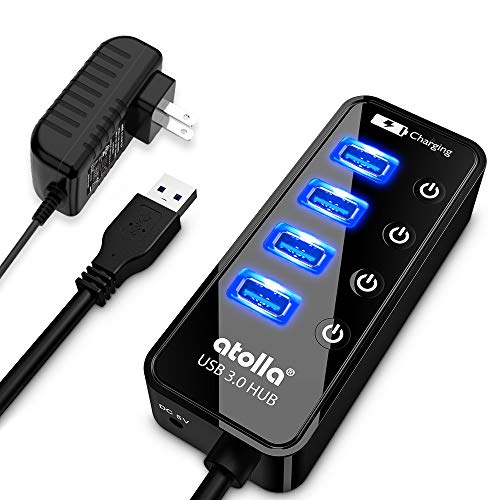
- 4 data ports plus 1 smart charging port
- Illuminated individual on/off switches
- Includes 5V/3A power adapter
Best For: Users who want data ports plus a charging port in one powered hub
Powered Portable Switch Hub
SABRENT 4-Port Powered USB 3.0 Hub

- 4 ports with LED power switches
- Includes 2.5A power adapter
- Compact, lightweight USB 3.0 hub
Best For: Portable desktop or laptop setups that need powered USB expansion
High-Capacity 7-Port Switch Hub
ONFINIO USB Hub 7 Port with Individual On/Off Switches

- Seven USB 3.0 ports
- Individual switches with indicator lights
- Plug and play with hot swapping
Best For: People who need maximum port expansion with per-port control
10-Port Power Control Hub
SABRENT 10-Port 60W Powered USB 3.0 Hub

- 10 USB 3.0 ports with 5Gbps transfer
- Individual switches and blue LEDs on every port
- Includes 60W adapter and plug-and-play setup
Best For: Large desktop setups that need per-port control and broad compatibility
8-Port Smart Charging Hub
atolla 8-Port USB 3.0 Data Hub Splitter

- 7 USB 3.0 data ports plus 1 smart charging port
- Individual on/off switches for each port
- Up to 5Gbps transfer with 5V/4A power adapter
Best For: Desk setups that need peripheral switching and one dedicated charging port
Hybrid 10Gbps Switch Hub
Rosonway 7-Port USB 3.2/USB C Hub

- Mixed USB-A and USB-C layout with 10Gbps support
- Individual switches and LED indicators on data ports
- Aluminum body with surge protection and 24W power supply
Best For: Mixed-device setups that need fast transfers and modern port variety
High-Capacity Desk Hub
10 Data Ports + Smart Charging

- 11 total ports with 10 USB 3.0 data connections
- Individual on/off switches with LED status lights
- Includes a 12V/3A adapter and long cables
Best For: Heavy desktop setups that need many ports and easy power control
Compact Metal Pick

- 4 USB 3.0 data ports plus 1 smart charging port
- Individual switches with LED indicators
- Aluminum body with included 5V/3A adapter
Best For: Small setups that want a compact powered hub with per-port control
Balanced Multi-Port Hub

- 7 USB 3.0 data ports and 4 smart charging ports
- Individual switches with soft blue LED lights
- Aluminum case with protection features
Best For: Users needing a durable hub with lots of ports and separate power control
Compact 4-Port Switch Hub – SABRENT 4-Port USB 3.0 Hub with Individual Power Switches
If you want a usb hub with individual power switches for a tidy desktop or laptop setup, this SABRENT 4-port model keeps things simple. It adds four USB 3.0 data ports, includes LED status indicators, and uses a 2 ft cable so you can place it where the ports are easiest to reach.
Best For: Users who want a compact, plug-and-play USB 3.0 hub for PC or Mac data devices.
Pros:
- Individual on/off switches with LED indicators for each port
- USB 3.0 data speeds up to 5Gbps, with backward support for USB 2.0 and 1.1
- 2 ft cable helps with flexible placement on a desk or near hard-to-reach ports
- Plug-and-play design with no driver required
Cons:
- Not intended for charging
- Only 4 ports, so it may feel limited for larger setups
This is a straightforward choice if your priority is quick access to ports and independent control over each connected device. It focuses on data expansion rather than power delivery, which keeps it practical for flash drives and similar peripherals.
Powered Charging Combo Hub – atolla 4-Port USB 3.0 Hub with Smart Charging
This usb hub with individual power switches is a useful pick if you want both data expansion and a dedicated charging option. The atolla hub offers four USB 3.0 data ports, one smart charging port, and includes a 5V/3A adapter to support powered use.
Best For: People who need a powered USB hub for syncing devices and charging a phone or tablet at the same time.
Pros:
- Four illuminated on/off switches for independent port control
- Includes one smart charging port with up to 2.4A output
- Comes with a 5V/3A AC power adapter for powered operation
- 5Gbps USB 3.0 data transfer and plug-and-play setup
Cons:
- Only one port is for smart charging, not all four
- Plastic enclosure may feel less premium than metal alternatives
For mixed workloads, this model stands out because it combines per-port switching with actual charging support. That makes it more versatile than a basic data-only hub, especially on crowded desks with multiple devices.
Powered Portable Switch Hub – SABRENT 4-Port Powered USB 3.0 Hub
If you need a usb hub with individual power switches and a little more power support, this SABRENT model is a strong fit. It adds four USB 3.0 ports, includes LED-lit switches for each port, and ships with a 2.5A power adapter for connected devices.
Best For: Laptop or desktop users who want a compact powered hub with independent port control.
Pros:
- Each port has its own LED power switch for independent control
- Powered design includes a 2.5A adapter
- USB 3.0 data speeds up to 5Gbps with backward compatibility
- Thin, lightweight body makes it easy to carry or place on a desk
Cons:
- Still limited to 4 ports
- Small plastic build may not suit users wanting a heavier-duty chassis
This hub is best viewed as a portable, powered expansion option rather than a high-capacity station. It balances per-port control, decent power support, and a compact footprint for everyday use.
High-Capacity 7-Port Switch Hub – ONFINIO USB Hub 7 Port with Individual On/Off Switches
For anyone shopping for a usb hub with individual power switches and more room to grow, this 7-port ONFINIO model is the largest option in the group. It converts one USB port into seven, supports USB 3.0 speeds up to 5Gbps, and keeps each port manageable with its own switch and indicator light.
Best For: Users who need the most ports for a laptop, desktop, or gaming setup.
Pros:
- Seven USB ports provide the most expansion in this roundup
- Individual on/off switches with lights help control each device
- USB 3.0 performance up to 5Gbps and backward compatibility
- Plug-and-play design with hot-swapping support
Cons:
- No included extra power supply is mentioned in the notes
- Larger port count can mean a bigger desktop footprint than 4-port models
This is the best choice if port count matters more than compactness. It gives you the most flexibility for peripherals like keyboards, flash drives, printers, and game console accessories while still keeping individual control simple.
10-Port Power Control Hub – SABRENT 10-Port 60W Powered USB 3.0 Hub
If you want a usb hub with individual power switches for a busy desk, this SABRENT model is built for straightforward control and high-capacity expansion. It turns one USB 3.0 port into 10 ports, supports up to 5Gbps data transfer, and includes blue LED indicators so you can quickly see which devices are active.
Best For: Users who need many USB ports with per-port switching for a PC, Mac, or Linux setup.
Pros:
- 10 USB 3.0 ports with up to 5Gbps transfer speeds
- Individual power switches and LED indicators on each port
- Includes a 60W 12V/5A power adapter, USB cable, and user manual
- Compatible with Windows, Mac OS, Linux, and backward-compatible USB 2.0/1.1 devices
Cons:
- Uses a basic ABS plastic enclosure rather than metal
- Designed for connectivity and control, not extra charging features
This is a practical choice if your priority is lots of ports plus easy device management. The combination of 10 ports, individual switches, and plug-and-play setup makes it well suited to peripherals, drives, and shared workstations.
8-Port Smart Charging Hub – atolla 8-Port USB 3.0 Data Hub Splitter
This usb hub with individual power switches is a good fit when you want to organize several peripherals and still keep one port available for charging. The atolla hub offers 7 USB 3.0 data ports plus a dedicated smart charging port, with individual on-off switches to let you leave only the devices you need powered up.
Best For: People who want a data hub for peripherals plus a dedicated charging port for phones and tablets.
Pros:
- 7 USB 3.0 data ports and 1 smart charging port
- Individual on/off switches for each USB port
- Up to 5Gbps data transfer with plug-and-play operation
- Includes a 5V/4A power adapter and 100cm hub cable
Cons:
- Built from plastic rather than metal
- Charging port is separate from the main data ports, so it is not an all-port charging hub
For a compact desk or laptop setup, this hub balances device control with everyday charging convenience. It is especially useful if you want to avoid unplugging peripherals while still having a dedicated port for mobile devices.
Hybrid 10Gbps Switch Hub – Rosonway 7-Port USB 3.2/USB C Hub
If you need a usb hub with individual power switches and faster modern connectivity, the Rosonway model stands out with a mixed port layout. It combines USB-A 3.2, USB-C 3.2, and USB-A 3.0 ports, supports data transfer up to 10Gbps, and uses individual switches with LED indicators on every super-speed data port.
Best For: Users with mixed USB-A and USB-C gear who want fast transfers and port-by-port control.
Pros:
- Hybrid layout with USB-A 3.2, USB-C 3.2, and USB-A 3.0 ports
- Individual on/off switches with LED indicators for each super-speed port
- Up to 10Gbps transfer speeds and plug-and-play setup
- Aluminum enclosure, surge protection, and a 24W certified power supply
Cons:
- Only the super-speed data ports are called out for switch control
- More specialized than a simple all-USB-A hub if you only need basic expansion
This is a strong pick for newer laptops, desktops, and gaming devices that mix USB-A and USB-C accessories. The faster 10Gbps support and metal build make it a more premium-feeling option for users who want both speed and control.
High-Capacity Desk Hub – 10 Data Ports + Smart Charging
If you want a USB hub with individual power switches for a busy desk, this 11-port Wenter model gives you a lot of flexibility. It combines 10 USB 3.0 data ports with 1 smart charging port, so it can handle accessories and charging without crowding your computer’s built-in connections.
Best For: Users who need lots of USB-A expansion, separate port control, and one dedicated charging port.
Pros:
- 10 USB 3.0 data ports plus 1 smart charging port
- Individual on/off switches with LED power indicators
- Up to 5Gbps transfer speed for supported devices
- Includes a 12V/3A power adapter and longer cables
Cons:
- Uses a plastic enclosure rather than metal
- Large port count may be more than some users need
- Smart charging is limited to a single dedicated port
This is a practical pick if your priority is maximum port count with easy per-port control. It is aimed at users who want to plug in a range of peripherals while turning ports off individually when they are not needed.
Compact Metal Pick – 4 Data Ports + Charging
This USB hub with individual power switches is a compact option for people who only need a handful of extra connections. The atolla hub adds 4 USB 3.0 data ports and 1 smart charging port, making it a simple fit for everyday peripherals and device charging at the same time.
Best For: Laptop and desktop users who want a smaller powered hub with per-port switches and a metal build.
Pros:
- 4 USB 3.0 data ports with up to 5Gbps transfer speeds
- Individual switches on each port with LED status indicators
- Aluminum alloy enclosure for a more premium design
- Includes a 5V/3A power adapter and 100cm cable
Cons:
- Fewer data ports than larger multi-device hubs
- Only one smart charging port is included
- May be too small for users with lots of USB accessories
Compared with larger hubs, this model keeps the footprint modest while still offering the convenience of individual switches. It is a straightforward choice if you want a cleaner desk setup and only need basic expansion.
Balanced Multi-Port Hub – 7 Data + 4 Charging Ports
If you need a USB hub with individual power switches and a stronger mix of data and charging ports, this Leinsis model is built for that role. It offers 7 USB 3.0 data ports and 4 smart charging ports, along with an aluminum case and a powered design for stable everyday use.
Best For: Users who want a durable powered hub with separate switches for many connected devices.
Pros:
- 7 USB 3.0 data ports plus 4 smart charging ports
- Individual switches on each port with LED lights
- Aluminum housing and over-voltage/over-current protection
- Includes USB-A cable, USB-C adapter, and longer power cable
Cons:
- More complex layout than basic hubs
- Charging and data ports are mixed into one larger unit
- May be more hub than needed for minimal setups
This is the most balanced option of the three if you want both data expansion and charging capacity. Its per-port switches make it easier to manage multiple accessories without unplugging them.
How We Picked the Best USB Hub with Individual Power Switches
We prioritized hubs that combine individual port control with useful real-world features like powered operation, stable build quality, adequate port counts, and a mix of USB-A and USB-C options where available. Since a USB Hub with Individual Power Switches is often used for multiple accessories, we also looked for models that appear suited to keyboards, mice, flash drives, card readers, webcams, and light charging tasks.
Quick Comparison
Short on ports? A 4-port model is usually best for minimal desk setups. Need flexibility? 7- to 11-port hubs are better for creators, office users, and home labs. If you care more about charging than data, choose a powered hub with a dedicated charging port. If you need modern connectivity, a USB-C-equipped hub or a USB 3.2 option is worth considering.
Key Buying Factors for a USB Hub with Individual Power Switches
Port Count and Layout
Choose the smallest hub that still covers your devices. More ports are useful, but only if they’re easy to reach and clearly labeled.
Power Delivery
Powered hubs are generally the better choice for multiple accessories, busier setups, or any device that may draw more current. Look at the adapter rating and whether the hub includes a dedicated charging port.
Data Speed
For drives, cameras, and faster peripherals, USB 3.0 or USB 3.2 matters. For basic accessories, speed is less critical, but it still helps with future-proofing.
Switch Quality and Indicators
Individual switches should be easy to toggle and clearly visible. LED indicators are helpful for confirming what’s on at a glance, especially on a crowded desk.
Build and Cable Practicality
Metal housings can improve durability and heat handling, while compact plastic models may be better for travel. Cable length and hub size also matter if you plan to keep it within arm’s reach.
Who Should Buy Which USB Hub with Individual Power Switches?
If you want a simple desk hub for a few peripherals, a compact 4-port option is enough. If you use several drives, accessories, or shared devices, move up to a 7-, 8-, 10-, or 11-port powered model. If your setup includes newer laptops or mixed USB-C gear, choose a hub with USB-C ports and higher-speed connections. For the most convenient everyday use, pick the model that balances port count, power, and switch visibility rather than chasing the biggest number alone.