
The right projector screen can make a bigger difference than upgrading the projector itself. Screen size, aspect ratio, portability, setup style, and surface quality all affect how bright, sharp, and enjoyable your image looks.
We selected 10 projector screens suited to different viewing spaces and budgets, from compact foldable models and pull-down screens to inflatable and 150-inch outdoor setups.
Best 10 Projector Screens Picks for 2026
Best Foldable Screen
Mdbebbron 120-Inch Projector Screen

- Large 120-inch 16:9 viewing area
- Foldable 1.7-pound portable design
- Front and rear projection support
Best For: Flexible home theater and outdoor setups
Best for Backyard Events
XHYCPY 16-Foot Inflatable Movie Screen

- Expansive 16-foot outdoor display
- Front and rear projection support
- Includes blower, stakes, and carry bag
Best For: Backyard movie nights and large gatherings
Best Pull-Down Screen
Elite Screens Manual B 100-Inch

- 100-inch 16:9 pull-down design
- 4K, 8K, HDR, and 3D-ready material
- 180-degree viewing angle
Best For: Dedicated home theaters and presentation rooms
Best Tripod Screen
VISULAPEX 80-Inch Portable Projector Screen

- Quick under-three-minute assembly
- Adjustable freestanding tripod design
- 1.2-gain fiberglass 4K-ready surface
Best For: Portable indoor and outdoor movie viewing
Best Budget Pick
100-Inch Foldable Projector Screen
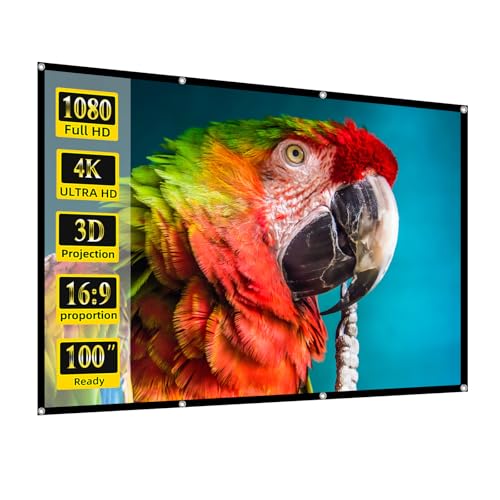
- Lightweight 16:9 polyester design
- Includes basic hanging accessories
- Best in dark, temporary setups
Best For: Budget-conscious casual viewing, camping, and backyard movie nights
Best for Secure Backyard Viewing
STWUI 120-Inch Stake-Down Screen

- Stake-ready weighted base
- Front and rear projection
- Tool-free setup with carry bag
Best For: Stable outdoor movie nights and camping
Best Foldable Screen – Mdbebbron 120-Inch Projector Screen
If you need projector screens for flexible indoor or outdoor viewing, the Mdbebbron 120-inch model emphasizes portability and simple installation. Its foldable polyester design supports front or rear projection and packs into a compact size for travel.
Best For: Home theaters, presentations, and outdoor movie setups where easy storage and a large viewing area matter.
Pros:
- Large 120-inch, 16:9 viewing area measuring 104 by 58 inches.
- Lightweight 1.7-pound design folds for storage in a backpack or suitcase.
- Supports front and rear projection with a 160-degree viewing angle.
- Can be attached with hooks, ropes, nails, brackets, or double-sided tape.
Cons:
- Does not include a dedicated stand or frame.
- Manual mounting requires choosing and supplying your preferred hardware.
This is a practical pick when a large, washable screen takes priority over a rigid installation. The flexible mounting options make it adaptable, but setup is less structured than with a framed or tripod model.
Best for Backyard Events – XHYCPY 16-Foot Inflatable Movie Screen
Among projector screens designed for outdoor gatherings, the XHYCPY 16-foot inflatable model stands out for its expansive floor-mounted format. The included blower inflates it in about two minutes, while the double-sided screen supports front or rear projection.
Best For: Backyard movie nights, parties, camping, and other events that need a very large freestanding display.
Pros:
- Huge 16-foot screen with a 16:9 ratio and 160-degree viewing angle.
- Supports both front and rear projection.
- Includes blower, tethers, stakes, frame, and carry bag.
- Removable screen and frame can be machine washed separately.
Cons:
- The 110V blower must remain plugged in during use.
- Requires outdoor anchoring with stakes and tethers for setup.
- Its large size may not suit smaller yards or indoor spaces.
This screen is built for spectacle rather than compact convenience. It offers a complete outdoor setup and exceptional size, but plan for continuous blower power and adequate room for anchoring.
Best Pull-Down Screen – Elite Screens Manual B 100-Inch
For a more permanent presentation setup, the Elite Screens Manual B provides a conventional wall- or ceiling-mounted option among projector screens. Its 100-inch 16:9 MaxWhite 2 surface is designed for 4K, 8K, Ultra HD, HDR, and active 3D front projection.
Best For: Home theaters, offices, and presentation rooms that need adjustable pull-down operation and a fixed mounting location.
Pros:
- 100-inch 16:9 viewing area measuring 49 by 87.2 inches.
- 180-degree viewing angle and 1.1 gain surface.
- Two-inch interval auto-lock mechanism supports varied height settings.
- Includes a two-year parts-and-labor warranty and lifetime technical support.
Cons:
- At 14.2 pounds, it is less portable than foldable screens.
- Mounting hardware or optional L brackets may be needed for installation.
- Designed for front projection rather than double-sided use.
This is a strong choice when you want repeatable, tidy operation instead of a screen you carry between locations. Its pull-down case suits dedicated rooms, while the adjustable locking mechanism adds placement flexibility.
Best Tripod Screen – VISULAPEX 80-Inch Portable Projector Screen
The VISULAPEX 80-inch model offers a middle ground between flexible projector screens and permanent installations. Its tripod frame assembles in under three minutes, and the included carrying bag makes it suitable for indoor rooms, travel, and outdoor movie nights.
Best For: Users who want a freestanding screen with quick setup, adjustable height, and easy transport.
Pros:
- 80-inch 16:9 screen with a stated 70 by 39-inch viewing area.
- Tripod height adjusts from 59 to 89 inches floor-to-bottom.
- 1.2-gain fiberglass surface supports vibrant 4K image reproduction.
- Weighs about 8.5 pounds and includes a carrying bag.
Cons:
- Its 80-inch size is smaller than the supplied 120-inch and 16-foot alternatives.
- Indoor placement requires space wider than 70 inches and taller than 89 inches.
- Tripod setup needs floor space and a reasonably stable location.
This model is a sensible portable option when you prefer a supported frame over wall mounting. It is easier to position than a hanging screen, while remaining compact enough for travel and storage.
Best Budget Pick – 100-Inch Foldable Projector Screen
For shoppers seeking affordable projector screens for occasional movie nights, this lightweight 100-inch model emphasizes portability and simple wall mounting. Its 16:9 polyester surface folds into a backpack, making it practical for temporary indoor or outdoor setups.
Best For: Camping, backyard movie nights, casual family viewing, and temporary wall-mounted setups in dark environments.
Pros:
- Lightweight, foldable design is easy to pack and transport.
- 100-inch 16:9 viewing area with a 160-degree viewing angle.
- Includes ropes, hooks, and double-sided tape for flexible installation.
- Budget-friendly option for casual use.
Cons:
- Thin material performs best in completely dark rooms or against an opaque wall.
- Creases may be present on arrival and require stretching or low-heat ironing.
- Stand, bracket, and carry bag are not included.
This is a value-focused screen rather than a heavy-duty home theater solution. Choose it when compact storage and low cost matter more than a permanently smooth, premium installation.
Best Large Portable Setup – 120-Inch Outdoor Projector Screen
This 120-inch STWUI model is designed for shoppers who want large projector screens with a freestanding setup for indoor or outdoor viewing. The washable milk-silk surface supports front and rear projection, while the included metal frame and carry bag make transport practical.
Best For: Outdoor movie nights, camping, weddings, schools, offices, churches, and other group events needing a large freestanding display.
Pros:
- Large 120-inch 16:9 screen for group viewing.
- Washable, foldable surface supports front and rear projection.
- Improved weighted chassis and compatible floor-nail holes help with stability.
- Tool-free frame assembly and included storage bag support portability.
Cons:
- The larger screen and stand require more setup space than compact wall-hanging models.
- Although assembly is designed to take about nine minutes, it still involves multiple frame components.
- Warranty coverage is listed as 30 days.
Its combination of a large viewing area, freestanding frame, and washable screen makes it a strong choice for shared viewing. Use additional stabilization outdoors when conditions are windy.
Best Stabilized Tripod Option – 100-Inch Projector Screen with Stand
Among portable projector screens, the TOWOND 100-inch model stands out for its tripod-based setup and included outdoor stabilization accessories. Its thicker polyester milk-silk surface is foldable, washable, and designed for both front and rear projection.
Best For: Home backyard theaters, camping, school or office events, and buyers who want a portable stand with added outdoor support.
Pros:
- Tripod design sets up quickly without tools.
- Thicker, wrinkle-free polyester surface supports front and rear projection.
- Includes a carry bag, sandbag, ground nails, and windproof ropes.
- 160-degree viewing angle and 16:9 format suit group viewing.
Cons:
- At about 7.5 pounds, it is less lightweight than a screen-only option.
- Outdoor stability depends on correctly using the sandbag, ropes, and ground stakes.
- No warranty is listed in the supplied product details.
This package is a practical middle ground for shoppers who want a portable 100-inch screen without relying on a wall. Follow the setup guidance carefully, especially outdoors, to keep the tripod and screen stable.
Best for Secure Backyard Viewing – STWUI 120-Inch Stake-Down Screen
For shoppers comparing projector screens for outdoor movie nights, the STWUI 120-inch model stands out for its stake-down base and wind-resistance setup. Its 16:9 matte screen supports front and rear projection, while the lightweight frame packs into the included carry bag.
Best For: Backyard screenings, camping, and other outdoor setups where added ground fixation is useful.
Pros:
- Widened base plate includes holes for ground stakes, reducing the need for heavy sandbags.
- Steel frame, four stakes, and two windproof ropes provide added outdoor stability.
- Elastic, wrinkle-free 120-inch screen offers a 160-degree viewing angle and supports front or rear projection.
- Tool-free modular assembly is designed to take about eight minutes.
Cons:
- The 120-inch screen is smaller than the two 150-inch alternatives in this roundup.
- Its 30-day warranty description is relatively limited.
Choose this screen if outdoor stability and portability matter more than having the largest possible image. The stake-ready base is especially practical for grass or soil, while the compact carry bag keeps transport manageable.
Best for Extra-Large Flexible Viewing – TOWOND 150-Inch Screen
If you want projector screens with a particularly large image, this TOWOND model provides a 150-inch display with a foldable stand and wrinkle-free polyester fabric. It supports both front and rear projection and includes stakes, ropes, and a storage bag for indoor or outdoor use.
Best For: Large backyard cinema setups, sports viewing, events, and presentations where a broad image is the priority.
Pros:
- Large 150-inch diagonal screen with a 160-degree viewing angle.
- Supports 16:9 and 1:1 aspect ratios for movies, games, photos, and presentations.
- Tool-free stand assembly is designed to take about five minutes.
- Includes six ground nails, six ropes, brackets, cross bars, and a carry bag.
Cons:
- At 11.5 pounds, it is substantially heavier than the 3-pound STWUI model.
- Indoor use requires a room wider than 140 inches according to the supplied notes.
- The listing specifies no warranty.
This is a strong pick when screen size is the deciding factor. Before buying, measure your indoor space carefully, since the 130-inch-wide screen dimensions require considerable room.
Best for Big-Screen Portability – FvcDmik 150-Inch Outdoor Screen
For buyers seeking portable projector screens with a cinematic footprint, the FvcDmik offers a 150-inch 16:9 display designed for indoor and outdoor use. Its foldable polyester screen, iron frame, ground nails, ropes, and heavy-duty carry bag target quick setup for movie nights, sports, gaming, and presentations.
Best For: Users who want a large, foldable screen for backyard cinema, parties, campsites, or presentations.
Pros:
- 150-inch 16:9 screen is designed for a large cinematic viewing experience.
- Anti-crease, thick polyester material is described as wrinkle-free, opaque, and easy to clean.
- Iron frame, ground nails, and rigging ropes help support outdoor stability in light winds.
- Tool-free assembly and a heavy-duty carry bag support travel and storage.
Cons:
- The supplied details do not specify a viewing angle, warranty, or front/rear projection support.
- Its listed item dimensions are 150 inches by 150 inches, so available setup space should be checked.
Consider this model if you want a large screen with straightforward portability and outdoor anchoring. Its feature set is broad, but shoppers needing rear projection or precise viewing-angle specifications may prefer a listing with those details clearly stated.
How We Picked These Projector Screens
We focused on screen formats that cover the most common home theater and outdoor viewing needs. The selection includes portable screens with stands, foldable fabric screens, manual pull-down designs, and an inflatable model for large backyard events. We also considered advertised size, 16:9 compatibility, front- and rear-projection support, wrinkle resistance, included accessories, and how easily each screen can be transported or stored.
Because projector performance depends heavily on room lighting and installation, no single screen is ideal for every buyer. The best choice balances image area with stability, setup time, viewing distance, and the space available.
Quick Comparison of the Best Projector Screens
| Screen type | Best for | Main advantage | Potential trade-off |
|---|---|---|---|
| Foldable portable | Flexible indoor and outdoor use | Easy to pack and store | May need careful tensioning |
| Screen with stand | Backyard movies and temporary setups | Fast freestanding installation | Requires a level, stable surface |
| Manual pull-down | Dedicated rooms or offices | Neater permanent installation | Less portable |
| Inflatable | Large outdoor events | Very large viewing area | Needs continuous blower power |
| 150-inch portable | Large groups and long viewing distances | Immersive image size | More setup space and wind exposure |
Key Buying Factors for Projector Screens
Size and Viewing Distance
A larger screen is not automatically better. Choose a size that fits the wall, yard, or room while leaving enough distance for viewers to see the full image comfortably. Large 120- to 150-inch screens work best when the audience can sit well back from the surface.
Aspect Ratio and Projector Compatibility
A 16:9 screen is the standard choice for movies, streaming services, gaming, and most modern projectors. Check the projector’s native resolution and placement before buying so the image fills the screen without excessive cropping or unused borders.
Screen Material and Image Quality
Look for a smooth, evenly tensioned surface that minimizes wrinkles and hot spots. A higher-gain material may help in rooms with limited brightness, but wide viewing angles and uniformity can matter more for groups watching from different positions.
Setup, Stability, and Storage
For outdoor use, prioritize sturdy frames, tie-down points, stakes, or a weighted base. Portable screens should include a carry bag and pack small enough for your storage space. An inflatable screen can create a large image quickly, but it requires access to power and protection from strong wind.
Front Versus Rear Projection
Front projection is the simplest option and works in most rooms and yards. Rear projection can keep the projector out of the audience’s way, but it requires extra space behind the screen and a compatible screen surface.
Who Should Buy Which Projector Screens?
- For occasional movie nights: Choose a foldable screen with a stand that is quick to assemble and easy to store.
- For a dedicated home theater: A manual pull-down screen offers a clean installation and convenient everyday use.
- For backyard gatherings: Select a freestanding outdoor model with secure anchoring and a wrinkle-resistant surface.
- For the biggest audience: A 150-inch or inflatable screen provides a more immersive view, provided you have enough space and suitable weather conditions.
- For mixed indoor and outdoor use: A portable 100- or 120-inch 16:9 screen offers a practical balance of image size, transportability, and setup flexibility.