
Finding the right monitor position is especially important for taller users. A wall mount can raise the screen to a more natural eye level, free desk space, and provide the reach needed to avoid leaning forward.
This roundup compares 10 monitor wall mounts for tall people, from extra-long single arms to heavy-duty ultrawide and dual-monitor systems. Pay close attention to arm length, wall construction, VESA compatibility, monitor weight, and adjustment range before buying.
Best 10 Monitor Wall Mounts for Tall People Picks for 2026
Best Heavy-Duty Ultrawide Mount

- Holds ultrawide screens up to 49 inches
- Supports up to 44 pounds
- Extends 10.5 inches and folds flat
Best For: Large ultrawide monitors and sturdy wall-mounted setups
Best Dual-Monitor Mount

- Supports two monitors up to 32 inches
- Holds 17.6 pounds per arm
- Offers tilt, swivel, and 360° rotation
Best For: Dual-monitor standing or ergonomic workstations
Best Height-Adjustable Mount

- Offers 6.3 inches of height adjustment
- Supports monitors up to 49 inches
- Provides 360° rotation and broad tilt range
Best For: Standing desks and users prioritizing vertical screen placement
Long-Reach Desk Saver
Extra-Long Single Monitor Wall Mount
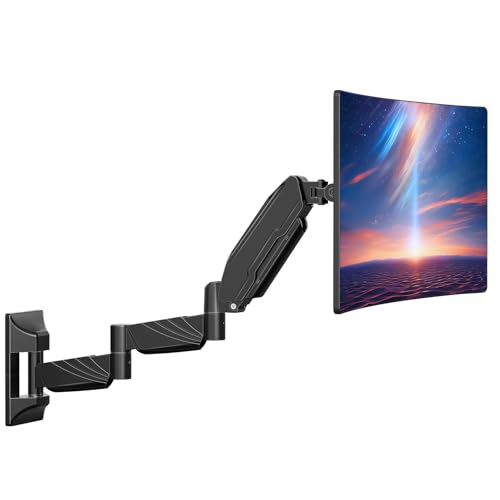
- 27.97-inch arm expands viewing and placement options
- Supports 17-32-inch monitors up to 17.6 pounds
- Full-motion adjustment with cable management
Best For: Tall users with small desks needing extra reach for one monitor
Tall Dual-Screen Adjuster
17-40-Inch Dual Monitor Wall Mount

- 31.5-inch pole expands vertical adjustment
- Holds two monitors up to 40 inches and 26.4 pounds each
- Arms extend 21.7 inches with full-motion positioning
Best For: Tall users needing dual, stacked, or mixed-size monitor support
Compact Height Flexibility

- 12.2-inch height adjustment for ergonomic positioning
- Extends 20.47 inches and retracts to 3.54 inches
- Supports 13-34-inch monitors up to 19.8 pounds
Best For: Tall users with compact, corner, or wall-side workspaces
Best Ultrawide Pick

- Supports 17-49-inch monitors up to 44 pounds
- Offers 10 inches of height adjustment and 23.9-inch extension
- Best suited to securely mounted ultrawide displays
Best For: Tall users with heavy ultrawide or curved monitors
Best Standard-Screen Value
VIVO Single Monitor Wall Mount
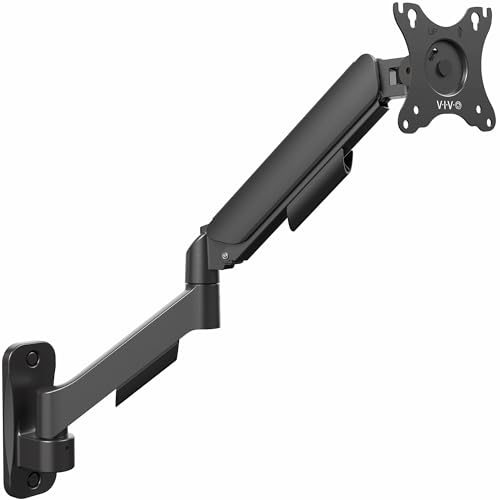
- Holds screens up to 32 inches and 19.8 pounds
- Spring-assist arm supports ergonomic height adjustment
- Includes broad tilt, swivel, and rotation control
Best For: Standard-monitor users seeking flexible positioning
Best Compact Option

- Fits 13-32-inch monitors up to 14.3 pounds
- Extends 17.1 inches with full-motion adjustment
- Designed for single-stud or solid-wall installation
Best For: Compact workstations with lighter monitors
Best Extended-Reach Mount – Extra-Long Single Monitor Arm
If you are comparing monitor wall mounts for tall people, this MOUNT PRO model stands out for its 25.67-inch extension and pneumatic height adjustment. It can also retract to 3.17 inches, making it useful when you need either a close-to-wall setup or more flexible viewing distance.
Best For: Tall users, corner workspaces, and single-monitor setups that need substantial reach and positioning flexibility.
Pros:
- Extends up to 25.67 inches and retracts to 3.17 inches.
- Pneumatic spring adjustment helps position the screen at a comfortable height.
- Supports 13- to 32-inch monitors weighing 4.4 to 17.6 pounds.
- Offers 360° rotation, ±90° swivel, and +90°/-45° tilt.
Cons:
- Not compatible with 1000R, 1500R, or 1800R curved screens.
- Must be installed into a wood stud, solid concrete, or brick—not drywall alone.
The unusually long arm makes this a strong choice when standard mounts leave a tall desk user reaching or looking downward. Verify the wall structure and monitor specifications before installation.
Best Heavy-Duty Ultrawide Mount – VIVO 49-Inch Wall Mount
For shoppers seeking monitor wall mounts for tall people with an ultrawide display, this VIVO mount combines support for screens up to 49 inches with a sturdy 44-pound capacity. Its articulating arm extends 10.5 inches and folds flat when you want a more compact setup.
Best For: Large ultrawide monitors and users who want a strong, space-conscious wall mount.
Pros:
- Supports most ultrawide monitors up to 49 inches and 44 pounds.
- Extends up to 10.5 inches and collapses close to the wall.
- Provides tilt, swivel, and screen-leveling adjustments.
- Includes integrated cable management.
Cons:
- Height adjustment is not specifically listed in the supplied specifications.
- Limited to VESA 75x75mm and 100x100mm mounting patterns.
This is a practical pick for a heavy ultrawide display where stability matters more than extreme arm reach. Its extension can improve viewing distance, though users needing a significant height lift may prefer a mount with explicit vertical adjustment.
Best Dual-Monitor Mount – HUANUO Ergonomic Wall Stand
This HUANUO model is a useful option among monitor wall mounts for tall people who need two screens raised for sitting or standing work. It supports two monitors up to 32 inches each and provides broad tilt, swivel, and rotation adjustments for ergonomic positioning.
Best For: Dual-monitor home offices and gaming setups where both screens need flexible ergonomic adjustment.
Pros:
- Holds two monitors up to 32 inches and 17.6 pounds per arm.
- Supports ±90° swivel, +35°/-35° tilt, and 360° rotation.
- Can be installed on wood studs, solid concrete, or brick.
- Includes cable management and supplied installation hardware.
Cons:
- Requires suitable structural mounting; drywall alone is not listed as compatible.
- Each monitor must use a 75x75mm or 100x100mm VESA pattern.
The dual-arm design makes it easier to create a raised workstation while keeping the desktop clear. It is especially compelling when you want portrait or landscape flexibility across both displays, but confirm the weight and VESA details for each monitor.
Best Height-Adjustable Mount – VIVO Ultrawide Wall Bracket
If vertical positioning is your priority, this VIVO mount is one of the more targeted monitor wall mounts for tall people. It provides 6.3 inches of height adjustment, supports displays up to 49 inches, and can rotate between portrait and landscape orientations.
Best For: Standing workstations and large monitors that need quick vertical repositioning.
Pros:
- Provides 6.3 inches of height adjustment.
- Supports screens from 17 to 49 inches.
- Offers +50°/-45° tilt, 40° swivel, and 360° rotation.
- Maintains a low-profile 4.25-inch distance from the wall.
Cons:
- Weight capacity varies by mounting method: up to 44 pounds on wood studs or 17.6 pounds on drywall only.
- Its 6.3-inch vertical range may be less than some tall users need.
The built-in height adjustment directly addresses the main challenge of setting a wall-mounted screen high enough for standing use. Choose the mounting surface carefully, particularly if using a heavier ultrawide monitor.
Long-Reach Desk Saver – Extra-Long Single Monitor Wall Mount
For shoppers comparing monitor wall mounts for tall people, this ErgoFocus model stands out for its 27.97-inch arm, giving you more freedom to position a single display at a comfortable distance and height. It supports 17- to 32-inch monitors weighing up to 17.6 pounds, provided the wall and VESA pattern are suitable.
Best For: Tall users with small desks who want a long-reach, single-monitor mount that can free substantial workspace.
Pros:
- Extra-long 27.97-inch arm helps expand monitor placement options.
- Full motion includes 360-degree rotation, +90/-45-degree tilt, and +/-90-degree swivel.
- Supports VESA 75×75 and 100×100 patterns and many 17- to 32-inch flat or curved displays.
- Hidden cable channels and included installation tools help maintain a tidy setup.
Cons:
- Must not be installed into drywall alone.
- Does not support ultra-curved 1000R, 1500R, or 1800R screens.
- Single-arm design is limited to one monitor.
The unusually long arm is the main reason to consider this mount for a tall-person workstation, especially when you need to pull the screen forward without using desk space. Confirm the monitor weight, VESA pattern, and wall structure before installation.
Tall Dual-Screen Adjuster – 17-40-Inch Dual Monitor Wall Mount
Among monitor wall mounts for tall people, this PUTORSEN model is designed around vertical flexibility: its 31.5-inch pole provides more height adjustment for dual monitors, stacked screens, or mixed-size displays. Each gas-spring arm supports up to 26.4 pounds and extends as far as 21.7 inches.
Best For: Tall users building a dual-monitor, stacked-monitor, or mixed-size workstation that needs broad vertical adjustment.
Pros:
- 31.5-inch pole offers expanded height adjustment for more ergonomic screen positioning.
- Supports two 17- to 40-inch monitors, with up to 26.4 pounds per arm.
- Full motion includes tilt, +/-90-degree swivel, +/-180-degree rotation, and up to 21.7-inch extension.
- Wall mounting frees desk space, while cable management keeps the setup cleaner.
Cons:
- Installation is intended for wood studs, concrete, or brick rather than drywall alone.
- Any VESA adapter weight counts toward the 26.4-pound capacity and may affect performance.
- Its dual-monitor configuration may be more mount than needed for a single-screen setup.
The tall center pole makes this the most purpose-built option here for elevated or stacked displays. Check each monitor’s actual weight, VESA compatibility, and the wall material before choosing it for a demanding dual-screen arrangement.
Compact Height Flexibility – ErGear Full-Motion Single Arm
This ErGear wall mount is a practical choice when monitor wall mounts for tall people also need to fit a tight workspace. Its single arm provides 12.2 inches of height adjustment, extends to 20.47 inches, and retracts to 3.54 inches, making it easier to bring a screen forward or tuck it away.
Best For: Tall users with wall-side desks, thick desktops, corners, or compact workspaces who need adjustable height without a desk clamp.
Pros:
- 12.2-inch height range helps fine-tune monitor placement.
- Extends to 20.47 inches and retracts to 3.54 inches for flexible workspace management.
- Full motion includes +80/-50-degree tilt, +/-90-degree swivel, and 360-degree rotation.
- Supports 13- to 34-inch monitors up to 19.8 pounds with VESA 75×75 or 100×100 patterns.
Cons:
- Supports only one monitor.
- Its 12.2-inch height range is less extensive than the dual-monitor model’s tall pole.
- Do not mount it to drywall alone.
The combination of useful height adjustment and a compact retracted depth makes this mount well suited to smaller rooms and tight desk layouts. It is a sensible single-monitor option when you want wall-mounted stability without desktop thickness or clamp-clearance restrictions.
Best Ultrawide Pick – ARES WING 49-Inch Monitor Arm
If you need monitor wall mounts for tall people and use a large ultrawide display, the ARES WING offers a broad adjustment range. It supports 17- to 49-inch screens up to 44 pounds, with 10 inches of height adjustment, 23.9 inches of extension, and full-motion positioning for a more comfortable workstation.
Best For: Tall users with heavy ultrawide or curved monitors who need substantial reach and height flexibility.
Pros:
- Supports monitors up to 49 inches and 44 pounds, including 1000R curved screens.
- Provides 10 inches of height adjustment, 180-degree swivel, 360-degree rotation, and +50/-20-degree tilt.
- Folds to about 5 inches from the wall and includes cable management.
- Uses a steel-and-aluminum build with an internal gas spring tested for 20,000-plus fatigue cycles.
Cons:
- Requires secure mounting to a wood stud, solid concrete, or brick; drywall-only installation is not advised.
- Displays without VESA holes require a separate VESA adapter.
For large screens and taller seating positions, this is the most capable option in the group. Its high weight capacity and generous extension make it especially versatile, though installation requires a properly supported wall.
Best Standard-Screen Value – VIVO Single Monitor Wall Mount
For shoppers comparing monitor wall mounts for tall people with a standard-size screen, the VIVO MOUNT-V001G combines spring-assisted height adjustment with extensive articulation. It holds monitors up to 32 inches and 19.8 pounds, making it a practical fit for many home and office setups.
Best For: Users with standard monitors who want easy height adjustment and broad viewing-angle control.
Pros:
- Supports screens up to 32 inches and 19.8 pounds with 75x75mm or 100x100mm VESA patterns.
- Spring-assist arm helps counterbalance the monitor for ergonomic height adjustment.
- Offers +90/-90-degree tilt, 180-degree swivel, and 360-degree rotation.
- Includes hardware for wood-stud and concrete/brick installation plus cable-management covers.
Cons:
- Its 19.8-pound capacity and 32-inch limit are less suitable for large ultrawide displays.
- Should not be installed on drywall alone.
The VIVO is a balanced choice when you want strong articulation without stepping up to an ultrawide-rated arm. Its counterbalance design is useful for raising or lowering the screen, while the installation requirements should be confirmed before purchase.
Best Compact Option – Mount-It! MI-765 Monitor Arm
If you want monitor wall mounts for tall people in a compact workstation, the Mount-It! MI-765 provides gas-spring height adjustment and full-motion positioning for 13- to 32-inch monitors. Its 17.1-inch extension can help bring the display forward for a more comfortable viewing position.
Best For: Home offices, study areas, gaming setups, and RV workstations using a lighter single monitor.
Pros:
- Fits most 13- to 32-inch monitors up to 14.3 pounds with 75x75mm or 100x100mm VESA patterns.
- Extends up to 17.1 inches and supports +90/-45-degree tilt, 180-degree swivel, and 360-degree rotation.
- Gas-spring adjustment, integrated cable management, and included installation hardware simplify setup.
- Mounts to a single wood stud or solid concrete wall and includes US-based technical support.
Cons:
- The 14.3-pound capacity is too limited for heavier monitors.
- Installation is not intended for drywall-only mounting.
- Its listed screen range and extension are less suited to very large ultrawide displays.
The MI-765 is a sensible space-saving choice when your monitor is relatively light and you need forward reach. Its motion range can help taller users fine-tune viewing height, but heavier screens call for a stronger arm.
How We Picked These Monitor Wall Mounts for Tall People
We focused on mounts that can place a display higher and farther from the wall than a basic short arm. The selection includes single-monitor, dual-monitor, and ultrawide models covering common screen sizes from 13 to 49 inches. We also considered stated weight limits, VESA compatibility, motion range, height adjustment, and whether the design suits gaming, office work, or mixed use.
Because wall mounting transfers the load to the installation surface, advertised capacity is only part of the decision. A mount rated for a heavy display still requires suitable hardware, careful stud placement, and a secure installation.
Quick Comparison
- Best for extra reach: Extra-long single-arm models such as the MOUNT PRO and Extra Long Arm options.
- Best for ultrawide screens: VIVO and ARES WING mounts rated for displays up to 49 inches.
- Best for two monitors: HUANUO and 17–40-inch dual-arm mounts.
- Best for lighter monitors: Mount-It! and compact VIVO or ErGear single-arm models.
- Best for flexible positioning: Full-motion gas-spring arms with tilt, swivel, rotation, and height adjustment.
Key Buying Factors for Monitor Wall Mounts for Tall People
Reach and Height Range
Tall users should check both the arm’s maximum extension and its vertical adjustment. A long arm helps position the screen at the correct viewing distance, while a broad height range makes it easier to align the top of the display near eye level without excessive neck tilt.
Monitor Size, Weight, and VESA Pattern
Confirm the screen’s diagonal size and weight—including any accessories—against the mount’s limits. Most products here use VESA 75×75 or 100×100 mounting patterns, but compatibility should be verified before purchase. Ultrawide displays may also require a sturdier arm and wider mounting support.
Wall Type and Installation
Mounting into a wood stud or appropriate masonry is generally more secure than relying on drywall anchors alone. For dual monitors and large ultrawides, use the installation method recommended by the manufacturer and ensure the wall can support the combined load plus the mount.
Adjustment and Stability
Gas-spring arms offer convenient movement, but they must be tensioned for the monitor’s weight. Look for tilt, swivel, rotation, and cable management if you frequently change positions. A long arm should remain stable at full extension rather than sagging or drifting.
Who Should Buy Which Monitor Wall Mounts for Tall People?
Choose an extra-long single-arm mount if you use one standard monitor and need substantial reach from a deep desk or tall seating position. Select an ultrawide-rated model for a 34- to 49-inch curved or wide display, checking both weight and VESA support carefully.
Dual-monitor mounts make sense for productivity, streaming, and multitasking, but they require more wall strength and careful screen alignment. A compact single-arm model is usually the better choice for a lightweight office monitor or a smaller workspace. If you regularly alternate between sitting and standing, prioritize smooth height adjustment and a generous motion range over maximum load capacity alone.