
Clear dialogue can make the difference between polished footage and a video viewers abandon. The best lavalier microphones for DSLR cameras keep voices close, intelligible, and consistent while letting you move naturally in front of the lens.
We’ve selected 10 wireless and clip-on options for vlogging, interviews, filmmaking, and everyday content creation, with attention to camera compatibility, transmission range, battery life, noise control, and ease of use.
Best 10 Lavalier Microphones for Dslr Cameras Picks for 2026
Premium Wireless Pick

- Ultralight 10g transmitters
- Up to 48 hours with case
- Two noise-cancellation levels
Best For: Two-person interviews, livestreams, and travel content
Feature-Rich Starter

- Two transmitters included
- Mono, stereo, and safety modes
- Up to 650 feet of range
Best For: Interviews and shoots where backup audio matters
AI Noise-Control Option

- Two-level AI noise cancellation
- Up to 50 hours with case
- App control and safety track
Best For: Mobile creators recording indoors and outdoors
Best Feature-Rich Multi-Device Kit
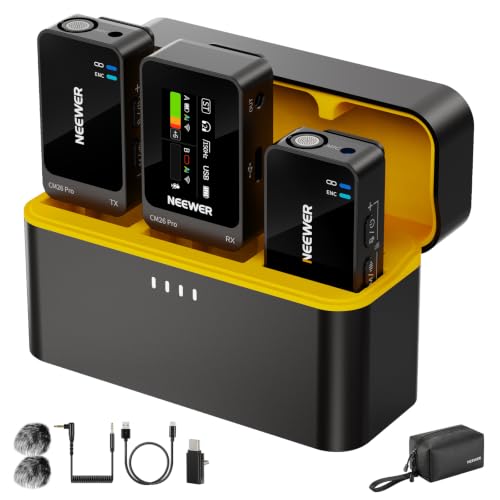
- 24-bit audio with dual AI noise cancellation
- Mono, stereo, and safe-track output modes
- Up to 50 hours of total runtime
Best For: Creators switching between cameras, phones, and computers
Best Budget-Friendly 4-in-1 Kit

- Camera, USB-C, Lightning, and USB connectivity
- Active denoise with mute and original-sound modes
- Includes furry windscreens and foam covers
Best For: Beginners recording vlogs across cameras and phones
Best Wireless Range
Movo WMX-1 Wireless Lavalier System

- Up to 200-foot wireless range
- Includes camera and smartphone cables
- Headphone monitoring and volume control
Best For: Creators needing flexible wireless audio for cameras and mobile devices
Best Feature Set
NEEWER CM28 Wireless Lavalier Microphone

- Two transmitters for dual-person recording
- Built-in 4GB recording per transmitter
- Noise cancellation and charging case included
Best For: Interviews, podcasts, and creators wanting internal backup recording
Premium Wireless Pick – DJI Mic Mini
The DJI Mic Mini is a strong choice among lavalier microphones for DSLR cameras when you want a compact two-transmitter system, detailed 48kHz audio, and long battery life. Its included 3.5mm TRS camera cable makes it practical for interviews, livestreams, and mobile content creation.
Best For: Creators who need discreet wireless audio, long runtimes, and flexible two-person recording.
Pros:
- Ultralight 10g transmitters are comfortable and discreet on camera.
- Up to 400m transmission range and automatic limiting support reliable recording.
- Charging case provides up to 48 hours of battery life.
- Two noise-cancellation levels suit quiet interiors or noisier environments.
Cons:
- Some ecosystem direct-connection features are designed for compatible DJI devices.
- The system relies on battery power and requires charging between extended shoots.
With two transmitters, a receiver, camera cable, windscreens, and charging case, the DJI Mic Mini is a well-equipped option for creators who value portability and dependable wireless performance.
Feature-Rich Starter – COMICA BoomX-D2
The COMICA BoomX-D2 is one of the more flexible lavalier microphones for DSLR cameras, combining two transmitters with selectable mono, stereo, and safety-track modes. Its 3.5mm camera connection, monitoring jack, and noise-reduction control make it useful for creators who want hands-on recording control.
Best For: Interviews, wedding video, outdoor vlogging, and creators who want a backup safety track.
Pros:
- Two transmitters support two-person recording with a range of up to 650 feet.
- Mono, stereo, and -6dB safety modes provide post-production flexibility.
- Receiver headphone output enables real-time, zero-latency monitoring.
- Auto-frequency selection and latency below 20ms support responsive recording.
Cons:
- Battery life is rated at up to 12 hours, shorter than some competing systems.
- Lightning iPhones require an additional Lightning adapter.
The BoomX-D2 stands out when recording safeguards matter. Its safety mode and monitoring features can help protect important dialogue from clipping or unexpected audio problems.
Simple Camera Kit – Movo WMX-2
The Movo WMX-2 keeps the setup straightforward for shoppers seeking lavalier microphones for DSLR cameras. This compact 2.4GHz system includes a wearable transmitter, receiver, charging case, and camera-focused 3.5mm connection for vlogging, filmmaking, and voice content.
Best For: DSLR and mirrorless creators who want a simple wireless setup with a built-in microphone.
Pros:
- Compatible with Canon, Sony, Nikon, and other DSLR cameras.
- Adaptive Frequency Hopping supports a stable signal up to 328 feet.
- Built-in omnidirectional transmitter microphone clips on quickly.
- Charging case adds a full additional charge to the transmitter’s up-to-7-hour battery life.
Cons:
- The system provides one channel rather than a two-transmitter setup.
- Its 3.5mm connector may require additional adapters for some devices.
For straightforward camera recording, the WMX-2 offers the essential pieces without a complicated workflow. It is particularly appealing if you primarily need one wearable microphone and dependable range.
AI Noise-Control Option – NEEWER CM26 MAX
The NEEWER CM26 MAX brings app control and two-level AI noise cancellation to the category of lavalier microphones for DSLR cameras. It supports USB-C devices and cameras, while its included 3.5mm TRS cable, safety track, limiter, and real-time monitoring add useful control for content production.
Best For: Creators recording in changing environments who want app-based audio adjustments and extended battery life.
Pros:
- Two AI noise-cancellation modes target indoor and outdoor recording conditions.
- 48kHz/24-bit audio, adaptive gain, limiter, and safety-track options provide recording flexibility.
- Charging case offers up to 50 hours of total runtime.
- App control and a standalone voice-recorder function add versatility.
Cons:
- Some older iPhones require a separately purchased MFi-certified USB-C-to-Lightning adapter.
- USB-C compatibility can vary by device and may require OTG activation on certain Android phones.
The CM26 MAX is a versatile pick for creators who want more than basic plug-and-play operation. Its AI modes, monitoring tools, and long case-supported runtime make it especially useful for mobile production and unpredictable sound environments.
Best Compact DSLR Wireless Kit – Movo NanoMic
The Movo NanoMic is a compact wireless option for anyone comparing lavalier microphones for DSLR cameras with a standard 3.5mm TRS input. Its two transmitters, direct camera connection, and charging case make it suitable for interviews, dialogue, and mobile video production.
Best For: DSLR and mirrorless shooters who need a lightweight two-microphone wireless setup.
Pros:
- Includes two wireless transmitters and a receiver for recording interviews or two subjects.
- Supports 16-bit/48kHz audio, a 20Hz–20kHz frequency response, and an over-80dB signal-to-noise ratio.
- Offers three noise-reduction levels, anti-clipping technology, and up to 328 feet of stated range.
- Provides up to 6 hours per charge, with up to 30 additional hours from the charging case.
Cons:
- Designed for cameras with a 3.5mm TRS microphone input, so it is less versatile for other device types.
- The supplied system is listed with one channel, despite including two transmitters.
Choose the NanoMic when small size and straightforward DSLR connectivity matter most. It is particularly practical for run-and-gun work where extended case-powered operation and unobtrusive transmitters are useful.
Best Feature-Rich Multi-Device Kit – NEEWER CM26 Pro
The NEEWER CM26 Pro stands out among lavalier microphones for DSLR cameras when you also need compatibility with phones, computers, and tablets. It combines 24-bit recording, adjustable output modes, monitoring, and dual-level AI noise cancellation in a two-transmitter wireless kit.
Best For: Content creators who record across DSLR cameras, smartphones, PCs, and other supported devices.
Pros:
- Includes camera, USB-C, and iOS connection options through the supplied cables and adapters.
- Offers 48kHz/24-bit audio, 88dB SNR, 120dB SPL, and automatic gain control with distortion limiting.
- Provides mono, stereo, and safe-track output modes, plus a 3.5mm TRS headphone jack for monitoring.
- Features two AI noise-cancellation levels, mute control, low-cut settings, and up to 50 hours of total runtime.
Cons:
- Its many controls and app-supported adjustments may be more than a simple camera setup requires.
- The stated 330-foot transmission distance applies to open, unobstructed areas and drops to 98 feet backward.
The CM26 Pro is a strong choice for creators who want one wireless system across several recording devices. Its safe-track mode and headphone monitoring are especially useful when you want more control during production.
Best Budget-Friendly 4-in-1 Kit – GoorDik J3
The GoorDik J3 is a flexible pick among lavalier microphones for DSLR cameras, with a 3.5mm camera connection alongside USB-C, Lightning, and USB adapter options. Its clip-on transmitters, active denoise modes, and included wind protection are aimed at beginner-friendly vlogging and content creation.
Best For: New creators who want one wireless lavalier kit for cameras, phones, and computers.
Pros:
- Supports cameras with 3.5mm audio ports as well as USB-C, Lightning, and USB-connected devices.
- Offers noise-reduction and original-sound modes, plus a mute function with indicator lights.
- Includes rotatable clips, furry windscreens, and extra foam covers for flexible placement and outdoor recording.
- Each transmitter is rated for 6–12 hours of use, and the receiver can charge a connected phone during recording.
Cons:
- Some Android phones may require OTG activation, while computers require manual input-device selection.
- The supplied notes do not specify an audio resolution, frequency response, or transmission range.
The J3 makes the most sense when broad device compatibility is more important than detailed published audio specifications. Its included adapters and wind protection help simplify a basic camera-to-phone content workflow.
Best Wireless Range – Movo WMX-1 Wireless Lavalier System
For shoppers comparing lavalier microphones for dslr cameras, the Movo WMX-1 is a practical wireless option with a claimed 200-foot range, camera-ready cabling, and monitoring through a headphone input. It also supports smartphones and tablets with the included connection cables.
Best For: Filmmakers, vloggers, mobile journalists, and content creators who need a flexible wireless system for camera and mobile recording.
Pros:
- Wireless transmission reaches up to 200 feet in suitable conditions.
- Includes both 3.5mm TRS camera and TRRS smartphone cables.
- Headphone monitoring and adjustable microphone volume help with recording control.
- Includes a receiver shoe mount, carrying case, and one-year warranty with U.S.-based support.
Cons:
- Each unit requires two AAA batteries.
- Battery life is rated for up to six hours.
- The system provides one audio channel.
The WMX-1 stands out when range and broad device compatibility matter more than rechargeable convenience. Its included accessories make it a straightforward choice for DSLR and mixed-device setups.
Best Feature Set – NEEWER CM28 Wireless Lavalier Microphone
The NEEWER CM28 is a feature-rich choice among lavalier microphones for dslr cameras, combining two transmitters, a receiver, onboard recording, noise cancellation, and a charging case. Its camera cable and included adapters also support a wide range of recording devices.
Best For: Interviews, podcasts, vlogging, streaming, and two-person recordings where backup recording and dual transmitters are useful.
Pros:
- Includes two transmitters and one receiver for two-microphone setups.
- Each transmitter has 4GB of storage for up to nine hours of uncompressed WAV recording.
- Offers one-click noise cancellation, gain adjustment, and an LCD status screen.
- Includes a charging case and supports claimed transmission distances up to 200 meters in unobstructed areas.
Cons:
- Actual wireless range varies by location and surroundings.
- The feature set may be more than needed for simple single-person recording.
- It requires charging rather than replaceable batteries.
Choose the CM28 if you want a versatile kit that can record internally as well as transmit to a DSLR camera. The dual-transmitter design makes it especially practical for interviews and multi-person content.
Best Compact Option – Movo Wireless Mini Camera Microphone
The Movo Wireless Mini is a compact option for shoppers seeking lavalier microphones for dslr cameras without a bulky setup. Its all-in-one transmitter and lavalier design connects through a 3.5mm input and includes selectable noise reduction, mute control, and a 10-hour battery rating.
Best For: DSLR and mirrorless camera users who prioritize a lightweight wireless microphone for day-long video projects.
Pros:
- Compact, featherlight design weighs about one ounce.
- Provides up to 10 hours of battery life.
- Selectable noise reduction and one-touch muting add recording control.
- Works with 3.5mm-enabled cameras, camcorders, and recorders from up to 164 feet away.
Cons:
- The stated wireless range is shorter than the 200-foot options in this roundup.
- It uses a single audio channel.
- Compatibility depends on the recording device having a 3.5mm line input.
The Wireless Mini is a sensible fit for mobile creators who want uncomplicated wireless audio and long operating time. Its small form factor helps keep a DSLR or mirrorless rig easy to handle.
How We Picked the Best Lavalier Microphones for Dslr Cameras
We focused on microphone systems that can connect to DSLR or mirrorless cameras through a compatible camera input, typically a 3.5mm TRS connection. The lineup includes single- and dual-transmitter kits, compact wireless systems, and models with extras such as onboard recording, charging cases, noise reduction, mute controls, and multi-device compatibility.
We also considered practical production needs: setup simplicity, portability, expected operating time, range, monitoring options, and whether the system is better suited to a solo creator, interview team, or larger recording setup. Specifications can vary by configuration, so confirm the included cables and adapters before ordering.
Quick Comparison
| Best For | What to Look For | Notable Features |
|---|---|---|
| Solo creators | One transmitter and simple pairing | Compact size, charging case, easy controls |
| Interviews | Two transmitters | Dual-channel recording and independent mutes |
| Outdoor shoots | Long range and noise control | Stable wireless transmission and wind protection |
| Backup recording | Internal storage | Onboard recording and uncompressed audio |
Key Buying Factors for Lavalier Microphones for Dslr Cameras
Camera Connection and Compatibility
Check whether the receiver includes a 3.5mm TRS camera cable. Smartphone-focused kits may use USB-C or Lightning connectors instead, and a TRRS phone cable is not always suitable for a DSLR. If you use multiple devices, a kit with interchangeable cables or broad compatibility can be more flexible.
Wireless Design and Range
Wireless systems give presenters freedom to move, but advertised range is measured in ideal conditions. Walls, crowds, Wi-Fi congestion, and the way you wear the transmitter can reduce performance. For most indoor filming, dependable pairing matters more than the longest headline range.
Audio Controls and Noise Reduction
Noise cancellation can help with fans, traffic, and room ambience, but aggressive processing may make speech sound unnatural. Look for adjustable or defeatable noise reduction when possible. A mute button, gain control, and receiver output monitoring can make live recording easier.
Battery Life and Backup Recording
Choose enough runtime for your longest shoot, allowing for setup delays and retakes. A charging case is useful for travel, while internal recording can protect your audio if the wireless link drops. For important work, record a short test and keep a backup audio source.
Who Should Buy Which Lavalier Microphones for Dslr Cameras?
Choose a dual-transmitter kit if you regularly record interviews, conversations, or two-person presentations. Choose a compact single-transmitter system for solo videos, tutorials, and vlogs where quick setup and low weight matter most.
Choose onboard recording if you film outdoors, work at longer distances, or want a safety track. Choose a multi-device kit if you alternate between a DSLR, phone, and computer. Before buying, verify the camera cable, transmitter count, storage method, battery claims, and included accessories against your actual shooting workflow.