
Old negatives and slides can hold decades of memories, but film deteriorates when it is stored in heat, humidity, or poor-quality sleeves. The right scanner makes it easier to preserve those images as digital files you can edit, print, and share.
We compared 10 consumer film scanners based on supported film formats, resolution claims, screen size, connectivity, ease of use, and overall value for home archiving.
Best 10 Film Scanners for Old Negatives Picks for 2026
Best All-Around Choice

- Scans 135, 110, and 126 negatives plus 50mm slides
- 5-inch LCD for previewing and editing
- Saves directly to SD or SDHC cards
Best For: Families digitizing mixed-format film collections
Best Complete Starter Kit
DigitPro Photo, Slide & Negative Scanner

- Scans film, slides, photos, and business cards
- Includes an 8GB SD card and accessories
- Standalone operation with a 3-year warranty
Best For: Beginners wanting a ready-to-use digitizing bundle
Best for High-Resolution Scans
Magnasonic FS71 24MP Film Scanner

- Produces 24MP JPEG files
- Supports 35mm, 110, 126, and Super 8 film
- Scans in less than five seconds per image
Best For: High-resolution archiving across multiple film formats
Best Large-Screen Model

- Tiltable 7-inch LCD for easier viewing
- Quick-feeding tray supports continuous scanning
- Supports 135, 110, and 126 film
Best For: Users who want a large display for scanning and sharing
Most Versatile Format Support
DigitPro C190 Film & Slide Scanner

- Supports 35mm, 110, 126, slides, and Super 8
- 5-inch LCD with one-touch scanning
- HDMI and USB-C outputs
Best For: Mixed film collections and easy family viewing
Best Touchscreen Workflow
HP HPFS500 Film & Slide Scanner
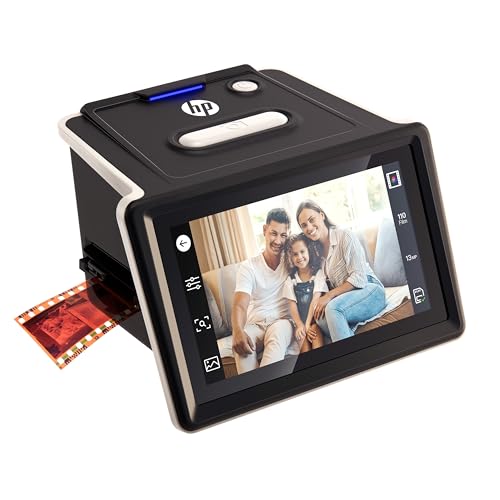
- Standalone scanning without a computer
- 5-inch touchscreen for preview and editing
- Quick-load tray for efficient sessions
Best For: Mixed 135, 126, and 110 archives
Best Accessory Bundle
KODAK SCANZA Film & Slide Scanner
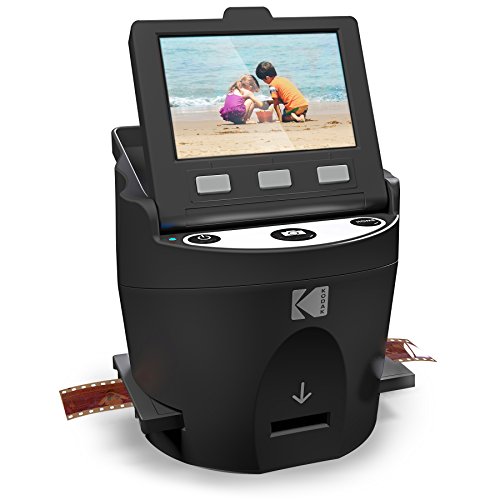
- Supports five listed film formats
- Includes multiple adapters and cables
- One-touch JPEG scanning with LCD preview
Best For: Home users digitizing varied supported film
Best All-in-One Option

- Scans 135/110 negatives and several slide formats
- 5-inch LCD with gallery mode and editing controls
- Includes HDMI, USB, adapters, and 36-month warranty
Best For: Families digitizing mixed film and slide collections
Best Simple 35mm Pick
Compact 35mm Negative and Slide Scanner

- Standalone plug-and-play scanning
- 2.4-inch screen with basic image adjustments
- Compact design with TV and computer transfer options
Best For: Beginners scanning mostly 35mm film
Best Large-Screen Upgrade
24MP Multi-Format Film Scanner

- Up to 24MP output with a 1/2.3-inch CMOS sensor
- 7-inch LCD for easier previews and browsing
- Supports 35mm, 110, 126, Super 8, and 8mm formats
Best For: Mixed-format archives and users who prefer a large display
Best All-Around Choice – KODAK Slide N Scan
If you want film scanners for old negatives that are simple to operate and easy to share, the KODAK Slide N Scan is a practical option. It handles 135, 110, and 126 negatives plus 50mm slides, previews images on a large 5-inch LCD, and saves scans directly to an SD or SDHC card.
Best For: Families digitizing mixed-format negatives and slides without relying on complicated computer software.
Pros:
- Supports 135, 110, and 126 negatives along with 50mm slides.
- Large 5-inch LCD supports previewing, editing, and gallery viewing.
- Includes quick-feeding trays, film adapters, USB and HDMI cables, and a cleaning brush.
- One-touch controls adjust color, brightness, size, and date/time settings.
Cons:
- SD card is not included.
- Supports SD or SDHC cards only up to 32GB.
- Requires a Windows 7-or-newer computer for its listed minimum system requirements.
The large screen and broad format support make this a balanced choice for home archiving. Its direct-to-card workflow is especially useful when you want to scan without setting up a dedicated computer station.
Best Complete Starter Kit – DigitPro Photo, Slide & Negative Scanner
Among film scanners for old negatives, the DigitPro stands out as a bundle-focused choice. It scans 35mm slides, 135 and 110 negatives, printed photos, and business cards, while its standalone design lets you work without installing software or drivers.
Best For: Beginners, parents, and grandparents who want an all-in-one package with an included memory card.
Pros:
- Handles film negatives, slides, printed photos, and business cards.
- Large 5-inch HD screen provides wide-angle previews and editing.
- Includes an 8GB SD card, holders, photo trays, power adapter, USB cable, and cleaning brush.
- Offers one-touch operation and a stated 3-year warranty.
Cons:
- The listed 1080P resolution is lower than several higher-resolution film-only models.
- Its 1.5 kg weight makes it less lightweight than some compact scanners.
- The supplied notes do not specify support for 126 film or Super 8 formats.
This model is convenient if you want to begin scanning immediately, since the included SD card and accessories reduce extra purchases. Its photo and business-card support also makes it more versatile than a film-only unit.
Best for High-Resolution Scans – Magnasonic FS71 24MP Film Scanner
The Magnasonic FS71 is a strong option for shoppers comparing film scanners for old negatives and prioritizing stated resolution. It creates 24MP JPEG files, supports several film formats including Super 8, and scans images in less than five seconds according to the supplied product information.
Best For: Users who want high-resolution digital files and support for 35mm, 110, 126, and Super 8 film.
Pros:
- Captures 24MP JPEG files from 35mm, 110, 126, and Super 8 negatives.
- Scans in less than five seconds per image according to the product notes.
- 5-inch LCD supports viewing and on-device brightness and RGB adjustments.
- SD card slot supports expandable memory up to 128GB.
Cons:
- SD card is not included.
- HDMI cable is not included.
- Coverage is limited to a one-year manufacturer warranty.
With its 24MP output, CCD sensor, broad film-format support, and fast scanning workflow, the FS71 is well suited to larger archives. The ability to adjust images on the scanner also helps keep the process computer-free.
Best Large-Screen Model – KODAK Slide N Scan Max
For shoppers who want film scanners for old negatives with a more comfortable viewing area, the KODAK Slide N Scan Max offers a tiltable 7-inch LCD. It supports 135, 110, and 126 film, uses a quick-feeding tray, and saves scans directly to SD or SDHC cards.
Best For: Users who prefer a large display for previewing, editing, and sharing scanned film.
Pros:
- Tiltable 7-inch LCD is larger than the displays on the other listed KODAK models.
- Quick-feeding tray supports continuous scanning without repositioning every frame.
- Scans 135, 110, and 126 negatives and slides.
- One-touch editing and direct SD/SDHC saving simplify home archiving.
Cons:
- SD or SDHC card is not included.
- Memory support is limited to cards up to 32GB.
- The listed connection type is USB rather than HDMI.
The Max is a practical fit for extended scanning sessions where a bigger screen matters. Its tiltable display can also function as a digital picture frame, giving the device an additional viewing use after scanning.
Most Versatile Format Support – DigitPro C190 Film & Slide Scanner
For shoppers comparing film scanners for old negatives, the DigitPro C190 stands out for its broad format support and simple standalone workflow. It handles 35mm/135, 110, 126, 50mm slides, and Super 8 film, then saves scans to built-in memory or a compatible SD card.
Best For: Families digitizing mixed film and slide collections who want a large preview screen and TV connectivity.
Pros:
- Supports multiple negative, slide, and Super 8 formats.
- Large 5-inch LCD supports preview, playback, and basic adjustments.
- One-touch scanning with HDMI and USB-C output.
- Includes film holders, cables, cleaning brush, and a 12-month warranty.
Cons:
- SD card is not included.
- Its 1080P output may appeal less to shoppers seeking higher-resolution archival equipment.
The C190 is a practical all-in-one choice when convenience and format flexibility matter most. Its built-in display and HDMI connection also make sharing scanned memories straightforward.
Best Touchscreen Workflow – HP HPFS500 Film & Slide Scanner
The HPFS500 is a convenient option for anyone seeking film scanners for old negatives without relying on a computer during scanning. Its standalone design, 5-inch touchscreen, and support for 135, 126, and 110 formats make it suited to hands-on digitization.
Best For: Users with mixed 35mm and smaller-format archives who want touchscreen controls and a quick-load tray.
Pros:
- Standalone workflow does not require a computer while scanning.
- 5-inch all-angle LCD touchscreen enables preview and editing.
- Supports 135, 126, and 110 negatives and positive slides.
- Quick-load tray helps streamline larger scanning sessions.
Cons:
- Its listed 13MP sensor with 22MP interpolation may not suit shoppers prioritizing the highest native resolution.
- Limited to the listed 135, 126, and 110 formats.
With its touchscreen interface and batch-friendly loading design, the HPFS500 focuses on ease of use. It is especially appealing when you want to work through a sizable collection with minimal setup.
Best Accessory Bundle – KODAK SCANZA Film & Slide Scanner
The KODAK SCANZA is a flexible pick among film scanners for old negatives, particularly if you want included adapters for several common formats. It converts supported negatives and slides to JPEG files, with a 3.5-inch display and simple one-touch controls.
Best For: Home users scanning 35mm, 126, 110, Super 8, and 8mm film who value a broad accessory kit.
Pros:
- Supports 35mm, 126, 110, Super 8, and 8mm negatives and slides.
- Includes multiple film inserts and adapters.
- 3.5-inch adjustable, tilting LCD and large one-touch buttons simplify operation.
- Includes USB, HDMI, AC, and video cables plus a cleaning brush.
Cons:
- SD card is not included.
- The display is smaller than the 5-inch screens on the other listed models.
- It saves scans as JPEG files, which may not meet every archival workflow preference.
The SCANZA is a straightforward choice for varied home collections, especially when you want adapters and cables included in the box. Its format range and simple controls reduce the need for extra equipment.
Best All-in-One Option – 22MP Film and Slide Scanner
For shoppers comparing film scanners for old negatives, this model stands out as a flexible, standalone option. It scans 135 and 110 negatives plus 135, 110, 126, and Super 8 slides, saves JPEG files to an SD card, and includes a large screen for previewing and basic adjustments.
Best For: Families digitizing a mix of negative and slide formats without relying on computer software.
Pros:
- 22MP scanning with support for color, black-and-white, and monochrome film.
- Large 5-inch LCD with gallery mode for viewing saved photos.
- Includes HDMI and USB cables, multiple adapters, cleaning brush, and a 36-month warranty.
- Offers onboard color, brightness, and date/time adjustments.
Cons:
- SD card is required but not included.
- Must remain connected to a power source during use.
The broad format support and included accessories make this a practical choice for varied family archives. Its direct-to-TV playback and standalone controls are especially useful for sharing digitized memories.
Best Simple 35mm Pick – Compact 35mm Negative and Slide Scanner
If your collection is mainly 35mm, this compact model offers a straightforward way to scan old negatives and slides. It creates 5MP or 10MP JPEG files, provides instant LCD previews, and works as a standalone device without computer drivers or specialized software.
Best For: Beginners, parents, and grandparents who want an uncomplicated 35mm digitizing workflow.
Pros:
- Simple plug-and-play operation with no complex software installation.
- Built-in 2.4-inch color screen supports flipping, mirroring, and brightness adjustments.
- Compact design with easy-load adapters for continuous feeding.
- Supports PC, Mac, and TV output for transferring or sharing images.
Cons:
- Limited to 35mm negatives and slides.
- SD card up to 32GB is required and not included.
- Has a one-year warranty.
This is a sensible entry-level choice when ease of use and portability matter more than broad format compatibility. Its smaller screen and lower stated capture options make it less suited to users seeking a higher-resolution, multi-format scanner.
Best Large-Screen Upgrade – 24MP Multi-Format Film Scanner
For shoppers who want a more comfortable preview experience, this film scanner for old negatives pairs a 7-inch LCD with up to 24MP capture. It supports 35mm, 110, 126, Super 8, and 8mm film and can scan, edit, and save images without requiring a computer.
Best For: Users with varied film formats who want a large display and high-resolution digital output.
Pros:
- Up to 24MP scanning through a 1/2.3-inch CMOS sensor.
- Large 7-inch LCD makes previews and browsing easier.
- Supports 35mm, 110, 126, Super 8, and 8mm film and slides.
- Includes an SD card for starting immediately.
Cons:
- Has a one-year manufacturer warranty.
- USB is the listed connection type; HDMI output is not specified in the supplied details.
The large screen, adjustable image sizing, and wide format support make this a strong fit for larger or mixed collections. The included SD card also removes one setup step, although buyers should confirm their preferred transfer and display connections.
How We Picked the Best Film Scanners for Old Negatives
We focused on scanners designed for home users who want to convert negatives, slides, and film strips without investing in a professional flatbed or dedicated camera-scanning setup. The selected models support common formats such as 35mm, 110, 126, Super 8, or 8mm, although compatibility varies by product.
We also considered advertised optical or interpolated resolution, preview-screen size, included holders, transfer methods, scanning speed, and whether the scanner can operate independently of a computer. Because image quality depends on film condition, cleaning, alignment, and exposure—not just megapixels—we treated resolution claims as one factor rather than the only measure of performance.
Quick Comparison
| Best For | Look For | Useful Features |
|---|---|---|
| Occasional home scanning | Simple controls and automatic exposure | Built-in display and memory-card storage |
| Large family archives | Fast workflow and broad format support | Included holders and batch-friendly operation |
| Viewing and sharing | Large, bright screen | HDMI or convenient USB transfer |
| Mixed vintage collections | Support for 35mm, 110, 126, and movie film | Multiple adapters and film guides |
Key Buying Factors for Film Scanners for Old Negatives
Film-Format Compatibility
Check the exact formats in your collection before buying. Most affordable units handle 35mm film and slides, while some also accept 110, 126, Super 8, and 8mm. A scanner that lacks the correct holder may require extra accessories or manual workarounds.
Resolution and Image Quality
Higher advertised megapixels can produce more room for cropping, but they do not guarantee sharper or more accurate scans. Look for even illumination, reliable film positioning, dust-free handling, and adjustable brightness or color controls. Clean the negatives gently before scanning to reduce spots and scratches.
Screen, Storage, and Connectivity
A built-in LCD lets you preview frames and adjust positioning without a computer. SD-card storage is useful for scanning away from a desk, while USB connections simplify transfers. HDMI output can help when reviewing images on a larger display, but it is not essential for basic archiving.
Workflow and Included Accessories
For a large collection, compare scanning speed, holder design, power requirements, and how easily film can be advanced. Included adapters, cleaning tools, and storage media can add practical value. Confirm whether the scanner saves JPEG files only or supports a less-compressed format.
Who Should Buy Which Film Scanners for Old Negatives?
Choose a compact, straightforward 35mm model if you have a small box of standard negatives and want the simplest possible workflow. Models with 22MP or 24MP claims and larger displays are better suited to users who want convenient previews, cropping flexibility, and support for several film formats.
If your archive includes 110, 126, Super 8, or 8mm film, prioritize compatibility over headline resolution. A scanner with broad adapter support can save considerable time and prevent the need to purchase multiple devices. For particularly valuable originals, extensive editing, or exhibition-quality prints, consider using a professional scanning service instead of relying solely on a consumer scanner.