
The best field recorders make it easier to capture clean, detailed audio away from a studio. Whether you record dialogue on set, live music, interviews, ambience, or quick voice notes, the right model can improve results while keeping your setup portable.
This roundup compares 10 field recorders across professional, beginner-friendly, lavalier, stereo, and voice-recording categories, with attention to microphone options, recording formats, portability, and workflow.
Best 10 Field Recorders Picks for 2026
Versatile Capsule Recorder
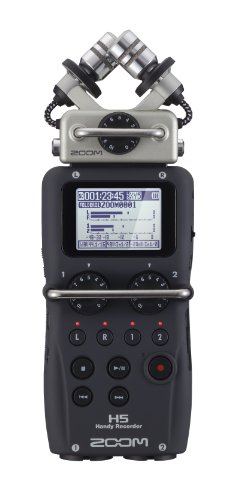
- Interchangeable input capsules
- Four-track simultaneous recording
- Two XLR/TRS inputs with phantom power
Best For: Filmmakers and musicians needing expandable inputs
Long-Life Voice Recorder

- Up to 68 hours of battery life
- 136GB total stated storage
- One-touch and voice-activated recording
Best For: Lectures, meetings, interviews, and dictation
Professional 32-Bit Recorder

- 32-bit float recording
- Dual locking XLR/TRS inputs
- Ultra-low-noise preamps
Best For: Professional external-microphone field recording
Adjustable Stereo Recorder

- Adjustable AB/XY stereo microphones
- 32-bit float recording
- 2-in/2-out USB-C interface
Best For: Music, video, voice, and podcast recording
Best XLR Field Recorder

- 32-bit/96kHz recording
- Two locking XLR/TRS inputs
- OLED waveform level display
Best For: Two-source interviews, podcasts, music, and filmmaking
Best Wearable Field Recorder

- 32-bit float recording
- Lavalier microphone included
- Up to 15-hour battery life
Best For: Discreet speech recording for interviews, weddings, and video
Best 4-Track Field Recorder

- Four-track recording
- Built-in stereo mics and two XLR/TRS inputs
- USB-C recording and SD backup
Best For: Multi-source music, podcasts, films, and live performances
Best Lightweight Pick

- 32-bit float stereo recording
- X/Y microphones up to 120 dB SPL
- USB microphone and accessibility features
Best For: Portable stereo recording and simple field setups
Most Versatile Pick

- Three mics with nine recording patterns
- Mono, stereo, and surround recording
- USB mic, SD backup, and Bluetooth timecode
Best For: Flexible music, interview, film, and field recording
Best Everyday Starter
- X/Y stereo mics with 32-bit float
- USB-C microphone mode
- 3.5mm headphone jack and accessibility features
Best For: Content creators, interviews, rehearsals, and everyday audio
Versatile Capsule Recorder – Zoom H5
The Zoom H5 is a flexible choice among field recorders for filmmakers, musicians, and creators who need expandable inputs. Its interchangeable capsule system, four-track recording, and XLR/TRS connections make it useful for both portable stereo capture and multi-source setups.
Best For: Filmmakers and musicians who want an expandable recorder with professional input options.
Pros:
- Interchangeable input capsules offer room to adapt the recorder to different recording needs.
- Two XLR/TRS combo inputs include selectable phantom power and a -20dB pad.
- Records up to four tracks simultaneously and can function as a USB audio interface.
- Includes a shock-mounted X/Y capsule to help reduce handling noise.
Cons:
- Storage is limited to SD/SDHC cards up to 32GB.
- Requires two AA batteries.
The H5 is a strong middle-ground option for users who need more than basic built-in microphones but do not want a larger multitrack setup. Its capsule compatibility and computer or iPad connectivity add useful long-term flexibility.
Long-Life Voice Recorder – Tonfarb A20
The Tonfarb A20 is a practical pick for field recorders shoppers focused on lectures, meetings, interviews, and dictation. It combines one-touch recording, voice activation, automatic noise reduction, and a large storage capacity in a compact metal-bodied design.
Best For: Students, journalists, and professionals recording extended meetings, classes, or interviews.
Pros:
- Supports 1536 kbps PCM recording with dual microphones and automatic noise reduction.
- Includes 8GB of built-in storage and a complimentary 128GB TF card.
- Offers up to 68 hours of continuous recording on its rechargeable battery.
- One-click recording, A-B repeat, voice activation, and password protection support convenient use.
Cons:
- Built-in microphones and MP3-focused format options are less suited to professional XLR workflows.
- The included memory capacity and recording figures depend on the selected recording format.
Choose the A20 when convenience, long battery life, and abundant storage matter more than interchangeable microphones or pro-level external inputs. Its simple controls make it well suited to everyday speech recording.
Professional 32-Bit Recorder – Zoom F3
The Zoom F3 is a focused professional option among field recorders, built for filmmakers and recordists working in unpredictable conditions. Its 32-bit float recording, dual A/D converters, ultra-low-noise preamps, and locking XLR inputs are designed to protect capture quality when levels and connections are difficult to manage.
Best For: Run-and-gun filmmakers and location recordists using professional microphones.
Pros:
- 32-bit float recording helps capture quiet dialogue and sudden peaks without constant level adjustments.
- Dual locking XLR/TRS inputs help secure microphone connections in complex or remote-mounted rigs.
- Ultra-low-noise preamps support clean audio in less controlled environments.
- Supports flexible standalone and USB workflows with battery power.
Cons:
- It does not provide the same built-in stereo microphone approach as handheld recorders with adjustable capsules.
- Requires two AA batteries and a microSD card for portable recording.
The F3 is best understood as a compact professional front end rather than an all-purpose handheld microphone recorder. For external-mic setups where clipping protection and secure XLR connections are priorities, it is the most specialized choice in this group.
Adjustable Stereo Recorder – TASCAM DR-07XP
The TASCAM DR-07XP is a versatile handheld option for field recorders buyers who want adjustable stereo microphones and modern 32-bit float capture. It supports music, audio-for-video, voice, meetings, and podcasting, while also working as a 2-in/2-out USB-C audio interface.
Best For: Creators needing adjustable stereo recording for music, video, voice, or podcast work.
Pros:
- Adjustable AB/XY condenser microphones support flexible stereo recording.
- Offers 32-bit float, 24-bit, 16-bit, high-resolution WAV, and MP3 recording modes.
- Handles sources up to 125dB SPL for loud environments and performers.
- Functions as a 2-in/2-out USB-C audio interface with computer-compatible connectivity.
Cons:
- Memory card is not included.
- Battery life is rated at up to 17.5 hours with two AA alkaline batteries, which is shorter than some voice-focused recorders.
The DR-07XP balances straightforward handheld operation with useful recording flexibility. Its adjustable microphones make it more adaptable for stereo sources, while 32-bit float and USB-C support extend its usefulness for video and computer-based workflows.
Best XLR Field Recorder – Zoom H1 XLR
The Zoom H1 XLR is a practical choice among field recorders for filmmakers, musicians, and podcasters who need flexible connections in a compact design. Its two XLR/TRS inputs, 32-bit/96kHz recording, and waveform display support clean, detailed recordings from microphones, instruments, and other sources.
Best For: Interviews, podcasts, filmmaking, and musicians needing two versatile external inputs.
Pros:
- Records in 32-bit/96kHz for detailed, clip-free audio.
- Two locking XLR/TRS combo inputs accommodate microphones and instruments.
- OLED waveform display helps monitor recording levels.
- Supports SDXC cards up to 1TB and offers a 3.5mm stereo input and headphone output.
Cons:
- Requires two AA batteries.
- Its two-input design may be limiting for larger multi-source sessions.
The H1 XLR stands out for creators who want professional connections without moving to a larger recorder. It is especially well suited to straightforward two-source recording setups.
Best Wearable Field Recorder – Zoom F2 Lavalier
The Zoom F2 is one of the most focused field recorders for on-camera work, combining a compact body-pack design with a supplied lavalier microphone. Its 32-bit float recording reduces the need for gain adjustments, while the REC Hold switch helps protect important takes during interviews, weddings, and video shoots.
Best For: Interviews, weddings, vlogs, filmmaking, and discreet on-person recording.
Pros:
- 32-bit float recording captures clip-free audio without manual gain adjustment.
- Includes an omnidirectional lavalier microphone with windscreen and lapel clip.
- Runs for up to 15 hours on two AAA batteries.
- Supports microSD cards up to 512GB and includes a REC Hold switch.
Cons:
- Its single lavalier-focused design is less versatile for instruments or multiple microphones.
- Records at 44.1kHz or 48kHz rather than 96kHz.
Choose the F2 when portability and dependable speech capture matter more than multiple inputs. The included lavalier and long battery life make it a streamlined option for creators working away from a studio.
Best 4-Track Field Recorder – Zoom H4 Essential
The Zoom H4 Essential is a flexible option among field recorders for larger creative projects. Its built-in stereo microphones, two XLR/TRS inputs, and four-track recording let you capture performances, interviews, podcasts, and video audio while also using the device as a USB audio interface.
Best For: Musicians, podcasters, filmmakers, and live-performance recording with multiple sources.
Pros:
- Offers four-track recording with built-in stereo microphones.
- Two XLR/TRS inputs connect external microphones, instruments, mixers, or soundboards.
- 32-bit float recording helps handle quiet dialogue and loud performances.
- Can record or stream over USB-C while saving a backup to an SD card.
Cons:
- Requires two AA batteries.
- Its broader feature set may be more than needed for simple single-source recordings.
The H4 Essential is the strongest fit here for creators who need more than a basic stereo recorder. Its combination of built-in microphones, external inputs, four tracks, and USB connectivity supports varied recording workflows.
Best Lightweight Pick – Zoom H1essential
The Zoom H1essential is a compact choice for field recorders users who want straightforward stereo capture without manually setting gain. Its X/Y microphones record up to 96kHz, while 32-bit float recording helps handle changing sound levels.
Best For: Portable interviews, ambience, rehearsals, and USB recording with a computer or mobile device.
Pros:
- 32-bit float recording reduces the need to adjust gain.
- Built-in X/Y microphones capture stereo audio up to 120 dB SPL.
- Works as a USB microphone with PCs, Macs, iOS devices, and Android devices.
- Audio guidance supports visually impaired users.
Cons:
- No headphone jack is listed in the supplied specifications.
- Its built-in microphone design offers less flexibility than a recorder with multiple microphone patterns.
Choose this model when low weight and simple operation matter most. It is a practical entry point for field recording, though the limited connectivity and microphone configuration may not suit more complex setups.
Most Versatile Pick – Zoom H2essential
The Zoom H2essential stands out among field recorders for its three built-in microphones and nine selectable recording patterns. It supports mono, stereo, and surround recording at up to 32-bit float/96kHz, making it adaptable to interviews, music, and soundscapes.
Best For: Musicians, podcasters, journalists, filmmakers, and field recordists who need multiple recording patterns.
Pros:
- Three microphones and nine patterns support a wide range of recording applications.
- 32-bit float recording enables clip-free capture without constant gain adjustments.
- Can function as a USB microphone while recording to an SD card simultaneously.
- Bluetooth supports wireless control and timecode syncing between multiple units.
Cons:
- At 6.72 ounces, it is heavier than the compact H1essential models listed here.
- Requires two AA batteries.
- Its broader feature set may be more than needed for simple stereo recordings.
This is the strongest all-purpose option in the group if recording flexibility is a priority. Its selectable patterns, accessibility features, and wireless synchronization make it especially useful for more involved production workflows.
Best Everyday Starter – Zoom H1 Essential
The Zoom H1 Essential is a practical option for field recorders users who need clear stereo sound in a small handheld device. Its X/Y microphones, 32-bit float recording, and USB-C microphone mode cover content creation, interviews, music practice, and everyday documentation.
Best For: Creators recording videos, podcasts, rehearsals, interviews, ambience, and remote calls.
Pros:
- X/Y stereo microphones provide a simple way to capture natural sound.
- 32-bit float recording helps produce clip-free audio without frequent gain changes.
- USB-C connectivity supports livestreams, calls, voiceovers, and mobile or desktop recording.
- Includes a 3.5mm headphone jack and accessibility features.
Cons:
- Battery life is listed at 10 hours, shorter than the H2essential’s stated 20 hours.
- It uses two AAA batteries.
- The stereo microphone setup is less configurable than the H2essential’s nine recording patterns.
For everyday content and uncomplicated stereo recording, this H1 Essential offers a useful balance of portability and capability. Consider the H2essential instead if you need surround recording, multiple patterns, or wireless multi-recorder synchronization.
How We Picked These Field Recorders
We selected models for distinct recording needs rather than treating every portable recorder as interchangeable. Our comparison considers microphone configuration, input flexibility, 32-bit float support, storage, battery or power requirements, USB functionality, portability, and ease of use. We also included dedicated voice recorders alongside more capable production tools so shoppers can match features to their actual workflow.
Product suitability depends on the recording environment. A compact stereo recorder may be ideal for ambience or rehearsals, while a recorder with XLR inputs is better for microphones, cameras, and professional production. A lavalier model can be the simplest option for discreet dialogue capture.
Quick Comparison
| Best For | What to Look For |
|---|---|
| Filmmaking and interviews | External microphone inputs, low-noise preamps, and dependable monitoring |
| Music and live sound | Stereo microphones, multitrack recording, and suitable input headroom |
| Fast dialogue capture | Lavalier support, compact design, and simple controls |
| Beginners and casual recording | Automatic levels, clear menus, and USB microphone functionality |
| Voice notes and transcription | Large storage, long battery life, playback, and straightforward file transfer |
Key Buying Factors for Field Recorders
Microphones and Inputs
Built-in X/Y or adjustable stereo microphones are convenient for general-purpose recording. XLR or combo inputs provide more flexibility for professional microphones, mixers, and instrument sources. If you need hands-free dialogue, check whether the recorder supports a lavalier microphone and the required connector or adapter.
32-Bit Float Recording
32-bit float can make unpredictable recording levels easier to manage by preserving substantial headroom and reducing the risk of unusable clipping from sudden loud sounds. It does not replace good microphone placement, and compatible editing software is still important.
Portability, Storage, and Power
Consider size, mounting options, battery type, recording time, and storage media before buying. Smaller models are easier to carry, but larger recorders may offer better input access and monitoring. USB-C connectivity can simplify file transfer and allow some models to function as audio interfaces.
Controls and Monitoring
Physical gain controls, a headphone output, level meters, and clear indicators are valuable when recording in the field. For film or interview work, confirm that the recorder supports the monitoring and input arrangement your camera or microphone setup requires.
Who Should Buy Which Field Recorders?
Choose a professional multi-input recorder if you need external microphones, instrument connections, multitrack capability, or more control over production audio. Choose a 32-bit float stereo recorder if you want a simple setup for unpredictable volume levels, rehearsals, ambience, or location sound.
Choose a lavalier recorder for discreet, body-worn dialogue during weddings, interviews, and content creation. Choose a compact stereo recorder for music practice, meetings, field sounds, or travel. Finally, choose a dedicated voice recorder when long recording time, playback, storage, and simple operation matter more than studio-style inputs.