
The right channel strip can turn a basic home-studio signal chain into a more controlled, polished recording setup. Combining a microphone preamp with tools such as compression, EQ, de-essing, or gating, these units help shape sound before it reaches your interface.
Our selection covers flexible vocal processors, tube channel strips, classic-style preamp and EQ designs, and modern all-in-one production hardware. Use the guide below to match features, connectivity, and workflow to your room and recording goals.
Best 10 Channel Strips for Home Studio Picks for 2026
Best Value Vocal Strip

- Four built-in processing sections
- Mic, line, and instrument inputs
- Rack-mountable 1U design
Best For: Vocal recording, streaming, and compact home studios
Best All-in-One Studio Hub

- Four XLR inputs and studio preamps
- APHEX voice processing presets
- Standalone and multitrack recording
Best For: Podcasting, streaming, and live production
Best Digital Connectivity
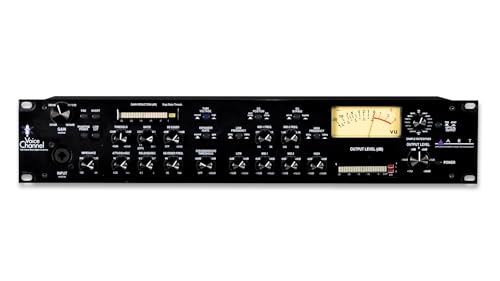
- Tube preamp with warmth and definition
- Integrated compressor and de-esser
- ADAT, USB, AES/EBU, and S/PDIF outputs
Best For: Digitally connected recording studios
Best Premium EQ Choice

- 80 dB of preamp gain
- Transformer-balanced Class A circuit
- Three-band EQ with high-pass filter
Best For: Premium recording front ends and tone shaping
Flexible USB Recording Hub

- One-channel mic/line preamp
- USB audio interface with up to 192 kHz support
- Compression, gate, expander, and de-esser
Best For: Single-input computer recording setups
Tube-Tone Studio Processor

- Class A 12AX7 tube preamp
- VCA compressor with selectable knee behavior
- Three-band EQ with variable-Q mid band
Best For: Rack-based vocal and instrument recording
Class A Analog Character

- Mono Class A mic/line preamp
- Custom transformer outputs with Silk enhancement
- Eight-segment LED meters and compressor
Best For: Analog source capture and tonal enhancement
Premium Tube Control

- Tube mic, instrument, and line preamp
- Optical compressor and EQ
- Single-channel design with 2-year warranty
Best For: Focused vocal and instrument tracking
Flexible Tube Shaping

- Mono tube channel strip
- Optical or FET compression voicings
- 4-band semi-parametric EQ
Best For: Detailed single-channel tone shaping
Rackmount Recording Hub
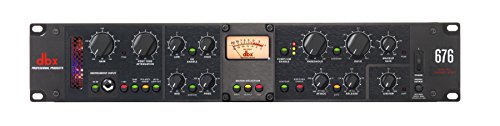
- 250-volt Class-A tube preamp
- Compressor/limiter with side-chain insert
- 3-band parametric EQ and rackmount design
Best For: Integrated rack-based recording setups
Best Value Vocal Strip – dbx 286s
The dbx 286s is a practical choice for home studio owners seeking channel strips for home studio vocal and instrument recording. It combines a microphone preamp with compression, de-essing, enhancement, and expander/gate sections in a rack-mountable 1U unit.
Best For: Vocalists, streamers, and home recordists who want hands-on dynamics and tone shaping without separate processors.
Pros:
- Includes compression, de-esser, enhancer, and expander/gate sections.
- Accepts microphone, line-level, and instrument sources.
- Loop-out and insert connections support additional processing.
- Status LEDs provide quick monitoring of levels and processor activity.
Cons:
- It is a single-channel processor.
- Its wired, rack-style design is less convenient for users seeking an all-in-one computer interface.
The dbx 286s stands out for focused vocal processing and straightforward hardware control. Its combination of core processors and flexible inputs makes it a strong starting point for a compact home studio setup.
Best All-in-One Studio Hub – RØDECaster Pro II
The RØDECaster Pro II takes a broader approach to channel strips for home studio work, combining four XLR inputs, studio preamps, APHEX voice processing, recording, monitoring, and show-control features in one desk unit.
Best For: Podcasters, streamers, and creators who need recording, voice processing, sound pads, and standalone operation in one console.
Pros:
- Provides four XLR microphone inputs and headphone outputs.
- APHEX processing presets are designed for quick voice enhancement.
- Records multitrack to a computer, microSD card, or USB drive.
- Eight customizable SMART pads support effects and live control.
Cons:
- It is a larger desk unit than a traditional single-channel strip.
- Its many production features may be unnecessary for simple microphone processing.
Rather than serving only as a preamp and processor, the RØDECaster Pro II functions as a complete production center. It is especially useful when your home studio workflow includes live shows, multitrack recording, and computer-free operation.
Best Digital Connectivity – ART VoiceChannel
The ART VoiceChannel is a tube-based option for channel strips for home studio recording, pairing an ART tube preamp with compressor, expander, de-esser, and gate controls. Its range of digital outputs also suits studios that need flexible routing.
Best For: Recordists who want tube preamp character, integrated dynamics control, and multiple digital connection options.
Pros:
- Uses a proven ART Tube Preamp design for warmth and definition.
- Includes compressor, expander, de-esser, and gate processing.
- Supports ADAT, AES/EBU, S/PDIF, TOSLink, and USB connectivity.
- Offers up to a 192 kHz maximum sample rate.
Cons:
- It is a single-channel unit.
- The extensive digital connectivity may be more than a basic home setup requires.
The VoiceChannel is a strong fit when both analog tone and digital integration matter. Its tube preamp and complete dynamics section cover common recording needs, while the output options make it adaptable to different studio systems.
Best Premium EQ Choice – Neve 1073SPX
The Neve 1073SPX focuses on high-quality front-end tone for home studio channel strips, combining a transformer-balanced Class A mic, line, and DI preamp with 80 dB of gain and a three-band EQ.
Best For: Engineers and musicians who prioritize a premium preamp, transformer-balanced Class A circuitry, and hands-on three-band equalization.
Pros:
- Offers up to 80 dB of preamp gain.
- Includes mic, line, and DI inputs for varied sources.
- Provides a three-band EQ, polarity reverse, and high-pass filter.
- Uses transformer-balanced Class A circuitry.
Cons:
- Its feature set centers on preamp and EQ rather than built-in compression or de-essing.
- It is a premium, specialized rack unit for users who need focused front-end control.
The 1073SPX is best viewed as a dedicated preamp/EQ solution rather than a full dynamics channel strip. Its gain range, source flexibility, filtering, and three-band EQ make it a compelling choice for shaping signals at the recording stage.
Flexible USB Recording Hub – UV1 Channel Strip
The Behringer Ultravoice UV1 combines a one-channel mic/line preamp with USB audio connectivity, making it a practical option when choosing channel strips for home studio recording. Its processing features include compression, a gate, and an expander/de-esser, while USB support connects it to a compatible personal computer.
Best For: Home-studio vocalists and producers who want one channel of preamp processing with direct USB connectivity.
Pros:
- Combines a mic/line preamp and USB audio interface in one unit.
- Includes compression, gate, expander, and de-esser processing.
- Supports sample rates up to 192 kHz.
Cons:
- Provides only one channel.
- USB compatibility is specified for Windows 10 and Mac OS X 10.4 or higher.
The UV1 is suited to a streamlined computer-based setup where a single input and built-in dynamics processing are more important than multiple channels or extensive analog routing.
Tube-Tone Studio Processor – StudioChannel Tube Strip
The PreSonus STUDIOCHANNEL is a rack-mountable channel strip built around a Class A 12AX7 vacuum-tube preamplifier, VCA compressor, and three-band EQ. For channel strips for home studio use, it offers a broad analog signal-shaping toolkit with mic, instrument, and line inputs.
Best For: Project-studio users who want tube preamp character plus compression and flexible three-band equalization.
Pros:
- Uses a high-voltage Class A 12AX7 vacuum-tube preamplifier.
- Includes a VCA compressor with auto attack/release and soft or hard knee options.
- Provides three-band EQ with a variable-Q mid band and shelving or peak options on the high and low bands.
- Accepts instrument, line, and microphone inputs and fits a 1U 19-inch rack.
Cons:
- At 10.5 pounds, it is less portable than a compact desktop unit.
- Its rack-mount design may be excessive for a minimal setup.
The StudioChannel is a versatile analog front end for shaping vocals, instruments, keyboards, and synths before recording, especially when tube coloration and hands-on dynamics control are priorities.
Class A Analog Character – Newton Channel Strip
The Rupert Neve Designs Newton is a mono channel strip centered on a Class A mic/line preamp and custom transformer outputs. It is a focused choice among channel strips for home studio setups that need analog front-end character, Silk harmonic enhancement, metering, and compression.
Best For: Engineers recording one source at a time who value Class A preamp design, transformer outputs, and harmonic enhancement.
Pros:
- Features a Class A mic/line preamp.
- Uses custom transformer outputs.
- Includes Silk harmonic enhancement, an eight-segment LED meter, and a compressor.
Cons:
- It is a mono channel strip.
- The supplied details do not specify EQ controls or USB connectivity.
The Newton keeps its feature set centered on high-quality analog input and output stages, making it a strong fit for a studio that prioritizes source capture and tonal enhancement over integrated computer interfacing.
Premium Tube Control – LA-610 Mk II
For home studio owners seeking channel strips for home studio recording, the Universal Audio LA-610 Mk II combines a vacuum-tube microphone, instrument, and line preamp with an optical compressor and EQ in one channel. Its single-channel design suits focused tracking setups.
Best For: Vocal, instrument, and line recording where tube preamp character and optical compression are useful.
Pros:
- Combines tube preamp, EQ, and optical compressor functionality.
- Accepts microphone, instrument, and line-level applications.
- Includes a 2-year warranty.
Cons:
- Provides one channel only.
- At 15.7 pounds, it may be less convenient for portable setups.
The LA-610 Mk II is a focused choice when you want multiple front-end processing stages centered around a tube-based channel, rather than a multichannel unit.
Flexible Tube Shaping – Pro Channel III
The ART Pro Channel III is a mono tube channel strip for home studio recording, with switchable microphone impedance, selectable optical or FET compression voicings, and a 4-band semi-parametric EQ. It is built for hands-on tone shaping on a single source.
Best For: Engineers who want flexible compression voicings and detailed EQ control on vocals or instruments.
Pros:
- Offers switchable microphone impedance.
- Provides optical and FET compression voicings.
- Includes a 4-band semi-parametric EQ.
Cons:
- It is a mono, single-source channel strip.
- Its listed weight is 10.61 pounds.
Choose the Pro Channel III if compression flexibility and semi-parametric EQ access are priorities in your channel strips for home studio setup.
Rackmount Recording Hub – dbx 676FX Tube Channel Strip
The dbx 676FX combines a high-voltage Class-A tube preamp with a compressor/limiter, side-chain insert, and 3-band parametric EQ. For channel strips for home studio use, its XLR and 1/4-inch connectivity, front-panel instrument input, VU meter, and rack-mountable 2U format offer a practical studio integration option.
Best For: Home studios needing a rackmount tube preamp with compression, limiting, EQ, and flexible connections.
Pros:
- Uses a 250-volt high-voltage Class-A tube preamp design.
- Includes compressor/limiter processing and a side-chain insert.
- Offers 3-band parametric EQ with sweepable mids.
- Provides XLR and 1/4-inch inputs and outputs plus a front-panel instrument input.
Cons:
- Its 2U rackmount format requires suitable rack or placement space.
- At 13 pounds, it is not especially lightweight.
The 676FX stands out when connectivity and integrated dynamics processing matter as much as tube preamp tone, especially in a fixed home studio rack.
How We Picked These Channel Strips for Home Studio Use
We focused on channel strips that offer meaningful benefits in a home-recording workflow: reliable microphone preamps, useful dynamics control, practical tone-shaping tools, and connectivity that fits common interfaces and monitor setups. The list includes affordable options for vocalists and creators, as well as premium units for engineers who want distinctive analog character.
We also considered whether each model suits tracking, hardware processing, podcasting, voice-over, or broader music production. A channel strip should improve your workflow, not simply add more knobs, so usability and signal-routing flexibility were important factors.
Quick Comparison
| Best For | What to Look For |
|---|---|
| Budget vocal recording | Simple preamp, compressor, de-esser, and output control |
| Podcasting and streaming | Fast setup, USB connectivity, routing, and voice processing |
| Tube coloration | Tube gain stages, warmth controls, and suitable headroom |
| Classic studio tone | Transformer-based preamp and musical EQ sections |
| Professional tracking | Low noise, robust metering, flexible patching, and dependable build quality |
Key Buying Factors for Channel Strips for Home Studio
Preamp Character and Gain
Decide whether you want clean gain, transformer coloration, or tube saturation. Clean designs preserve the microphone’s natural sound, while transformer and tube circuits can add thickness, harmonics, and a more assertive character.
Processing Controls
Compression helps control peaks, EQ shapes tone, and a de-esser can reduce harsh “s” sounds. An expander or gate is useful for reducing room noise, but it requires careful settings to avoid cutting off quiet words or musical transients.
Inputs, Outputs, and Routing
Check microphone and line-level compatibility, phantom power, insert points, direct outputs, and digital or USB connections. Make sure the unit can integrate with your audio interface without unnecessary adapters or complicated gain staging.
Space, Noise, and Workflow
Rackmount models suit permanent studio installations, while desktop units are easier to reposition. In a small room, low noise and simple monitoring may matter more than a large feature set. Hardware controls are especially valuable if you prefer making quick changes while recording.
Who Should Buy Which Channel Strips for Home Studio?
Choose a compact, affordable processor if you mainly record vocals, voice-over, or instruments and want compression and tone shaping before conversion. A USB-equipped unit is the better choice for creators who need an uncomplicated computer connection, podcast routing, or streaming features.
Tube models are a strong fit when you want warmth and harmonic color, particularly on vocals, bass, and close-miked instruments. For a recognizable classic tone, prioritize a transformer-style preamp with a responsive EQ. Experienced engineers who already own quality microphones and interfaces may prefer a premium channel strip with deeper routing, stronger headroom, and more refined controls.
Before buying, identify where the unit will sit in your chain: microphone to channel strip to interface, or interface insert to hardware processor. Confirm input and output levels, available rack or desk space, and whether you need digital connectivity. The best channel strip is the one whose sound and controls support your recording habits without adding friction.