
The best podcast recorder for interviews should capture clear speech, fit your recording setup, and stay simple enough to operate while you focus on the conversation. The right choice depends on whether you need built-in microphones, XLR inputs, remote-call support, or automatic transcription.
We compared ten options across portable voice recorders, podcast-focused mixers, and handheld audio recorders to help you match features, workflow, and budget to the way you conduct interviews.
Best 10 Podcast Recorders for Interviews Picks for 2026
Best All-Around Interview Recorder

- Four XLR inputs with phantom power
- Four headphone outputs with volume controls
- Phone, USB, and mix-minus support
Best For: Multi-person podcast interviews with remote guests
Best AI Notes Companion
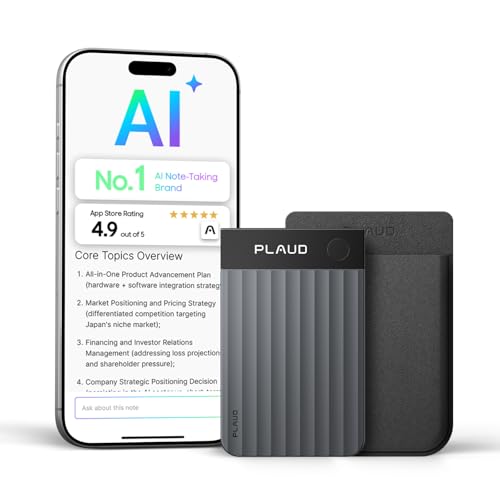
- AI beamforming for in-person conversations
- Transcribes in 112 languages with speaker labels
- Ultra-slim design with automatic transfer
Best For: Portable interviews where transcripts and summaries are priorities
Best for Assisted Mixing

- Four XLR inputs and multitrack recording
- AI noise reduction and tone enhancement
- Four headphone outputs with separate controls
Best For: Small interview productions needing simpler audio processing
Best Budget Pocket Recorder

- Built-in noise-reduction microphone
- 64GB storage with WAV and MP3 support
- Voice activation and USB-C file transfer
Best For: Simple portable interviews, meetings, and lectures
Best All-Around Field Recorder

- 32-bit float recording helps avoid distorted takes
- Built-in stereo mics plus two XLR/TRS inputs
- USB-C recording or streaming with SD backup
Best For: Flexible interview and field recording setups
Best for Long-Duration Voice Notes

- Voice activation helps limit silent sections
- 128GB storage supports extensive recording capacity
- Password protection and organized folders included
Best For: Simple, extended interviews and conversations
Best Two-Person Podcast Recorder

- Two USB mic inputs and two headphone outputs
- Mix-Minus helps prevent remote-call echo
- AI noise reduction and individual-track SD recording
Best For: Two-person podcasts with remote guests
Best Compact Pick

- 32-bit float stereo recording
- Built-in X/Y microphones
- USB microphone mode
Best For: Solo interviewers and mobile podcasters
Best for Multi-Guest Shows
Zoom PodTrak P8 Recorder Bundle

- Records up to six microphones
- Six independent headphone outputs
- Multitrack recording to SD card
Best For: Panels, multi-guest podcasts, and studio interviews
Best XLR Flexibility

- Two locking XLR/TRS inputs
- 32-bit/96kHz recording
- Waveform display and headphone output
Best For: Two-person interviews using external microphones
Best All-Around Interview Recorder – Zoom PodTrak P4
For creators comparing podcast recorders for interviews, the Zoom PodTrak P4 is a flexible choice for multi-person conversations. It combines four XLR microphone inputs, four individually controlled headphone outputs, and dedicated support for phone or USB-based remote guests.
Best For: In-person podcast interviews with up to four microphones, plus occasional phone or remote guests.
Pros:
- Four XLR inputs with phantom power support multiple microphones.
- Four headphone outputs provide individual volume control.
- Automatic mix-minus supports call-in phone and remote interviews.
- Battery-powered operation and multitrack recording add flexibility.
Cons:
- Battery life is listed at up to 3.5 hours on two AA batteries.
- It is larger and less pocket-friendly than compact voice recorders.
The P4 is particularly practical when everyone needs a microphone and a headphone feed. Its sound pads, USB audio interface mode, and multitrack recording make it a strong starting point for structured interview productions.
Best AI Notes Companion – Plaud Note Pro
The Plaud Note Pro takes a different approach to podcast recorders for interviews, pairing built-in microphones with automatic transcription and summaries. Its compact design is suited to recording conversations in person, on calls, or through online meetings before turning them into organized notes.
Best For: Interviewers who want portable recording plus searchable transcripts, speaker labels, summaries, and follow-up items.
Pros:
- Four MEMS microphones and one VPU use AI beamforming to capture voices across a room.
- Smart dual-mode recording switches between phone calls and in-person use.
- Plaud Intelligence supports transcription in 112 languages with speaker labels.
- Credit-card-sized, 0.12-inch-thin design weighs 1.06 ounces.
Cons:
- There is no headphone jack for monitoring during recording.
- Advanced transcription access includes plan limits, with 300 free minutes per month and optional upgrades.
This is less of a conventional multitrack podcast production recorder and more of an interview documentation tool. It makes sense when fast transcripts and structured summaries matter more than XLR inputs, live monitoring, or hands-on audio mixing.
Best for Assisted Mixing – Zoom PodTrak P4next
For podcast recorders for interviews that need more hands-off audio processing, the Zoom PodTrak P4next adds AI noise reduction, tone enhancement, and compression to a four-input setup. It is designed for small rooms, multiple speakers, and phone-connected recording workflows.
Best For: Interview podcasts with up to four mic inputs where simpler audio balancing and clean phone-video capture are useful.
Pros:
- Four XLR inputs support up to four people with multitrack recording.
- Up to +70 dB of gain accommodates demanding microphones.
- Four headphone outputs have separate volume controls.
- AI noise reduction, tone enhancement, and compression reduce manual mixing work.
Cons:
- It requires two AA batteries for portable operation.
- The supplied notes identify SDHC as the hardware interface, so users should plan around that storage workflow.
The P4next is a strong fit for interviewers who want the P4-style layout with added processing assistance. Its phone connection can also send audio directly into video, avoiding a separate synchronization step.
Best Budget Pocket Recorder – EVISTR 64GB Voice Recorder
For straightforward podcast recorders for interviews, the EVISTR 64GB digital voice recorder offers a compact way to capture conversations without a mixer or external microphones. Its built-in microphone, voice activation, playback controls, and USB file transfer suit simple one-device recording.
Best For: Students, journalists, and interviewers who need an inexpensive portable recorder for meetings and conversational interviews.
Pros:
- Dynamic noise reduction and PCM processing support stereo recording up to 1536kbps.
- 64GB storage can hold up to 4,660 hours at 32Kbps.
- Voice activation can reduce silent sections and conserve storage.
- Supports WAV and MP3 recording with USB-C transfer to Windows or Mac.
Cons:
- Its built-in microphone does not provide the multi-mic connectivity of podcast production recorders.
- Voice activation may not suit interviews where every pause should be preserved.
The EVISTR is best viewed as a simple field voice recorder rather than a full podcast interface. It is a practical option for capturing interview audio quickly, then transferring files for editing later.
Best All-Around Field Recorder – Zoom H4 Essential
The Zoom H4 Essential is a versatile choice among podcast recorders for interviews, especially when you may also record music, video audio, or live performances. Its built-in stereo microphones, two XLR/TRS inputs, 32-bit float recording, and USB-C connectivity give you flexible ways to capture and back up conversations.
Best For: Interviewers and podcasters who need a portable recorder that can handle both built-in microphones and external professional audio gear.
Pros:
- 32-bit float recording helps capture audio without worrying about distorted takes.
- Built-in stereo microphones and two XLR/TRS inputs support different recording setups.
- Can record or stream through USB-C while saving a backup to an SD card.
- Spoken menu guidance makes operation easier for more users.
Cons:
- Requires two AA batteries when operating without another power source.
- Its broader feature set may be more than needed for simple voice-only interviews.
Choose the H4 Essential if you want one recorder for interviews and larger creative projects. It is particularly practical when you need input flexibility, clip-resistant recording, and a local backup.
Best for Long-Duration Voice Notes – EVIDA 128GB Voice Recorder
The EVIDA 128GB Digital Voice Recorder is a compact option for straightforward interviews, meetings, and conversations. Its voice activation, noise-cancellation microphone, password protection, and long stated battery life make it suited to recording speech without a more involved podcasting setup.
Best For: Interviewers who prioritize extended voice recording, simple file storage, and voice-activated capture over multi-microphone podcast production.
Pros:
- Voice activation can reduce blank sections and whisper-level snippets.
- Supports MP3 recording at multiple bit rates or WAV at 1536kbps.
- 128GB storage is rated for up to 9,296 hours of recording.
- Password protection, bookmarks, folder organization, and USB file transfer add convenience.
Cons:
- Uses a built-in mono microphone rather than stereo or external microphone inputs.
- No headphone jack is listed for monitoring during recording.
- Its feature set is focused on voice recording rather than full podcast mixing or streaming.
This recorder makes sense for interviewers who want a small, uncomplicated device with substantial storage. Consider another model if live monitoring, multiple microphones, or advanced podcast production is central to your workflow.
Best Two-Person Podcast Recorder – Zoom PodTrak P2
The Zoom PodTrak P2 is designed specifically for two-person podcast interviews. It accepts two USB microphones, provides two headphone outputs, and can connect a phone or computer for a remote guest while Mix-Minus helps prevent echo and feedback.
Best For: Two-person podcast interviews that use USB microphones, remote call-ins, and streamlined recording or streaming.
Pros:
- Two USB mic inputs and two headphone outputs simplify a two-person setup.
- Built-in Mix-Minus helps eliminate echo and feedback for call-in guests.
- AI noise reduction, tone shaping, compression, and de-essing support cleaner spoken audio.
- Can stream to a smartphone or computer while saving individual tracks to an SD card.
Cons:
- Battery life is rated at up to four hours on four AA batteries.
- Its two-microphone design is less suited to larger in-person panels.
- It is tailored to USB microphones rather than the XLR/TRS inputs found on some field recorders.
The PodTrak P2 is the most directly podcast-focused option here. Choose it when interview simplicity, headphone monitoring, remote guests, and built-in voice processing matter more than broad instrument or microphone connectivity.
Best Compact Pick – Zoom H1 Essential Recorder
For shoppers seeking podcast recorders for interviews, the Zoom H1 Essential is a compact option focused on clear stereo voice capture. Its built-in X/Y microphones, 32-bit float recording, and USB-C microphone mode make it practical for interviews, podcasts, calls, and mobile content.
Best For: Solo interviewers, mobile podcasters, and creators who want a lightweight recorder with built-in stereo microphones.
Pros:
- 32-bit float recording helps provide clip-free audio.
- Built-in X/Y stereo microphones capture conversations naturally.
- Can work as a USB microphone for calls, livestreams, and podcasts.
- Lightweight 92-gram design with up to 10 hours of battery life.
Cons:
- Its built-in microphone design is less suited to multi-person setups than a recorder with multiple XLR inputs.
- Uses two AAA batteries, which need to be replaced or recharged separately.
The H1 Essential is a straightforward choice when portability and fast setup matter more than extensive routing or guest-monitoring features. It is especially useful for one-on-one interviews recorded in the same space.
Best for Multi-Guest Shows – Zoom PodTrak P8 Recorder Bundle
For larger interview productions, the Zoom PodTrak P8 is one of the more fully equipped podcast recorders for interviews. It records up to six microphones and 13 tracks simultaneously to an SD card, while providing separate headphone outputs and mixes for each guest.
Best For: Panel discussions, studio podcasts, and interview hosts managing several microphones and guests.
Pros:
- Supports up to six microphones with dedicated preamps and up to 70 dB of gain.
- Six independent headphone outputs help each participant monitor comfortably.
- Mix-minus supports echo-free call-ins through TRRS or USB connections.
- Touchscreen editing and assignable sound pads support production without a computer.
Cons:
- At 5.78 pounds, it is substantially less portable than compact handheld recorders.
- Bluetooth calling requires the separately sold Zoom BTA-2 receiver.
- The broader feature set may be more than a solo interviewer needs.
The PodTrak P8 is designed for organized, multi-person recording rather than minimal grab-and-go work. Its individual headphone mixes, multitrack recording, and call-in options make it the strongest fit here for complex interview sessions.
Best XLR Flexibility – Zoom H1 XLR Recorder
The Zoom H1 XLR is a practical middle ground for podcast recorders for interviews, pairing a compact recorder format with two XLR/TRS combo inputs. It supports 32-bit/96kHz recording, waveform level viewing, and headphone monitoring for more controlled microphone-based interviews.
Best For: Interviewers who use external microphones and need two-channel recording in a portable format.
Pros:
- Two locking XLR/TRS inputs accommodate microphones and instruments.
- 32-bit/96kHz recording delivers detailed audio capture.
- OLED waveform display provides a quick view of recording levels.
- 3.5mm stereo input and headphone output add connection flexibility.
Cons:
- It does not offer the multi-guest input and headphone features of a dedicated podcast mixer.
- Requires two AA batteries for portable operation.
- Its small 0.96-inch display may provide less viewing space than a larger touchscreen recorder.
The H1 XLR is a solid choice when your interview setup calls for external microphones but you still want a compact recorder. Its two-channel design is better suited to a host-and-guest configuration than to larger panels.
How We Picked the Best Podcast Recorders for Interviews
We focused on the features that matter most during real interviews: recording quality, microphone connectivity, portability, monitoring, battery or power flexibility, storage, and ease of transferring files. We also considered specialized tools such as phone inputs, USB connectivity, multitrack recording, noise reduction, voice activation, transcription, and password protection.
The selection includes dedicated podcast recorders, compact field recorders, and straightforward digital voice recorders. That mix is intentional: a two-person studio interview has different needs from a quick lecture, street interview, or remote call.
Quick Comparison
| Best For | Look For | Product Types |
|---|---|---|
| Two-person podcast interviews | Two quality inputs, headphone monitoring, simple controls | Two-channel recorders, compact podcast units |
| Multi-guest conversations | Four or more microphone inputs and independent monitoring | Multitrack podcast recorders |
| Remote interviews | Phone or USB connectivity, mix-minus support, reliable monitoring | Podcast mixers and USB-enabled recorders |
| Fast note-taking and transcription | Voice activation, internal storage, AI transcription or summaries | Digital voice recorders and AI recorders |
| Field interviews | Built-in microphones, compact size, battery operation | Handheld recorders |
Key Buying Factors for Podcast Recorders for Interviews
Inputs and Microphone Compatibility
Check how many people you plan to record and what microphones you already own. XLR inputs suit dynamic and condenser microphones, while USB microphone inputs can simplify a computer-based setup. Built-in stereo microphones are convenient for casual interviews but offer less control over microphone placement.
Monitoring and Recording Workflow
Headphone outputs let you and your guests catch background noise, clipping, or connection problems before they ruin a session. Multitrack recording is useful when each speaker needs separate editing, while a stereo mix is quicker to manage for simple publishing.
Remote-Call Support
For online interviews, prioritize phone input, USB connectivity, or a dedicated mix-minus feature. These connections help prevent the remote guest from hearing an unwanted echo and make it easier to record both sides of the conversation.
Portability, Storage, and Power
Field interviews benefit from compact designs, internal microphones, long battery life, and removable memory. Verify supported card capacity, file formats, charging options, and whether the recorder can continue working while connected to a computer or power bank.
Noise Reduction and Transcription
Noise reduction can improve speech in imperfect environments, but it cannot replace good microphone placement. AI transcription and summaries are useful for reviewing interviews quickly; check subscription requirements, language support, privacy terms, and the accuracy you need before relying on them.
Who Should Buy Which Podcast Recorders for Interviews?
- Choose a compact podcast recorder if you want dedicated controls, multiple inputs, headphone monitoring, and a repeatable interview workflow.
- Choose a handheld recorder if you record on location, need built-in microphones, or want a flexible tool for interviews, video, music, and ambient sound.
- Choose a digital voice recorder for lectures, one-on-one notes, quick interviews, and situations where simplicity and long internal storage matter more than studio control.
- Choose an AI voice recorder if searchable transcripts and summaries are central to your workflow and you are comfortable reviewing cloud or app-based processing policies.
- Choose a larger multitrack podcast unit when you regularly host several guests, need independent headphone mixes, or want more control during live production.
Before buying, map your typical interview: number of speakers, microphone type, recording location, remote or in-person connection, and editing workflow. The best option is the one that handles those requirements without adding unnecessary setup during the conversation.