
The right field monitor gives directors a clearer view of framing, focus, exposure, and performance without forcing everyone around the camera to crowd in. For 2026, this roundup spans compact DSLR monitors, bright daylight displays, and larger production screens with SDI, HDMI, or multi-view support.
Use the comparison and buying advice below to match monitor size, brightness, connectivity, and power options to your camera package and shooting environment.
Best 10 Field Monitor for Directors Picks for 2026
Best Daylight Monitor
VILTROX DC-A1 7-inch HDR Field Monitor

- 2800-nit display for bright outdoor locations
- 4K 60Hz HDMI pass-through
- Waveform, LUT, and exposure tools
Best For: Directors filming outdoors who want advanced monitoring in a portable kit
Best Large Broadcast Monitor
SEETEC P173-9HSD-CO 17.3-inch Monitor

- Large 17.3-inch 1080p display
- 3G-SDI, HDMI, composite, and component I/O
- Tally lights and broadcast monitoring tools
Best For: Broadcast and studio setups needing a spacious director or client display
Best Portable Touchscreen
NEEWER F700 7-inch Field Monitor

- 2000-nit touchscreen with auto backlight
- 4K HDMI loop-in and loop-out
- Includes two-battery NP-F configuration
Best For: Small crews wanting a bright, feature-rich monitor for mobile shoots
Best Production Monitor
osee Mega 15S 15.4-inch HDR Monitor
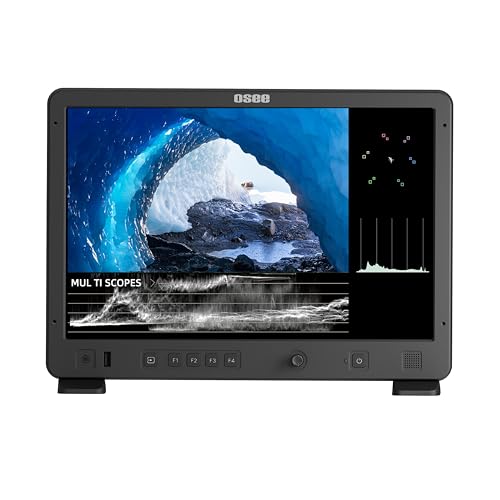
- 15.4-inch 10-bit, 1500-nit display
- Dual 3G-SDI and 4K HDMI connectivity
- Calibration, HDR, and waveform tools
Best For: Professional sets needing a large, SDI-ready director or client monitor
Bright Outdoor Pick

- Bright touchscreen with detachable sun hood
- 4K HDMI and 3G-SDI loop support
- Waveform, false color, focus assist, and 3D LUTs
Best For: Directors needing detailed monitoring in bright outdoor or mixed-signal shoots
Multi-Camera Control Pick

- Quad-view monitoring for four HDMI sources
- Four HDMI loop outputs for switcher workflows
- 15.6-inch screen with peaking and false color
Best For: Live production and studio teams overseeing multiple HDMI feeds
Lightweight Starter Pick

- Lightweight 7-inch IPS monitoring screen
- Histogram, zebra, focus assist, and false color
- Two batteries, sunshade, and cables included
Best For: Beginners and small crews using HDMI-equipped cameras
Best Bright Compact Monitor

- 1200-nit 5.5-inch touchscreen
- 4K HDMI in/out with 3D LUT tools
- Includes NP-F550 battery and sunshade
Best For: Portable outdoor directing and camera monitoring
Best Large Crew Monitor

- 10.1-inch 2000-nit touchscreen
- 4K 60Hz HDMI input and output
- Professional scopes and focus tools
Best For: Collaborative daylight shooting with multiple crew members
Best Budget-Friendly Compact Monitor
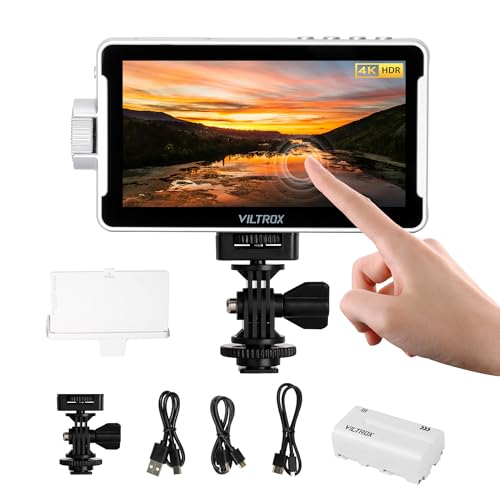
- 5.5-inch 1920x1080 touchscreen
- 400-nit display with Rec.709 and sRGB coverage
- 4K HDMI and USB-C connectivity
Best For: Compact indoor and shaded-location monitoring
Best Daylight Monitor – VILTROX DC-A1 7-inch HDR Field Monitor
For directors who need a field monitor for directors that remains usable outdoors, the VILTROX DC-A1 combines a highly bright 2800-nit display with 4K 60Hz HDMI pass-through. Its touchscreen interface, exposure tools, LUT support, and flexible power options make it well suited to demanding location shoots.
Best For: Outdoor filmmakers, documentary crews, and directors who need strong daylight visibility and advanced on-set monitoring tools.
Pros:
- 2800-nit 7-inch 1080p IPS touchscreen is designed for clear daylight viewing.
- Supports 4K 60Hz HDMI input and lag-free pass-through to another display or transmitter.
- Includes waveform, vectorscope, histogram, false color, focus peaking, and custom 3D LUT support.
- Accepts NP-F batteries, DC input, and USB-C power, with a hard-shell case included.
Cons:
- The glossy screen finish may still produce reflections in some lighting conditions.
- Its 7-inch size provides less viewing area than larger production monitors.
The DC-A1 is a particularly strong choice when daylight visibility and professional analysis tools matter more than having the largest possible screen. The included accessories and multiple power methods also make it practical for mobile production.
Best Large Broadcast Monitor – SEETEC P173-9HSD-CO 17.3-inch Monitor
The SEETEC P173-9HSD-CO is a large-format field monitor for directors who need an easy-to-see image for production, playback, or client viewing. Its 17.3-inch 1080p screen, 3G-SDI connectivity, tally lights, and included carry case make it especially suitable for broadcast-style setups.
Best For: Broadcast crews, studio productions, and director or client stations that benefit from a larger screen and broad video connectivity.
Pros:
- Large 17.3-inch 1920×1080 display makes framing and review easier from a distance.
- Accepts and outputs 3G-SDI, HDMI, composite, and component signals.
- Provides focus assist, check field, image freeze, image flip, markers, and safe-frame tools.
- Includes front and rear three-color tally lights, a V-mount plate, sunshade, adapter, and suitcase.
Cons:
- At 400 nits, it is less daylight-oriented than the brighter monitors in this roundup.
- The larger form factor is less convenient for compact camera rigs.
- Its stated display resolution is limited to 1920×1080.
This SEETEC monitor prioritizes viewing area and broadcast integration over compact portability. It is a sensible pick when directors, operators, or clients need to see the image clearly in a dedicated production position.
Best Portable Touchscreen – NEEWER F700 7-inch Field Monitor
The NEEWER F700 gives directors a portable field monitor for directors with a bright 2000-nit touchscreen, 4K HDMI loop-through, and a broad set of exposure and focus tools. Its included two-battery configuration and multiple mounting points add flexibility for mobile shoots.
Best For: Indie filmmakers, videographers, and small crews wanting a bright touchscreen monitor with extensive tools and flexible power.
Pros:
- 7-inch 1080p IPS touchscreen reaches 2000 nits and supports manual or automatic backlight control.
- Supports HDMI input and output with 4K loop-through and headphone audio monitoring.
- Offers waveform, vectorscope, histogram, false color, zebras, HDR, peaking, and custom LUT uploads.
- Supports NP-F batteries, USB-C charging, and DC power; the two-battery model is supplied with two batteries.
Cons:
- The included DC power cable is not supplied according to the product notes.
- Battery runtime is listed as about 2.4 hours per NP-F750 battery.
- Cooling fans may add operational noise in quiet shooting environments.
The F700 balances brightness, portability, and feature depth well. It is a practical all-rounder for directors who want touchscreen control and professional monitoring aids without moving to a larger production display.
Best Production Monitor – osee Mega 15S 15.4-inch HDR Monitor
The osee Mega 15S is a production-focused field monitor for directors who need a larger image, professional SDI connectivity, and reliable on-set exposure evaluation. Its 15.4-inch 10-bit IPS panel, 1500-nit brightness, calibration support, and V-mount power design suit commercial and multi-camera productions.
Best For: Directors, DITs, and cinematographers working on commercial, cinema, or multi-camera sets with SDI-based workflows.
Pros:
- 15.4-inch 10-bit IPS display provides a spacious 1920×1200 monitoring area with 1500-nit brightness.
- Includes dual 3G-SDI inputs and outputs plus a 4K HDMI input for versatile signal routing.
- Offers auto color calibration, HDR preview, 3D LUT importing, waveform, vectorscope, histogram, false color, and peaking.
- Pre-installed V-mount plate, XLR/AC options, and C-stand or light-stand mounting support production use.
Cons:
- Its 15.4-inch size and production mounting hardware make it less compact than a camera-top monitor.
- The product notes list an 18 ms response time.
- It is positioned as a professional production monitor rather than a simple low-cost display.
The Mega 15S is the strongest fit here for a director’s station or client village where screen size, SDI routing, and color evaluation are priorities. Its calibration and rigging options help it integrate into more demanding professional workflows.
Bright Outdoor Pick – VILTROX DC-X3
For directors who need a field monitor for directors that remains readable outdoors, the VILTROX DC-X3 combines a bright 6-inch touchscreen with HDMI and SDI connectivity. Its waveform, vectorscope, histogram, false-color, focus-assist, and custom 3D LUT tools support more confident framing and exposure decisions.
Best For: Directors and camera crews working in bright outdoor conditions or mixed HDMI/SDI production environments.
Pros:
- High-brightness display with a detachable hood for improved daylight visibility.
- Supports 4K HDMI and 3G-SDI loop input/output, plus headphone audio monitoring.
- Offers extensive exposure, focus, color, and image-analysis tools.
- Accepts NP-F batteries, DC power, and compatible USB-C power.
Cons:
- Its professional feature set may be more than casual shooters need.
- The monitor is larger and heavier than a basic compact on-camera display.
The DC-X3 is a strong choice when visibility, signal flexibility, and detailed monitoring tools matter more than minimal size. The included NP-F550 battery and multiple power options also make it practical for location work.
Multi-Camera Control Pick – FEELWORLD ATEM156
The FEELWORLD ATEM156 is a field monitor for directors built around multi-camera and live-production oversight. Its 15.6-inch screen can display four HDMI sources in a quad split, while loop outputs help route those signals to a switcher or other production equipment.
Best For: Directors, streamers, and broadcast teams monitoring multiple HDMI cameras or sources from a studio or control position.
Pros:
- Displays four DCI 4K24 or UHD 4K30 HDMI inputs in a quad split.
- Four HDMI loop outputs support integration with switchers and other displays.
- Supports quad, dual, single-image, and picture-in-picture viewing modes.
- Includes peaking, false color, headphone monitoring, and VESA mounting.
Cons:
- The 250 cd/m² brightness is better suited to controlled environments than strong sunlight.
- It is less portable than a small on-camera field monitor.
- A V-mount battery plate is included, but the battery is not.
Choose the ATEM156 when the director needs a large shared view of several sources rather than a lightweight camera-top monitor. Its aluminum housing, loop-through connections, and flexible layouts make it particularly useful for live switching and studio workflows.
Lightweight Starter Pick – FEELWORLD FW759 PRO
The FEELWORLD FW759 PRO is a practical field monitor for directors who want a larger view than a camera’s built-in screen without adding much weight to a rig. Its 7-inch 1280×800 IPS display includes histogram, zebra, focus assist, and false-color tools for basic composition and exposure checks.
Best For: Beginners, vloggers, and small crews using DSLR, mirrorless, or camcorder HDMI setups.
Pros:
- Lightweight 300g design suits handheld rigs and gimbals.
- 7-inch IPS screen provides a clearer framing view than many built-in displays.
- Includes useful histogram, zebra, focus-assist, and false-color functions.
- Package includes two F550 batteries, sunshade, cables, and mounting accessories.
Cons:
- Its 1280×800 resolution is lower than full-HD monitoring options.
- It provides HDMI connectivity rather than the broader HDMI/SDI support of professional models.
- The 400-nit display may be less effective in direct sunlight.
The FW759 PRO emphasizes affordability, portability, and a ready-to-use accessory kit. It is a sensible entry-level choice for directors and creators who need essential monitoring aids without the complexity or weight of a larger production monitor.
Best Bright Compact Monitor – VILTROX DC-550 Pro II
The VILTROX DC-550 Pro II is a practical field monitor for directors who need a compact screen that remains readable outdoors. Its 5.5-inch 1200-nit display, touchscreen controls, 4K HDMI pass-through, and exposure and focus tools give a director a clearer view of the camera feed without adding much bulk.
Best For: Directors and camera operators working in bright outdoor conditions who want a small monitor with professional exposure, focus, and LUT tools.
Pros:
- 1200-nit brightness and included sunshade improve daylight visibility.
- Waveform, false color, histogram, focus assist, HDR, and 3D LUT support provide useful monitoring controls.
- HDMI input and output support signals up to 4K 30Hz and allow feed sharing.
- Includes an NP-F550 battery, multiple cables, case, and a one-year replacement service.
Cons:
- The 5.5-inch screen offers less viewing area than larger director monitors.
- Its listed native resolution is 1920×1080, despite supporting higher-resolution HDMI input.
Choose the DC-550 Pro II when portability and daylight readability matter more than having a large shared screen. Its included accessories and broad monitoring toolkit make it a well-equipped compact option.
Best Large Crew Monitor – FEELWORLD LUT11H
The FEELWORLD LUT11H is a strong field monitor for directors who need a large, shared image on set. Its 10.1-inch 1920×1200 screen, 2000-nit brightness, wide viewing angle, and dual HDMI inputs make it suited to collaborative monitoring in bright locations.
Best For: Directors working with several crew members who need a highly visible screen, extensive monitoring tools, and 4K 60Hz HDMI support.
Pros:
- Large 10.1-inch display with 2000-nit brightness is designed for daylight viewing.
- 170-degree viewing angle allows multiple crew members to watch simultaneously.
- Supports up to 4K 60Hz through dual HDMI inputs and one HDMI output.
- Includes waveform, RGB parade, vectorscope, false color, focus peaking, zebra, 3D LUT, and anamorphic de-squeeze tools.
Cons:
- At 810 g, it is less compact than a typical 5.5-inch field monitor.
- The package does not include a battery.
- Its 26-watt power consumption may require more substantial power planning.
The LUT11H is the most practical choice here for directors who prioritize shared visibility and high-brightness performance. Its larger footprint is the trade-off for a more comfortable monitoring experience across a crew.
Best Budget-Friendly Compact Monitor – VILTROX DC-V1
The VILTROX DC-V1 is a compact field monitor for directors who want a straightforward 5.5-inch touchscreen with Full HD detail and flexible power options. Its 400-nit display, HDMI connectivity, 3D LUT and HDR support, and included sunshade make it a useful choice for controlled-light or shaded shooting environments.
Best For: Directors who want a lightweight, Full HD on-camera monitor for indoor work, shaded locations, and general video production.
Pros:
- 5.5-inch 1920×1080 display runs at a 60Hz refresh rate.
- Supports 4K HDMI input and output while displaying a Full HD image.
- Offers touchscreen control, HDR, 3D LUT support, and Rec.709 and sRGB coverage.
- Supports battery and USB-C power and includes a sunshade hood.
Cons:
- 400-nit brightness is lower than the other monitors in this roundup.
- The supplied notes do not specify included battery details or a full accessory list.
- A 160-degree viewing angle is narrower than the larger FEELWORLD monitor’s listed angle.
The DC-V1 makes sense when a compact Full HD monitor is the priority and shooting is not dominated by direct sunlight. It delivers useful core features without the size or brightness demands of a larger director-focused display.
How We Picked the Best Field Monitor for Directors
We selected these 10 monitors based on the features that matter most during production: screen visibility, resolution, input and output compatibility, monitoring tools, physical size, portability, and power flexibility. The list includes compact 5.5- and 6-inch displays for camera operators, bright 7- and 10.1-inch options for outdoor work, and larger 15- to 17.3-inch monitors suited to directors, DITs, and video villages.
We also considered practical features such as touchscreen control, 3D LUT support, HDR capability, focus and exposure aids, SDI connectivity, HDMI 2.0 support, quad-view monitoring, and included mounting or sunshade accessories. Because camera systems vary widely, confirm the monitor’s exact signal, resolution, frame-rate, and battery requirements before buying.
Quick Comparison
| Best For | Recommended Type | What to Prioritize |
|---|---|---|
| Directing beside the camera | 7- to 10.1-inch monitor | High brightness, touch controls, focus tools |
| Video village or studio production | 15- to 17.3-inch monitor | Viewing size, SDI, HDR, reliable mounting |
| Multi-camera switching | Quad-split monitor | Multiple HDMI inputs and multiview layouts |
| Run-and-gun or gimbal work | 5.5- to 7-inch monitor | Low weight, battery support, HDMI pass-through |
| Bright outdoor locations | 1,500- to 2,800-nit monitor | Sunlight readability and a protective hood |
Key Buying Factors for a Field Monitor for Directors
Brightness and Screen Size
Brightness is critical outdoors, where a 400-nit display may be difficult to see. Monitors rated around 1,500 to 2,800 nits are better suited to direct daylight. Larger screens make group viewing easier, but they add weight and require sturdier support.
Inputs, Outputs, and Signal Support
Check whether your camera outputs HDMI, 3G-SDI, or both. HDMI is common on mirrorless and cinema cameras, while SDI is preferred for longer cable runs and professional broadcast setups. If you need to send the feed onward, verify that the monitor includes the required output and supports your camera’s resolution and frame rate.
Monitoring Tools
Focus peaking, false color, zebras, waveform, vectorscope, anamorphic de-squeeze, and 3D LUT support can help directors judge technical image quality more confidently. Touchscreen controls are convenient, although physical buttons may be preferable when working quickly or wearing gloves.
Power and Mounting
Confirm which battery type the monitor accepts and whether batteries, plates, or a power adapter are included. A sun hood is valuable outdoors, while a strong tilt arm, V-mount setup, or U-shaped bracket may be more suitable for a video village.
Who Should Buy Which Field Monitor for Directors?
Choose a compact 5.5- to 7-inch monitor if you need a lightweight display attached directly to a DSLR, mirrorless camera, gimbal, or small cinema rig. Directors working outside should favor a high-brightness model with a hood and dependable battery support.
For a director’s station, interview setup, or small video village, a 10.1- to 15.6-inch display offers a better balance of viewing comfort and portability. Choose the larger 17.3-inch broadcast-style option when several crew members need to review the image or when SDI connectivity is central to the workflow.
If you are monitoring several sources or working with a switcher, select the quad-split model rather than a conventional single-input monitor. Finally, prioritize SDI-capable production displays for broadcast, studio, and long-cable applications, and HDMI-focused monitors for most DSLR, mirrorless, and compact cinema-camera rigs.