
The best smart home hubs for apartments make it easier to connect lights, sensors, locks, thermostats, and other devices without adding unnecessary complexity or taking over valuable space.
These 10 hubs cover a range of priorities, from simple Alexa-based control and apartment-friendly security to local automation and broad protocol support. The right choice depends on your devices, network, privacy preferences, and how much customization you want.
Best 10 Smart Home Hubs for Apartments Picks for 2026
Most Versatile
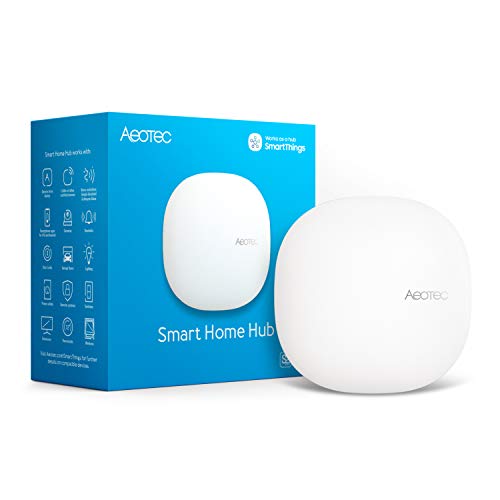
- Matter, Zigbee, Z-Wave Plus, and Wi-Fi support
- Works with Alexa and Google Home
- Wi-Fi or Ethernet setup with SmartThings automations
Best For: Mixed-brand apartment setups
Best for Tapo Devices

- Connects up to 64 Tapo devices
- Built-in chime and up to 90 dB siren
- Requires 2.4GHz Wi-Fi
Best For: Tapo-based apartment automation and alerts
Best Touchscreen Control

- Customizable 8-inch smart-home dashboard
- Built-in Wi-Fi, Zigbee, Matter, Thread, and more
- Controls cameras, locks, alarms, and routines
Best For: Alexa households wanting a shared visual control panel
Best for Local Automation

- Home Assistant OS comes preinstalled
- Keeps home data on the device
- USB expansion for Z-Wave, Zigbee, and Thread
Best For: Privacy-focused users building advanced apartment automations
Best for Lutron Lighting
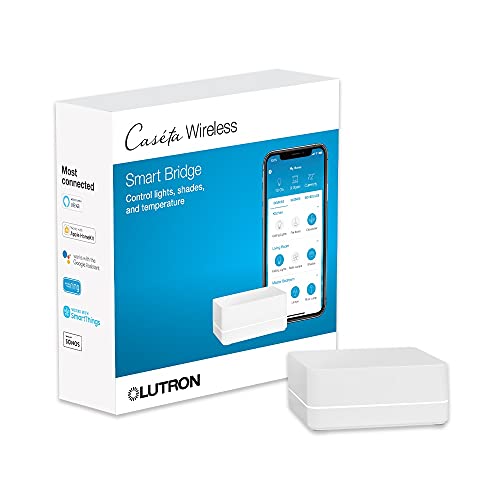
- Supports up to 75 Caseta devices
- Works with Alexa, HomeKit, Google Assistant, and more
- Easy router and app-based setup
Best For: Apartments built around Lutron Caseta lighting
Best for Advanced Local Automations

- Runs automations locally for quick response
- Supports Matter, Z-Wave, Zigbee, and Bluetooth
- No subscription required for full platform functionality
Best For: Advanced apartment setups needing broad protocol support
Best for Aqara Security

- Supports up to 128 Aqara devices
- Built-in alarm speaker and RGB night light
- Works with HomeKit, Google Assistant, Alexa, and IFTTT
Best For: Aqara-focused apartments using sensors and security automations
Long-Range Pick

- Up to 0.25-mile maximum range
- Smartphone and voice control support
- Compact wired hub without battery backup
Best For: YoLink-based apartment setups needing extended-range motion alerts
Best All-Around Automation

- Local control with offline operation
- Supports Zigbee, Matter, Thread, and Ethernet
- Works with 1,000+ brands without a subscription
Best For: Apartments needing broad compatibility and customizable routines
Best Matter Bridge
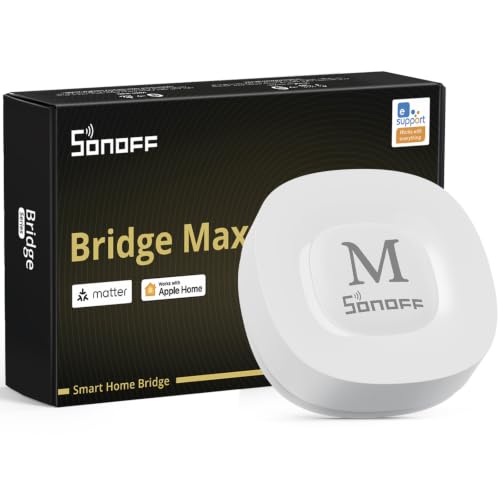
- Bridges Zigbee devices to Matter platforms
- Local web console with no cloud required
- Supports Home Assistant and includes a 90 dB alarm
Best For: Apartments consolidating Zigbee devices across major smart-home platforms
Most Versatile – Aeotec Smart Home Hub
For apartment dwellers who want broad device compatibility, the Aeotec Smart Home Hub is a flexible choice among smart home hubs for apartments. It supports Matter, Zigbee, Z-Wave Plus, Wi-Fi, Ethernet, Alexa, and Google Home, while the SmartThings app handles setup and automation.
Best For: Apartments with devices from multiple smart-home ecosystems.
Pros:
- Supports Matter, Zigbee, Z-Wave Plus, and Wi-Fi devices.
- Works with Alexa and Google Home voice control.
- Offers Wi-Fi or Ethernet connectivity and some local automations.
- SmartThings app is available for Android, iOS, and iPadOS.
Cons:
- Z-Wave Plus support is specified for the V3 model.
- Designed for use in North America.
The Aeotec hub stands out when your apartment already contains a mix of brands and protocols. Its wide compatibility makes it more adaptable than a hub limited to one product family.
Best for Tapo Devices – Tapo H100 Smart Hub
The Tapo H100 is a compact option for apartment residents building around Tapo sensors, switches, and buttons. It connects to a 2.4GHz Wi-Fi network, uses a low-power wireless protocol, and includes a built-in chime and siren.
Best For: Small Tapo-focused apartment security and automation setups.
Pros:
- Connects up to 64 Tapo devices.
- Supports sensor- and button-triggered Smart Actions.
- Provides up to a 90 dB siren with compatible sensors.
- Low-power connections can help extend device battery life.
Cons:
- Requires a 2.4GHz Wi-Fi network.
- Compatible device support is centered on Tapo sensors, switches, and buttons.
- It cannot directly connect to Tapo smart plugs or smart lighting.
Choose the H100 when you want a straightforward Tapo ecosystem rather than a broad, multi-brand hub. Its built-in alerts and stated 30-meter maximum range can be useful in many apartment layouts, though actual coverage varies.
Best Touchscreen Control – Amazon Echo Hub
The Amazon Echo Hub combines a customizable 8-inch touchscreen with Alexa control, making it a practical command center for smart home hubs for apartments. You can arrange device controls, view cameras, start routines, and manage compatible security devices from one wall-mounted panel.
Best For: Households wanting an easy, visual Alexa-based control panel.
Pros:
- Customizable dashboard with sections and resizable controls.
- Built-in hub supports Wi-Fi, Bluetooth, Zigbee, Matter, Sidewalk, and Thread devices.
- Can control compatible cameras, locks, alarms, and sensors.
- Supports wall mounting and optional tabletop placement.
Cons:
- Wall-mounting cable pass-throughs and power-over-Ethernet adapter are sold separately.
- Tabletop stand is sold separately.
- Some Ring features require Alexa+ and a compatible Ring subscription sold separately.
The Echo Hub is especially appealing if you prefer seeing controls rather than relying only on voice or phone apps. It also suits apartments where a single visible panel can simplify shared access to routines and security controls.
Best for Local Automation – Home Assistant Green
Home Assistant Green | Smart Home hub with Advanced Automation | Official Home Assistant Hardware
Check Price On AmazonHome Assistant Green is a compact, fanless hub for apartment residents who want advanced automation and local data storage. Home Assistant OS comes preinstalled, and the unit connects by Ethernet, with USB expansion available for Z-Wave, Zigbee, and Thread devices.
Best For: Privacy-conscious users who want powerful, customizable apartment automation.
Pros:
- Preinstalled Home Assistant OS simplifies initial setup.
- Stores home data locally on the device.
- Supports advanced automations across connected devices.
- Fanless design uses only a couple of watts and operates silently.
Cons:
- Ethernet is the listed network connection.
- Z-Wave, Zigbee, and Thread connectivity requires compatible USB devices.
- May be better suited to users comfortable expanding and configuring a flexible platform.
Home Assistant Green is a strong fit when control over data and automation matters more than a polished, single-brand ecosystem. Its small silent design works well in an apartment, while USB expansion leaves room to add wireless protocols later.
Best for Lutron Lighting – Lutron Caseta Smart Hub
For apartment dwellers building around Lutron Caseta switches and dimmers, this hub is a straightforward way to connect lighting with Alexa, Apple HomeKit, Google Assistant, Ring, Sonos, and Serena shades. It plugs into an outlet, connects to your router, and uses Clear Connect technology separately from Wi-Fi-connected devices.
Best For: Apartments centered on Lutron Caseta lighting and users who want broad voice-assistant and smart-home integration.
Pros:
- Supports up to 75 Caseta devices for gradual expansion.
- Works with Alexa, Apple HomeKit, Google Assistant, Ring, Sonos, and Serena shades.
- Simple router connection and app-guided setup.
- Clear Connect technology does not compete with Wi-Fi devices.
Cons:
- Its strongest fit is a home using Lutron Caseta devices.
- Caseta dimmers, switches, and coordinating accessories are sold separately.
This is one of the more focused smart home hubs for apartments: an appealing choice when reliable, expandable Lutron lighting matters more than broad multi-brand device support.
Best for Advanced Local Automations – Hubitat Elevation C-8 Pro
The Hubitat Elevation C-8 Pro is a versatile pick for smart home hubs for apartments when fast local automations and multi-protocol support are priorities. It processes routines on the hub, supports Matter, Z-Wave, Zigbee, and Bluetooth, and works with Alexa, Google Home, and Apple HomeKit.
Best For: Apartment residents who want advanced, subscription-free automations, broad device compatibility, and continued expansion.
Pros:
- Local processing keeps automations running when the internet is unavailable.
- Supports Matter 1.5, Z-Wave 800 Long Range, Zigbee 3.0, and Bluetooth.
- Compatible with more than 1,000 devices across over 100 brands.
- Includes Rule Machine and an AI-assisted routine builder without a required subscription.
Cons:
- Advanced automation features may require more setup and learning than simpler hubs.
- Its extended wireless range may be more capability than a small apartment needs.
With local control, multiple radios, and no recurring subscription requirement, the C-8 Pro is a strong long-term platform for renters or homeowners who expect their apartment setup to become increasingly sophisticated.
Best for Aqara Security – Aqara Hub M1S Gen 2
The Aqara Hub M1S Gen 2 is a compact option among smart home hubs for apartments, especially for users building around Aqara sensors and automation devices. It connects Aqara Zigbee products, provides alarm and doorbell sounds, and integrates with Apple HomeKit, Google Assistant, Alexa, and IFTTT.
Best For: Aqara-based apartment setups that need sensors, alarm features, lighting, and simple app-controlled routines.
Pros:
- Links up to 128 Aqara devices with Zigbee 3.0, when repeaters are used as required.
- Built-in 2-watt speaker can serve as an alarm or doorbell.
- RGB light and illumination sensor support configurable lighting and automations.
- Works with Apple HomeKit, Google Assistant, Alexa, and IFTTT.
Cons:
- Requires a 2.4 GHz Wi-Fi network and does not support Wi-Fi 6.
- It supports Aqara Zigbee devices rather than third-party Zigbee devices.
- Some child-device features may not be universally compatible across platforms.
This hub makes the most sense when Aqara is your preferred ecosystem. Its built-in speaker, night-light functions, and illumination sensor add useful apartment-friendly features beyond basic device bridging.
Long-Range Pick – YoLink Smart Home Hub
For apartments that need dependable sensor connectivity, the YoLink Smart Home Hub is a straightforward option among smart home hubs for apartments. It connects by wire, supports smartphone compatibility and voice control, and lists a maximum range of up to 0.25 miles.
Best For: Apartment residents building a YoLink-based setup with motion alerts and extended-range connectivity.
Pros:
- Lists a maximum range of up to 0.25 miles.
- Supports smartphone compatibility and voice control.
- Compact, lightweight design at approximately 4.33 x 4.33 x 1.06 inches and 0.19 kg.
Cons:
- This regular hub model does not include battery backup.
- The supplied details identify wired connectivity and do not list broader protocol support.
The YoLink hub is best suited to shoppers prioritizing range and simple motion-alert functionality. Its lack of battery backup is worth considering for apartment setups where continued operation during an outage matters.
Best All-Around Automation – Homey Pro mini
The Homey Pro mini is a versatile choice among smart home hubs for apartments, combining local control with Zigbee, Matter, Thread, and Ethernet support. It is designed for routines, energy monitoring, alerts, and integration with more than 1,000 brands without a required subscription.
Best For: Apartment dwellers who want broad compatibility, customizable automations, and local processing.
Pros:
- Supports Zigbee, Matter, Thread, and Ethernet out of the box.
- Offers local data processing and automations that can continue when the internet is down.
- Works with 1,000+ brands and integrates with Alexa, Google Assistant, and Siri.
- No monthly subscription is required for listed Homey features and cloud services.
Cons:
- Z-Wave, Bluetooth, and infrared support require the separately sold Homey Bridge.
- The supplied details do not list included sensors or other smart devices.
Homey Pro mini stands out when an apartment setup includes devices from several ecosystems. Its local operation and no-subscription approach are useful for privacy-conscious users, while the optional Bridge adds flexibility at extra cost.
Best Matter Bridge – SONOFF Bridge Max
The SONOFF Bridge Max is a practical choice among smart home hubs for apartments that use Zigbee devices across multiple ecosystems. It bridges Zigbee, BTHome, and eWeLink devices to Matter platforms, supports Wi-Fi and Ethernet, and offers local management without requiring cloud access.
Best For: Apartment users connecting Zigbee devices with Apple Home, Alexa, Google Home, Home Assistant, or a local security setup.
Pros:
- Bridges Zigbee, BTHome, and eWeLink devices to Matter platforms.
- Supports Wi-Fi, Ethernet, Zigbee, and a local web console.
- Can work with Home Assistant through MQTT or Matter bridging.
- Includes a built-in 90 dB alarm and mobile notifications for supported security setups.
Cons:
- Its strongest compatibility focus is Zigbee and supported Matter ecosystems.
- The supplied details do not indicate built-in support for every smart-home protocol.
Bridge Max is a strong fit for renters or apartment owners consolidating Zigbee equipment while keeping management local. The Ethernet option and 90 dB alarm add useful flexibility, particularly for users comfortable configuring a more technical setup.
How We Picked the Best Smart Home Hubs for Apartments
We focused on hubs that suit apartment living, where space, wireless reliability, setup simplicity, and compatibility matter. The selection includes products supporting major standards such as Matter, Zigbee, Z-Wave, Thread, or proprietary wireless protocols. We also considered compatibility with Alexa, Google Assistant, Apple Home, and popular device ecosystems, along with local automation features, Ethernet or Wi-Fi connectivity, security functions, and expansion potential.
A good apartment hub should solve a real problem without requiring a complex server setup or extensive rewiring. Because renters and homeowners have different needs, the list includes both beginner-friendly hubs and advanced platforms for users who want precise control.
Quick Comparison
- Best overall flexibility: Aeotec Smart Home Hub
- Best for Alexa and visual control: Amazon Echo Hub
- Best for advanced local automation: Home Assistant Green
- Best for serious DIY control: Hubitat Elevation C-8 Pro
- Best for Lutron lighting: Lutron Caséta Smart Hub
- Best for affordable Tapo devices: Tapo H100
- Best for Aqara accessories: Aqara Hub M1S Gen 2
- Best for long-range sensors: YoLink Smart Home Hub
- Best compact multi-protocol option: Homey Pro mini
- Best for SONOFF devices: SONOFF Bridge Max
Key Buying Factors for Smart Home Hubs for Apartments
Device Compatibility
Check the wireless standards used by your current and planned devices. Matter can improve cross-platform compatibility, while Zigbee and Z-Wave provide access to large accessory ranges. Some hubs work best within one brand ecosystem, so confirm compatibility before buying.
Network and Installation Requirements
Wi-Fi hubs are often convenient for apartments, but Ethernet-connected models can provide a more stable connection. Check whether the hub requires 2.4GHz Wi-Fi, a wired router connection, cloud registration, or a separate bridge for certain products.
Local Control and Privacy
Local processing can improve responsiveness and keep automations running during an internet outage. Cloud-dependent hubs may be easier to configure, but they can rely more heavily on account access, remote services, and subscription changes.
Size, Placement, and Apartment Limitations
Choose a hub that fits near your router or in a central location. Metal cabinets, thick walls, and crowded wireless environments can reduce range. If you cannot install dedicated wiring or repeaters, prioritize strong wireless coverage and simple placement.
Who Should Buy Which Smart Home Hubs for Apartments?
Choose the Aeotec or Homey Pro mini if you want broad protocol support and room to grow. Pick Home Assistant Green or Hubitat if advanced automation, local control, and customization matter more than a beginner-oriented interface.
Amazon Echo Hub is a natural fit for Alexa households that want a wall-friendly visual control panel. Lutron Caséta is the focused choice for reliable lighting control, while Aqara, Tapo, and SONOFF make the most sense when most of your accessories already come from those ecosystems.
For apartments with hard-to-reach areas or a need for extended sensor range, consider YoLink. Before purchasing, list your existing devices, identify the standards they use, and decide whether you prefer maximum simplicity or deeper automation control.