
A power amplifier with balanced inputs can reduce noise over long cable runs while giving your system the headroom needed for clearer, more controlled sound. The right model depends on your speakers, listening space, impedance, and whether you need home audio simplicity or professional PA flexibility.
We selected 10 options ranging from compact desktop and home-theater amplifiers to rack-mountable professional units. Use the guide below to compare power ratings, connectivity, controls, and the practical differences that matter before buying.
Best 10 Power Amplifier with Balanced Inputs Picks for 2026
Professional Power and DSP Control
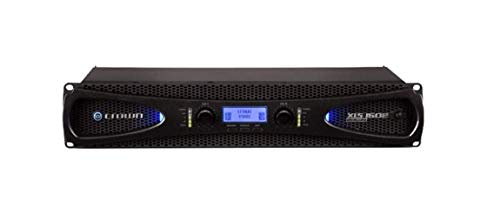
- 525W per channel at 4 ohms
- Balanced XLR/TRS and RCA inputs
- DSP crossover and Peakx Limiters
Best For: Live sound and professional rack systems
Compact Balanced Stereo Value

- Up to 180W stereo or 235W mono
- Combo XLR/TRS balanced input
- Stereo, mono, and 12V trigger operation
Best For: Desktop and home audio systems
Efficient Mid-Power Rack Amplification

- 350W per channel at 4 ohms
- Balanced XLR/TRS plus RCA inputs
- Lightweight Class D rack design
Best For: Moderate-power live sound and installations
High-Output Gigging Amplifier
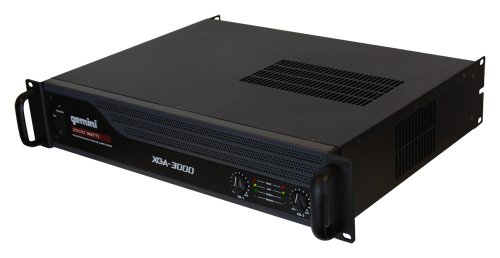
- Up to 3,000W listed output
- Balanced XLR and 1/4-inch inputs
- Speakon and binding-post outputs
Best For: Mobile DJs, PA systems, and live events
Audiophile Dual-Mono Power
T9.4 Balanced Class AB Amplifier

- 225W RMS per channel with twin 800VA transformers
- Balanced XLR and RCA inputs with dual-mono design
- High damping factor for demanding floorstanding speakers
Best For: Audiophile stereo systems and difficult-to-drive floorstanding speakers
Flexible Rack Power
Pyle PTA1000BT Bluetooth Power Amplifier

- XLR and TRS inputs with Bluetooth and USB playback
- Up to 2,000W maximum bridged output
- Rack-mountable chassis with fan cooling and LED meters
Best For: PA, DJ, and installation systems needing varied inputs
Professional Stage Power
Crown XLi1500 Two-Channel Amplifier

- 450W continuous per channel at 4 ohms
- 900W bridged 8-ohm configuration
- Rack-mountable with forced-air cooling and selectable voltage
Best For: DJ, PA, and stage systems requiring straightforward rack amplification
Balanced Home Theater Power

- 2x90W per channel
- RCA and XLR inputs
- Multi-channel home theater design
Best For: Two-channel home theater setups using RCA or XLR sources
Flexible PA Amplification

- 100W x2 RMS output
- Bluetooth 5.3 and XLR input
- 225W bridged output at 4 ohms
Best For: Small PA, party, DJ, and garage sound systems
Compact PA and Home Audio

- 2x120W stereo output
- Three RCA input pairs
- Mic, pager, and mixing modes
Best For: Small PA, karaoke, meeting, and analog home audio systems
Professional Power and DSP Control – Crown XLS1502
If you need a power amplifier with balanced inputs for live sound, installations, or rack-based systems, the Crown XLS1502 combines substantial two-channel output with useful DSP features. Its balanced XLR and TRS inputs, selectable sensitivity, crossover controls, and Peakx Limiters make it flexible for demanding setups.
Best For: Live sound users and installers who need lightweight rack power, DSP control, and high output.
Pros:
- Delivers 525W per channel at 4 ohms and up to 1,550W bridged at 4 ohms.
- Balanced XLR and TRS inputs complement RCA connectivity.
- Built-in DSP includes band-pass filters, PureBand crossover, and Peakx Limiters.
- Lightweight 8.6-pound Class D design supports rack installation.
Cons:
- Its professional rack format and feature set may be more than a basic home system requires.
- Speaker outputs are listed as 1/4-inch connections.
The XLS1502 is a strong choice when output headroom and system control matter. Sleep mode, menu locking, forced-air cooling, and the included authorized-dealer warranty add practical value for regular professional use.
Compact Balanced Stereo Value – Fosi Audio ZA3
The Fosi Audio ZA3 is a compact power amplifier with balanced inputs for desktop audio, passive speakers, and small home theater systems. Its combo XLR/TRS input helps reduce interference, while stereo and mono modes let you adapt the amplifier to different speaker or subwoofer arrangements.
Best For: Desktop listeners and home audio users who want a small, flexible amplifier with balanced connectivity.
Pros:
- Provides up to 180W in stereo mode or 235W in mono mode.
- Balanced combo input accepts both XLR and 1/4-inch TRS plugs.
- 12V trigger input supports synchronized system operation.
- Compact design includes a 48V power supply and upgraded ventilation.
Cons:
- Its maximum output is lower than that of the larger professional rack amplifiers in this roundup.
- Op-amp rolling requires compatible replacement components and user experimentation.
With a small footprint, low reported noise floor, and switchable operating modes, the ZA3 is well suited to systems where balanced connection and flexibility are more important than extreme venue-level output.
Efficient Mid-Power Rack Amplification – Crown XLS1002
For systems that need a power amplifier with balanced inputs but not the higher output of the XLS1502, the Crown XLS1002 offers a practical two-channel alternative. It combines balanced XLR and TRS inputs with RCA connectivity, DSP crossover functions, and speaker protection in a lightweight Class D chassis.
Best For: Small to midsize live sound rigs, installations, and rack systems needing efficient two-channel amplification.
Pros:
- Produces 350W per channel at 4 ohms and up to 1,100W bridged at 4 ohms.
- Balanced XLR and TRS inputs provide flexible source compatibility.
- PureBand crossover, Peakx Limiters, and selectable input sensitivity support system tuning.
- 8.6-pound rack-mount design uses efficient DriveCore Class D technology.
Cons:
- It offers less output than the Crown XLS1502.
- Cooling uses forced-air fans, which may matter in noise-sensitive locations.
The XLS1002 makes sense when you want Crown’s compact professional format and control features while matching a more moderate power requirement. Sleep mode and system reset add useful convenience for installed or touring setups.
High-Output Gigging Amplifier – Gemini XGA-3000
The Gemini XGA-3000 is a high-output power amplifier with balanced inputs for DJs, PA systems, and live events. It accepts XLR, 1/4-inch, and RCA sources, supports stereo or bridged mono operation, and provides multiple speaker connection options for flexible stage and venue setups.
Best For: Mobile DJs, live performers, and venues needing substantial output and broad connection compatibility.
Pros:
- Rated for up to 3,000W of output according to the supplied specifications.
- Balanced XLR and 1/4-inch inputs also accommodate unbalanced RCA sources.
- Speakon outputs and 5-way binding posts support varied speaker installations.
- Protection circuits, variable-speed cooling, and front-panel status LEDs support gig use.
Cons:
- At 17.6 pounds or more depending on the listed specification, it is heavier than the Crown models.
- The supplied details do not identify DSP crossover features.
- Its 2U chassis requires more rack space than compact amplifiers.
Choose the XGA-3000 when raw output, bridgeability, and connection flexibility take priority. Its protection features and road-oriented metal chassis make it a practical option for recurring mobile or venue-based work.
Audiophile Dual-Mono Power – T9.4 Balanced Class AB Amplifier
The T9.4 is a power amplifier with balanced inputs designed for demanding home audio systems. Its dual-mono construction, twin 800VA transformers, high damping factor, and 225W-per-channel output suit listeners who want substantial control over difficult-to-drive floorstanding speakers.
Best For: Audiophile stereo systems, low-sensitivity floorstanding speakers, and setups that benefit from balanced XLR connectivity and strong bass control.
Pros:
- Physically separated dual-mono layout with independent amplification, power supply, and protection circuits.
- 225W RMS per channel, twin 800VA C-core transformers, and a 160,000μF capacitor array provide substantial reserves.
- Includes balanced XLR and RCA inputs, bi-wiring-capable binding posts, and a heavy-duty aluminum chassis.
Cons:
- At 36 kg, it is considerably heavier than the other listed amplifiers.
- Its one-year warranty is relatively short for a premium component.
The T9.4 is the most specialized choice here, emphasizing stereo separation, robust power delivery, and high-current speaker control. Confirm that your rack or cabinet can accommodate its substantial weight and chassis.
Flexible Rack Power – Pyle PTA1000BT Bluetooth Power Amplifier
The Pyle PTA1000BT is a power amplifier with balanced inputs aimed at flexible sound-system use. It combines XLR and TRS inputs with Bluetooth, USB playback, bridgeable two-channel operation, and rack-mountable construction for small PA, DJ, or installation setups.
Best For: Rack-based PA and DJ systems that need multiple source options, bridge mode, and straightforward front-panel monitoring.
Pros:
- Provides two XLR and two 1/4-inch TRS inputs, plus Speakon and binding-post speaker connections.
- Supports Bluetooth streaming, USB-A MP3 playback, and a stated 2,000W maximum bridged output.
- Rack-mountable design includes cooling fans, LCD display, and signal, clip, protect, and level indicators.
Cons:
- The supplied notes specify peak or maximum output rather than a continuous per-channel rating.
- Its feature set is oriented toward PA and DJ use rather than audiophile-focused stereo listening.
Choose the PTA1000BT when connectivity and operating flexibility matter as much as amplification. Its bridge mode, wireless playback, and front-panel controls make it practical for event-oriented systems.
Professional Stage Power – Crown XLi1500 Two-Channel Amplifier
The Crown XLi1500 is a two-channel professional power amplifier for DJ, PA, and stage applications. It delivers 450W continuous per channel at 4 ohms, offers selectable input voltage, and uses forced-air cooling with flexible I/O for rack-based installations.
Best For: Professional or semi-professional sound systems that need dependable two-channel rack amplification for PA and stage use.
Pros:
- Rated for 450W continuous per channel at 4 ohms.
- Two-channel design supports conventional stereo operation, with a stated 900W bridged 8-ohm capability.
- Rack-mountable chassis provides forced-air cooling, selectable input voltage, and flexible input/output connections.
Cons:
- The supplied notes do not specifically list balanced XLR inputs, so verify connector compatibility before buying.
- It lacks the Bluetooth and USB playback features included with the Pyle model.
The XLi1500 is a focused choice for users who prioritize established professional amplification, rack integration, and continuous output specifications. It is better suited to PA and stage systems than feature-rich home playback.
Balanced Home Theater Power – Monolith M2100X
The Monolith M2100X is a straightforward choice when you need a power amplifier with balanced inputs for a home theater or multi-channel audio setup. It provides two channels at 90 watts per channel and accepts both RCA and XLR connections, giving you flexibility when matching it with different source equipment.
Best For: Home theater users who need two-channel amplification with RCA and XLR input support.
Pros:
- Provides 2×90 watts per channel.
- Includes both RCA and XLR inputs.
- Designed for multi-channel home theater applications.
Cons:
- No Bluetooth, USB, or EQ controls are listed in the supplied details.
- The supplied specifications do not identify speaker impedance compatibility.
Choose the M2100X if connection flexibility matters more than built-in streaming or front-panel tone controls. Its RCA and XLR inputs make it particularly useful in systems that use balanced source connections.
Flexible PA Amplification – Donner MAMP7
The Donner MAMP7 is a versatile power amplifier with balanced inputs for home parties, small live performances, DJs, and garage systems. It combines two 100-watt RMS channels with Bluetooth 5.3, USB, RCA, AUX, and XLR connectivity, while bridge mode can deliver 225 watts through one channel at 4 ohms.
Best For: Users who want flexible wired and wireless inputs, adjustable EQ, and bridgeable output for small sound systems.
Pros:
- Offers 100W x2 RMS or 225W x1 in bridge mode.
- Includes Bluetooth 5.3, USB, RCA, AUX, and XLR inputs.
- Provides treble, midrange, and bass controls.
- Supports stereo, parallel, and bridge input modes.
Cons:
- Bluetooth range is specified at 59 feet.
- USB support is limited to devices up to 64 GB.
- Its 2U rack-style design may be more equipment than a simple home setup requires.
The MAMP7 stands out when you need more than a basic amplifier. Its combination of balanced XLR connectivity, wireless playback, EQ controls, and bridge operation makes it adaptable across several small-format audio applications.
Compact PA and Home Audio – Pyle PTA4
The Pyle PTA4 is a compact stereo receiver for buyers who want a power amplifier with balanced-input-style versatility alongside microphone and RCA connectivity. It delivers 120 watts per channel, includes three pairs of RCA inputs, and adds a microphone input, pager/mixing modes, and rotary EQ controls for announcements or karaoke.
Best For: Home audio, small PA, meeting, and karaoke setups that need microphone mixing and simple analog controls.
Pros:
- Delivers 2×120 watts for speakers with 4-ohm impedance.
- Includes three pairs of RCA inputs plus a 1/4-inch microphone input.
- Pager mode supports microphone talkover for meetings and announcements.
- Offers bass, treble, balance, microphone, and master-volume controls.
Cons:
- The supplied details list RCA connectivity but do not list XLR or other balanced inputs.
- Its warranty is listed as 90 days.
- It does not provide the same input flexibility as the Donner MAMP7.
The PTA4 is best viewed as an accessible analog PA and home audio amplifier rather than a dedicated balanced-input power amp. Its microphone features and pager/mixing switch make it practical for speech, karaoke, and basic multi-source systems.
How We Picked the Best Power Amplifier with Balanced Inputs
We focused on models with balanced XLR or combination balanced inputs, then considered output power, supported speaker impedance, channel configuration, construction, controls, and intended use. The lineup includes Class D, Class AB, stereo, dual-mono, bridgeable, home-audio, and professional PA designs so you can compare products across common setups.
Published wattage is useful but not sufficient on its own. We also looked for features that affect day-to-day operation, including DSP, limiters, EQ controls, Bluetooth, rack compatibility, Speakon connections, and flexible input options. Because manufacturer ratings may use different test conditions, treat power figures as a comparison point rather than a guarantee of identical real-world performance.
Quick Comparison: Power Amplifiers with Balanced Inputs
- Best for compact home systems: Fosi Audio ZA3 and Donner models offer smaller form factors and convenient features.
- Best for professional versatility: Crown XLS1502 and XLS1002 combine balanced inputs with DSP-oriented controls and efficient Class D designs.
- Best for higher-output PA use: Gemini XGA-3000, Pyle rack-mount models, and Crown XLi1500 are aimed at louder systems and event-style setups.
- Best for home theater: Monolith M2100X is designed around clean multi-channel home audio rather than portable PA operation.
- Best for traditional stereo amplification: The T9.4 dual-mono Class AB design emphasizes separate channel operation and balanced connectivity.
Key Buying Factors for a Power Amplifier with Balanced Inputs
Power, Impedance, and Headroom
Check the amplifier’s continuous output at the impedance your speakers actually use, typically 4 or 8 ohms. Avoid choosing solely by the largest advertised peak number. Adequate headroom helps prevent clipping, but excessive power can damage speakers if the system is poorly configured or driven recklessly.
Balanced Connectivity and System Matching
Balanced XLR inputs are most valuable when connected to a mixer, audio interface, processor, or preamp with balanced outputs, especially across long cable runs. Confirm whether the inputs are true balanced connections and check the available outputs, including RCA, TRS, or Speakon connections, before ordering adapters or cables.
Channels, Bridging, and Speaker Setup
A two-channel amplifier can run left and right speakers independently, while bridge mode combines channels for greater output to a compatible load. Bridging changes the minimum impedance and wiring requirements, so follow the manufacturer’s instructions and never assume every speaker is suitable for bridged operation.
Controls, Protection, and Installation
DSP, filters, limiters, gain controls, cooling, and protection circuits can make a major difference in a PA or installation. For rack systems, verify chassis size, ventilation, fan noise, and rear-panel clearance. For desktop or living-room use, prioritize low noise, compact dimensions, and simple gain adjustment.
Who Should Buy Which Power Amplifier with Balanced Inputs?
Choose a Crown XLS1502 or XLS1002 if you want an efficient, feature-rich amplifier for a studio, rehearsal space, installed system, or small PA. Consider the Crown XLi1500 or Gemini XGA-3000 when higher-output event or DJ operation matters more than compact size.
For a desk, bookshelf system, or modest home theater, the Fosi Audio ZA3, Donner, or Monolith M2100X may be a better fit depending on whether you value compact convenience, wireless features, or dedicated multi-channel home audio. The T9.4 is worth considering if you prefer a dual-mono Class AB approach with balanced inputs.
Pyle’s rack-mount and home-audio models suit buyers who want broad connectivity, Bluetooth or media playback, and accessible controls at a lower cost. Before buying, match the amplifier to your speakers’ impedance and sensitivity, confirm the required input cables, and leave sufficient ventilation around the chassis.