
The right desktop microphone preamp can give a quiet or low-output microphone the gain, clarity, and headroom it needs without forcing you to replace the mic or audio interface.
This roundup compares 10 options ranging from compact inline boosters to feature-rich two-channel preamps, with attention to noise performance, controls, connectivity, and microphone compatibility.
Best 10 Desktop Microphone Preamps Picks for 2026
Transformer-Toned Choice
Auteur DT Single-Channel Preamp

- Single-channel mic and instrument preamp
- Ultra-high-speed input stage
- Transformer-balanced output
Best For: Dedicated desktop vocal or instrument recording
Maximum-Gain Versatility

- Up to 75dB gain and stated -120dB EIN
- 48V phantom power for condenser microphones
- Balanced XLR plus dual 3.5mm outputs
Best For: Flexible vocal and compact recording setups
Portable Two-Channel Pick

- Two channels with up to 66dB gain
- +4dBu and -10dBV outputs
- USB-C or power-bank operation
Best For: Mobile two-source recording and flexible routing
Simple Dynamic-Mic Booster

- Adds 29dB of gain for dynamic and ribbon mics
- Compact plug-and-play XLR design
- Requires 48V phantom power
Best For: Boosting low-output dynamic or ribbon microphones
Best Multi-Output Desktop Microphone Preamp
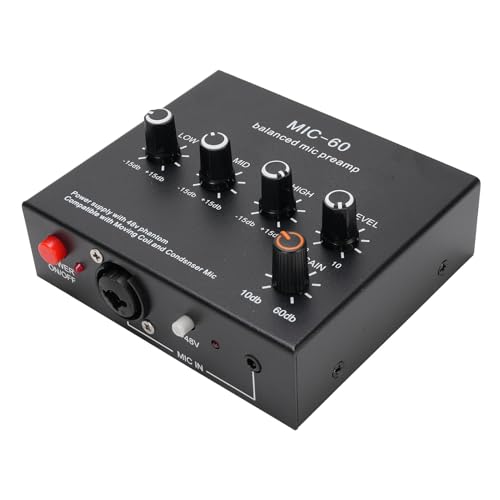
- Up to 60dB gain
- 48V power for condenser mics
- XLR, 3.5mm, and 6.35mm outputs
Best For: Flexible home studio and streaming setups
Best Plug-and-Play Desktop Microphone Preamp

- Clean 29dB signal boost
- LED phantom-power indicator
- Locking XLR connection
Best For: Compact studio and stage setups
Best Compact Desktop Microphone Preamp

- 20dB transparent gain
- 48V dynamic/condenser support
- Compact metal XLR design
Best For: Home studios, podcasts, and live streams
Flexible Low-Noise Gain

- 0–72 dB adjustable gain
- -120 dBV EIN rating
- Separate mic and instrument inputs
Best For: Dynamic microphones, instruments, and mobile or desktop streaming
Compact Dynamic Mic Booster

- +25 dB clean gain
- Balanced XLR input and output
- Compact metal housing
Best For: Dynamic and passive ribbon microphones in small recording setups
Portable Instrument-Friendly Gain

- 19–66 dB variable gain
- -120 dBV EIN rating
- XLR, TRS, and TS outputs
Best For: Home studios and portable vocal or instrument recording
Transformer-Toned Choice – Auteur DT Single-Channel Preamp
The Black Lion Audio Auteur DT is a focused option among desktop microphone preamps for setups that need one microphone or instrument channel. Its ultra-high-speed input stage and transformer-balanced output make it suited to users who want a dedicated desktop preamp rather than a multi-channel unit.
Best For: Home studios, vocal recording, and instrument sources that need one dedicated preamp channel.
Pros:
- Single-channel mic and instrument preamp design
- Ultra-high-speed input stage
- Transformer-balanced output
- Desktop-oriented construction weighing 5.1 pounds
Cons:
- Only one channel is provided
- The relatively large 12.75 x 10.45 x 6.3-inch footprint may require dedicated desk space
The Auteur DT is a straightforward choice when output balancing and a dedicated single-channel workflow matter more than channel count. Consider it for a permanent or semi-permanent desktop recording setup.
Maximum-Gain Versatility – MIC-1 75dB Mic Preamp
The MIC-1 is a flexible choice among desktop microphone preamps, offering up to 75dB of gain, a stated -120dB EIN, and support for dynamic and condenser microphones. Its balanced XLR output plus 3.5mm outputs also makes it practical for both studio connections and compact recording devices.
Best For: Vocalists, podcasters, and home recordists using low-output dynamic microphones, condenser microphones, or mixed-format monitoring and recording gear.
Pros:
- Up to +75dB of gain with stated -120dB EIN performance
- 48V phantom power supports condenser microphones
- Balanced XLR, 3.5mm mic, and 3.5mm line outputs
- Compact metal housing with a three-year warranty
Cons:
- The two input ports cannot operate simultaneously
- Its multiple output formats may require careful connection planning
With substantial gain and broad connectivity, the MIC-1 is built for users who need more than a basic inline booster. Check the input limitations before buying, especially if simultaneous sources are part of your workflow.
Portable Two-Channel Pick – RO03 2i2 Mic Preamp
The RO03 2i2 is a practical two-channel option among desktop microphone preamps, with adjustable gain from 19 to 66dB and a stated -120dB EIN. USB-C power and simultaneous balanced and unbalanced outputs make it useful for mobile rigs as well as fixed studio setups.
Best For: Two-microphone or mixed microphone-and-instrument recording, mobile interviews, vlogs, and setups connecting to both professional and consumer equipment.
Pros:
- Two channels with up to 66dB of gain
- Handles two mics, two instruments, or one of each simultaneously
- Provides +4dBu balanced and -10dBV unbalanced outputs
- Runs from 5V/1A USB-C power or a power bank
Cons:
- Requires correct gain staging; +4dBu output should not feed a mic input
- USB-C power is required for operation
The RO03 2i2 stands out when channel flexibility and portable power are priorities. Its output-level options are useful, but buyers should plan their cabling carefully to avoid overload or distortion.
Simple Dynamic-Mic Booster – StudioMan DPM1 Inline Preamp
The StudioMan DPM1 is a compact inline option among desktop microphone preamps, designed to add 29dB of gain to low-output dynamic and ribbon microphones. It fits between the microphone and an interface, mixer, or other XLR-equipped device, helping users avoid excessive gain from the main preamp.
Best For: Podcasters, streamers, vocalists, and live-sound users with dynamic or ribbon microphones and an interface or mixer that supplies phantom power.
Pros:
- Adds 29dB of clean, transparent gain
- Designed for dynamic and ribbon microphones
- Compact plug-and-play XLR format
- Metal casing helps shield against interference
Cons:
- Not for condenser microphones
- Requires 48V phantom power, which is not included
- Provides a fixed gain amount rather than adjustable gain
The DPM1 is an uncomplicated solution when a dynamic or ribbon microphone needs additional level without replacing the existing interface. Confirm phantom-power availability and microphone compatibility before purchasing.
Best Multi-Output Desktop Microphone Preamp – 3-Input 60dB Mic Booster
For desktop microphone preamps that can handle varied setups, this VBESTLIFE model combines up to 60dB of gain, 48V power, and three input channels. Its balanced circuit and multiple output options make it a flexible choice for home recording, podcasting, and live streaming.
Best For: Users who need broad microphone compatibility and flexible connections in a compact desktop unit.
Pros:
- Provides up to 60dB of gain for low-output dynamic microphones.
- Supports both dynamic and condenser microphones with 48V power.
- Offers XLR, 3.5mm, and 6.35mm connections for mixers, interfaces, speakers, and other devices.
- Compact metal housing helps reduce interference and is easy to store.
Cons:
- The manufacturer warranty is listed as 90 days.
- Its many connection options may be more than a simple single-microphone setup requires.
This is a versatile option when your desktop microphone preamp needs to serve recording and streaming equipment alike. Choose it for connection flexibility and high available gain rather than a minimalist configuration.
Best Plug-and-Play Desktop Microphone Preamp – StudioMan CPM1L 29dB Booster
If you want a straightforward desktop microphone preamp for adding gain to a compatible microphone signal, the StudioMan CPM1L offers 29dB of low-noise boost in a compact metal adapter. Its indicator light and locking mechanism make setup status and connection security easy to monitor.
Best For: Studio and stage users seeking a compact XLR signal booster with visible power confirmation.
Pros:
- Provides 29dB of gain through a low-noise preamp circuit.
- LED indicator confirms when phantom power is supplied.
- Locking mechanism helps prevent accidental disconnections.
- Gold-plated contacts and standard XLR ports support broad professional-audio compatibility.
Cons:
- It is designed around XLR connections rather than offering multiple output formats.
- The supplied notes specifically describe it for condenser microphones, so check compatibility with your microphone before buying.
The CPM1L is a focused choice for users who value simple installation, a secure connection, and an at-a-glance operating indicator. Its 29dB boost is more targeted than the higher-gain multi-input models in this roundup.
Best Compact Desktop Microphone Preamp – 20dB Low-Noise Booster
This compact microphone preamplifier is a practical pick among desktop microphone preamps for users who want clean, moderate gain without a large control surface. It supplies 20dB of balanced amplification, 48V power, and an XLR output for dynamic and condenser microphone applications.
Best For: Home studios, podcasting, and streaming setups that need a compact XLR preamp with 48V support.
Pros:
- Delivers 20dB of clean, transparent gain.
- Supports dynamic and condenser microphones with 48V power.
- Fully balanced circuitry is designed for low-noise operation without added coloration.
- Rugged black metal casing helps reduce electromagnetic interference.
Cons:
- Offers less gain than the 60dB model in this roundup.
- The supplied specifications identify an XLR output, so it may be less suitable for setups needing several output formats.
With its small footprint and straightforward feature set, this model suits desktop users who need a clean signal lift rather than extensive routing. It is especially sensible when low noise and portability matter more than maximum gain.
Flexible Low-Noise Gain – RO-04 Mic Preamp
For desktop microphone preamps, the RO-04 stands out when you need substantial, adjustable gain without a high noise floor. Its 0–72 dB range, dual output levels, and separate microphone and instrument inputs make it adaptable for studio recording, podcasting, livestreaming, and mobile setups.
Best For: Low-output dynamic microphones, livestreamers, podcasters, and users who also record instruments.
Pros:
- Adjustable 0–72 dB gain range suits microphones from low-output dynamics to more sensitive sources.
- Rated at -120 dBV EIN for a very low noise floor when additional gain is needed.
- Separate microphone and 1 MΩ instrument inputs support microphones, guitar, and bass.
- USB-C power-bank support and dual output levels add flexibility for desktop and mobile streaming.
Cons:
- Its 2.42-pound weight and larger footprint are less portable than simpler inline boosters.
- The wide feature set may be more than needed for a basic single-microphone setup.
The RO-04 is a versatile choice if you want one preamp to cover demanding dynamic microphones, instruments, and different streaming devices. It is especially appealing when clean, high gain and power flexibility matter more than a minimal setup.
Compact Dynamic Mic Booster – StudioMan CL-100 XLR Preamp
Among desktop microphone preamps, the StudioMan CL-100 is a straightforward option for adding clean gain to dynamic and passive ribbon microphones. Its compact metal housing and standard XLR input/output make it easy to place between a microphone and an interface, mixer, or recording device.
Best For: Dynamic-microphone users, podcasters, streamers, and compact home-studio signal chains.
Pros:
- Provides a dedicated +25 dB gain boost for low-level dynamic and passive ribbon microphones.
- Standard balanced XLR connections support interfaces, mixers, and other compatible equipment.
- Compact metal chassis offers desk-friendly placement and EMI/RFI shielding.
- 10 Hz–20 kHz frequency response and stated high headroom support full-range recording.
Cons:
- It is designed primarily as a fixed-gain booster rather than a variable-gain preamp.
- The notes specifically target dynamic and passive ribbon microphones, so it is less versatile for instrument recording.
The CL-100 makes sense when your main problem is insufficient level from a dynamic microphone and you want a small, simple XLR solution. Its fixed 25 dB boost keeps the setup uncomplicated, though users seeking broader control may prefer a variable-gain model.
Portable Instrument-Friendly Gain – RO03 Mic Preamp
The RO03 is one of the more flexible desktop microphone preamps for users who need multiple output formats and portable USB-C power. Its 19–66 dB usable gain range, -120 dBV EIN rating, and 1 MΩ instrument input support dynamic, condenser, and ribbon microphones as well as direct instrument recording.
Best For: Budget-conscious home studios, vocal recording, instrument users, and portable creators who need varied line outputs.
Pros:
- Offers a practical 19–66 dB gain range with a stated -120 dBV EIN noise performance.
- Supports dynamic, condenser, and ribbon microphones plus instruments through a 1 MΩ input.
- XLR, TRS, and TS outputs provide flexible connections, with +4 dBu and -10 dBV output options.
- Type-C power improves portability and compatibility with different power sources.
Cons:
- The microphone and instrument inputs cannot be used simultaneously.
- The manufacturer recommends connecting to an audio interface’s TRS line input for the lowest noise, which may require a suitable cable.
- Its gain range starts at 19 dB, so it is less suited to applications requiring near-unity gain.
The RO03 is a strong fit when connection flexibility and instrument compatibility are priorities. It offers useful output choices and portable power, but careful cabling—particularly using a TRS line input—is important for achieving the stated low-noise performance.
How We Picked These Desktop Microphone Preamps
We focused on practical features that affect everyday recording: available gain, noise performance, input and output formats, phantom-power support, channel count, monitoring features, and overall flexibility. The selection includes single-channel preamps for simple vocal or broadcast setups, two-channel models for stereo or dual-microphone work, and compact boosters designed to add gain close to the microphone.
Specifications such as EIN, gain range, Hi-Z support, high-pass filtering, phase controls, and balanced XLR connections were considered alongside usability. Because microphone and interface requirements vary, no single model is ideal for every setup.
Quick Comparison
| Best For | Features to Prioritize | Recommended Type |
|---|---|---|
| Dynamic microphones | High clean gain and low noise | Inline or desktop booster |
| Condenser microphones | 48V phantom power and balanced inputs | Full-featured preamp |
| Two microphones | Two independent channels | Dual-channel preamp |
| Home studios | Gain control, monitoring flexibility, and low EIN | Studio-style desktop unit |
| Instruments and microphones | Hi-Z input, phase, and filtering | Multi-function preamp |
Key Buying Factors for Desktop Microphone Preamps
Gain and Noise Performance
Dynamic and ribbon microphones often need substantially more gain than condenser microphones. Choose a unit with enough clean gain for your microphone and speaking or singing distance. A low EIN rating can help preserve detail when substantial amplification is required, especially with quiet sources.
Phantom Power and Microphone Compatibility
Condenser microphones generally require 48V phantom power, while many dynamic microphones do not. Phantom power should be switchable, and ribbon-microphone users should verify compatibility before connecting vintage or passive ribbon designs.
Inputs, Outputs, and Channel Count
Check whether the preamp uses balanced XLR connections and whether its output matches your interface, mixer, recorder, camera, or computer setup. A two-channel model is useful for stereo recording, interviews, podcasts, or two-person sessions, while a single-channel unit may be more compact and affordable.
Controls and Extra Features
Useful additions may include high-pass filtering, phase reversal, Hi-Z input, signal indicators, multiple output formats, and independent channel controls. These features are valuable when the preamp must handle more than a basic microphone-to-interface connection.
Power, Placement, and Build
Confirm how the unit is powered and leave room for its cables and controls on your desk. Metal housings can be reassuring for portable or frequent-use setups, but connection layout and easy access to gain and phantom controls matter just as much.
Who Should Buy Which Desktop Microphone Preamps?
Choose a compact inline booster if you use a low-output dynamic microphone and simply need more level before an interface or mixer. These models are convenient for speech, streaming, and basic podcasting.
Choose a single-channel desktop preamp if you want more control, a dedicated gain stage, or a sturdier studio-oriented connection. This is a sensible choice for solo vocals, voice-over, and one-microphone recording.
Choose a two-channel preamp for interviews, stereo sources, dual vocals, or a setup that may expand. Independent gain controls provide more flexibility than a single booster.
Choose a feature-rich model with Hi-Z, filtering, or phase controls if you record instruments as well as microphones or need more control over difficult sources. Before buying, match the preamp’s connectors, power requirements, gain range, and phantom-power behavior to the rest of your signal chain.