
Choosing the right machine for prototype work comes down to speed, consistency, material support, and how much post-processing you can tolerate. The best options balance print quality with dependable day-to-day use.
Below, we focus on 3D printers for prototypes that can help you move from concept to test part faster, whether you need affordable entry-level hardware or a more advanced multi-material system.
Best 10 3d Printers for Prototypes Picks for 2026
Fast Enclosed FDM Pick

- 500mm/s printing with 20,000 mm/s² acceleration
- Enclosed design and auto bed leveling
- Up to 16 colors with AMS support
Best For: Rapid prototype iterations and presentation-ready models
Tough Detail Resin

- ABS-like durability for functional prototypes
- 8K detail with textures down to 35 microns
- Water-washable cleanup and low-viscosity flow
Best For: Detailed resin prototypes and small functional parts
Rapid CoreXY Choice

- 600mm/s travel speed with 20,000mm/s² acceleration
- Auto leveling plus quick 3-second nozzle swaps
- Direct extruder and vibration compensation
Best For: Fast prototype cycles and efficient small-batch printing
Tough PLA Upgrade

- Up to 5x impact toughness vs standard PLA
- ±0.02mm accuracy for precise parts
- Low warp, strong adhesion, and clog-free feeding
Best For: Functional PLA prototypes, brackets, and test parts
Large-Format Multi-Material Prototyping
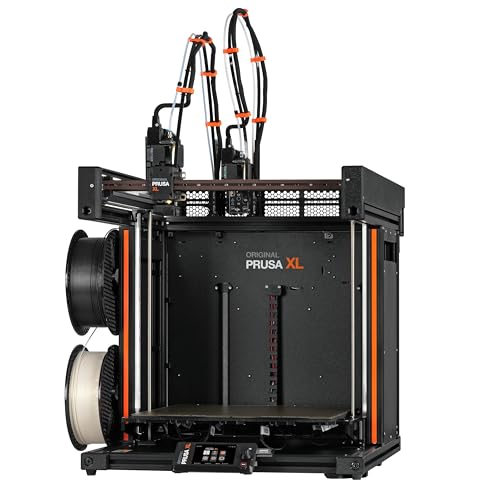
- Two-toolhead multi-material system
- 14.17 inch cube build volume
- Segmented heated bed for large prints
Best For: Complex functional prototypes and large prints with multi-material needs
Fast Beginner Prototype Printing

- Prints up to 250 mm/s
- CR Touch auto leveling
- Sprite direct drive for PLA, PETG, TPU
Best For: Quick prototype iterations with beginner-friendly setup
Kids-Friendly AI Starter

- AI model tools make creating simple without design skills.
- Enclosed, quiet, leveling-free design suits home use.
- Includes 8,000+ models and an all-in-one starter kit.
Best For: Kids, families, and beginners making simple concept models
Compact Beginner Builder

- Fully assembled and ready to print in about 8 minutes.
- Auto leveling and app control make setup simple.
- Small, quiet, and suitable for home or classroom use.
Best For: Beginners and students printing small prototype ideas
Fast Enclosed FDM Pick – Bambu Lab P1S
If you’re comparing 3d printers for prototypes, the Bambu Lab P1S is built for fast turnaround and cleaner results across a wide range of materials. Its 500mm/s speed, 20,000 mm/s² acceleration, automatic bed leveling, and enclosed design make it a strong fit when you need functional prototype prints without a long setup or tuning process.
Best For: Makers and teams that want a fast, enclosed FDM printer for prototype iterations and multi-material presentations.
Pros:
- Very fast printing with 500mm/s speed and 20,000 mm/s² acceleration
- Enclosed body helps support advanced filaments and more stable printing
- Automatic bed leveling reduces setup friction and first-layer issues
- Supports up to 16 colors with AMS for more presentation-ready prototypes
Cons:
- Multi-color printing requires a Bambu Lab AMS connection
- Carbon/glass fiber reinforced polymers are not recommended
- More advanced materials have limits compared with standard PLA/PETG use
The P1S is a practical choice when speed, ease of use, and material flexibility matter more than maximum build volume. For prototype workflows that benefit from rapid iteration and polished output, it offers a balanced mix of automation and performance.
Tough Detail Resin – ELEGOO 8K ABS-Like Resin
For 3d printers for prototypes that need fine detail and tougher parts, this ELEGOO 8K water washable ABS-like resin is aimed at functional, small-scale printing. It combines 8K clarity with ABS-like durability, low viscosity for smoother flow, and water-wash cleanup, making it useful when prototype accuracy and easier post-processing both matter.
Best For: Engineers, makers, and modelers who need detailed resin prototypes with better strength than standard resin.
Pros:
- ABS-like formula is designed for functional prototypes and mechanical parts
- 8K detail captures textures as fine as 35 microns
- Water-washable for simpler cleanup than alcohol-based resin workflows
- Low viscosity helps reduce trapped air and failed layers
Cons:
- Resin printing still requires a compatible resin printer and post-processing
- More suited to small, detailed parts than large build volumes
- Handling liquid resin is less convenient than FDM filament workflows
This resin makes sense when prototype work needs crisp features and better toughness than typical display resin. It is especially appealing for functional small parts, test pieces, and detailed models where surface quality is a priority.
Rapid CoreXY Choice – FLASHFORGE Adventurer 5M
If speed is the priority in 3d printers for prototypes, the FLASHFORGE Adventurer 5M is designed to keep iteration cycles short. Its CoreXY structure, 600mm/s travel speed, 20,000mm/s² acceleration, auto bed leveling, and quick-change nozzle system are all aimed at fast, repeatable printing with less downtime.
Best For: Rapid prototype production for users who want fast setup, high speed, and simple nozzle changes.
Pros:
- 600mm/s travel speed and 20,000mm/s² acceleration for fast output
- Fully automatic bed leveling helps with consistent first layers
- 3-second detachable nozzle changes improve workflow flexibility
- Direct extruder, dual-fan cooling, and vibration compensation support print quality
Cons:
- Build volume is 220x220x220mm, which may be limiting for larger parts
- Best suited to users comfortable with a modern app-based workflow
- High-speed focus may not be necessary for slower, one-off prints
The Adventurer 5M stands out when prototype teams want fast turnarounds without lots of manual setup. Its combination of speed, automation, and quick nozzle swaps makes it a strong fit for iterative testing and short production runs.
Tough PLA Upgrade – OVERTURE Super PLA+
When you already have one of the best 3d printers for prototypes, the filament you choose can make a big difference in strength and reliability. OVERTURE Super PLA+ is built for tougher functional prints, offering improved impact resistance, low warp behavior, and consistent dimensional accuracy for parts like brackets, tools, and test pieces.
Best For: FDM users who need a stronger PLA option for functional prototype parts and dependable day-to-day printing.
Pros:
- Up to 5x the impact toughness of standard PLA
- Low shrinkage and strong layer adhesion support reliable parts
- ±0.02mm dimensional accuracy helps with precise prototypes
- Vacuum-sealed and dried to reduce moisture-related bubbles and clogging
Cons:
- Still a PLA-based material, so it is not the toughest option overall
- Best suited to FDM printers that accept 1.75mm filament
- Functional performance depends on printer settings and part design
For prototype work, this filament is a smart upgrade over basic PLA when you need better toughness without making printing more complicated. It is a practical choice for users who want dependable, precise output for everyday test parts and light functional use.
Reliable Everyday Prototyping – ELEGOO Neptune 3 Pro
If you want one of the more practical 3d printers for prototypes, the ELEGOO Neptune 3 Pro focuses on dependable setup and consistent results rather than flashy extras. Its 225 x 225 x 280 mm build volume suits everyday prototype sizes, while auto bed leveling and a direct drive extruder help reduce the usual first-print frustrations.
Best For: Makers who want a straightforward printer for daily prototype work, flexible materials, and reliable first layers.
Pros:
- 36-point auto bed leveling helps make first-layer setup easier.
- Dual-gear direct drive extruder supports PLA, TPU, PETG, and ABS.
- Silent stepper motors keep operation as low as 47 dB.
- Power-loss resume and filament runout sensor add peace of mind on longer jobs.
Cons:
- Build volume is solid for daily work, but not large-format.
- Designed more for reliability than advanced multi-material prototyping.
Overall, the Neptune 3 Pro is a sensible choice when you need a dependable prototype printer that balances ease of use, material flexibility, and steady print quality. It is especially appealing if you want less calibration hassle and more consistent everyday output.
Large-Format Multi-Material Prototyping – Original Prusa XL 2-Toolhead
For teams comparing 3d printers for prototypes, the Original Prusa XL stands out as a large-format machine built for complex, functional work. Its 14.17 x 14.17 x 14.17 inch build volume, dual toolhead system, and CoreXY motion make it a strong fit for multi-part prototypes and support-heavy prints.
Best For: Engineering teams, studios, and advanced makers who need large prototypes and multi-material capability.
Pros:
- Two-toolhead system supports seamless material changes and soluble supports.
- Large 14.17 x 14.17 x 14.17 inch build volume suits bigger prototypes.
- Segmented heated bed helps improve adhesion and reduce warping.
- CoreXY motion is designed for accurate, fast printing.
Cons:
- Large size and weight make it less compact than smaller desktop printers.
- Setup includes separate packing/install steps for some fragile parts.
This is the most advanced option in the group for prototype workflows that need material switching, support structures, and bigger build space. If your projects demand professional output and workflow integration, the XL offers the strongest capability here.
Fast Beginner Prototype Printing – Creality Ender 3 V3 SE
If speed matters in your shortlist of 3d printers for prototypes, the Creality Ender 3 V3 SE is built to get working parts on the bed quickly. With up to 250 mm/s printing, CR Touch auto leveling, and a Sprite direct drive extruder, it aims to combine fast turnaround with a simple setup.
Best For: Beginners and budget-conscious makers who want quick prototype iterations with minimal setup hassle.
Pros:
- Up to 250 mm/s printing helps speed up prototype cycles.
- CR Touch auto leveling and automatic Z-offset calibration simplify first-layer setup.
- Sprite direct drive extruder supports PLA, PETG, and TPU.
- Silent mainboard and flexible build plate improve everyday usability.
Cons:
- Build size is more compact than large-format prototype machines.
- Best suited to everyday materials rather than advanced multi-material workflows.
The Ender 3 V3 SE makes a lot of sense if you want quicker prototype turnaround without a complicated learning curve. It is the most approachable option here for fast, practical prints and routine iteration.
Kids-Friendly AI Starter – AOSEED AI 3D Printer for Kids
If you’re comparing 3d printers for prototypes in a family or classroom setting, this AOSEED model is geared more toward quick concept-building than advanced engineering parts. It stands out for its one-tap printing, AI-assisted model creation, and bundled library of 8,000+ print-tested designs, making it easy to move from idea to finished object without a steep learning curve.
Best For: Kids, families, and beginners who want a safe, guided printer for simple prototype-like projects and creative builds.
Pros:
- AI Doodle, AI MiniMe, and MINIMAKIE make model creation accessible without design experience.
- Enclosed, pinch-resistant design with quiet operation and leveling-free platform supports easier home use.
- Fast printing up to 400 mm/s peak speed, with small toy projects finishing in as little as 20 minutes.
- Includes 8 rolls of PLA, tools, magnetic build plate, stickers, and access to 8,000+ reviewed models.
Cons:
- Supports single-color printing only; multicolor designs require printing separate parts and assembling them.
- Build volume and feature set are aimed at kids and simple projects, not demanding prototype work.
Overall, this is a strong pick if your priority is a beginner-friendly, safe printer that helps turn ideas into physical objects quickly. It is less of a serious engineering machine, but it works well for lightweight concept models, educational use, and creative prototype-style projects.
High-Speed Prototype Workhorse – Creality K2 SE 3D Printer
For buyers focused on 3d printers for prototypes, the Creality K2 SE is the most work-ready option in this group. Its CoreXY motion system, 500 mm/s top speed, rigid metal frame, and auto leveling are all aimed at producing fast, stable prints with consistent detail across functional parts, large models, and iterative test pieces.
Best For: Makers and small teams who want a fast, rigid printer for functional prototypes and larger test parts.
Pros:
- Up to 500 mm/s printing with 20,000 mm/s² acceleration for rapid turnaround.
- Die-cast aluminum alloy frame and crossbeams improve rigidity and dimensional accuracy.
- Auto leveling, vibration reduction, and input shaping help deliver cleaner surfaces at speed.
- Expandable to Creality CFS for multicolor printing when you need it.
Cons:
- Creality CFS multicolor support is sold separately.
- Large, fast machine design may be more than casual hobby users need.
This is the strongest choice here if your workflow depends on fast iteration and consistent dimensions. It is built to move beyond toy projects and into practical prototyping, especially when you need speed, stability, and room for larger parts.
Compact Beginner Builder – Entina Tina2C Mini 3D Printer
If you want a compact option among 3d printers for prototypes, the Entina Tina2C is better suited to small concept parts, classroom models, and first-time experimentation than large functional builds. It emphasizes easy setup, app-guided printing, auto leveling, and a small footprint, so beginners can start making simple parts quickly.
Best For: Beginners, kids, and students working on small prototype ideas, STEM projects, and compact models.
Pros:
- Fully assembled and designed to start in as fast as 8 minutes.
- App-based workflow includes AI search, photo-to-print, and 20+ creative modules.
- Auto leveling, power-loss recovery, and a quick-swap printhead support easier printing.
- Compact, quiet, and suitable for home, classroom, or office use.
Cons:
- Very small 3.9 × 3.9 × 3.9 inch build volume limits prototype size.
- Best suited to simple prints rather than larger or more demanding functional parts.
The Tina2C makes sense when convenience matters more than scale. It is a practical starter machine for learning, testing ideas, and printing compact models, but its tiny build area means it is not the right pick for bigger prototype work.
How We Picked These 3d Printers for Prototypes
We prioritized printers and materials that make sense for prototype development: reliable first-layer adhesion, repeatable dimensional accuracy, usable print speeds, and strong ecosystem support. We also looked at build volume, enclosure design, auto-leveling, and whether the machine can handle common prototype materials such as PLA+, PETG, ABS-like resin, and tougher engineering filaments.
Quick Comparison
For fast functional FDM parts, enclosed or high-speed CoreXY-style machines are often the best fit. For fine-detail concept models, resin systems and resin-compatible materials can deliver smoother surfaces. If you need large parts or iterative assemblies, prioritize build area and multi-material options over raw speed alone.
Key Buying Factors for 3d Printers for Prototypes
Speed Vs. Real-World Throughput
Marketing speed numbers matter less than successful, consistent prints. A printer that runs slightly slower but fails less often will usually produce prototypes faster over a week of development.
Material Compatibility
Match the machine to the part’s job. PLA and PLA+ are fine for quick fit checks, while ABS, ASA, and tougher composites are better for heat resistance and functional testing. Resin is ideal when surface finish and detail are the priority.
Dimensional Accuracy and Calibration
Auto-leveling, sturdy motion systems, and stable temperatures improve repeatability. That matters when you are testing tolerances, snap fits, or assembly clearances.
Build Volume and Workflow
Choose a bed size that matches your typical prototype dimensions. For larger enclosures, brackets, or fixtures, a bigger platform reduces the need to split parts and glue them later.
Ease of Use and Maintenance
For teams that prototype often, setup time, slicer support, and nozzle or resin maintenance can be just as important as print quality.
Who Should Buy Which 3d Printers for Prototypes?
If you need fast functional parts, look for a high-speed enclosed FDM printer with auto-leveling and support for tougher filaments. If your priority is detail and smooth surfaces, a resin setup with washable resin is the better route. Beginners and casual makers should focus on simple, ready-to-run machines with dependable calibration. For advanced product development, multi-toolhead or multi-color systems offer more flexibility for assemblies, labeling, and visual mockups.
In short, the best 3d Printers for Prototypes are the ones that fit your materials, tolerance needs, and workflow. Start with the part requirements, then choose the machine that gets you repeatable results with the least friction.