
Recording a lecture clearly can make reviewing complex material easier, especially when your notes cannot keep up with the speaker. The right recorder should capture intelligible speech, operate discreetly, and provide enough storage for long classes.
This roundup covers 10 podcast recorders for lectures, including simple digital voice recorders, AI-assisted note-taking devices, and versatile Zoom models for users who also create podcasts or interviews.
Best 10 Podcast Recorders for Lectures Picks for 2026
Best Compact Lecture Recorder
EVISTR L357 Digital Voice Recorder

- Voice activation helps reduce silent passages.
- 64GB storage with WAV and MP3 support.
- USB-C transfer and up to 32 hours of recording.
Best For: Students and everyday lecture recording
Best Simple Stereo Recorder

- X/Y stereo microphones capture detailed sound.
- 32-bit float recording is designed to avoid clipping.
- USB-C microphone mode supports calls and podcasts.
Best For: Lectures, interviews, and portable content creation
Best High-Capacity Voice Recorder
EVIDA V601 128GB Voice Recorder

- 128GB capacity stores extensive lecture recordings.
- Voice activation offers six sensitivity levels.
- Password protection and four folders improve organization.
Best For: Frequent lecture recording and large file libraries
Best Expandable Recorder for Podcasts

- Two XLR/TRS inputs connect external audio gear.
- Four-track and 32-bit float recording support bigger projects.
- USB-C recording or streaming with SD-card backup.
Best For: Podcasters and advanced lecture recording setups
Best AI Note-Taking Pick

- AI transcription and summaries powered by GPT-4o
- 152-language support and noise cancellation
- 64GB storage with up to 35 hours of recording
Best For: Students and professionals who want automated lecture notes
Best for Group Recording

- Four XLR microphone inputs with phantom power
- Four headphone outputs and multitrack recording
- Phone and USB remote-interview support
Best For: Panels, interviews, and multi-speaker lecture recordings
Best High-Capacity Option

- 128GB storage with up to 33 hours of recording
- AI transcription, summaries, and speaker identification
- One-touch recording with wired OTG phone transfer
Best For: Frequent lecture recording and high-volume note-taking
Best Simple Recorder
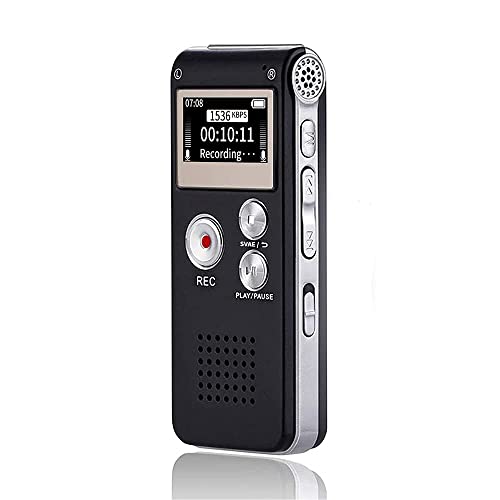
- Simple one-button recording
- Noise reduction and voice activation
- 30-hour recording battery life
Best For: Students wanting an easy, lightweight lecture recorder
Best Long-Running Option
136GB Tonfarb Lecture Recorder

- 68-hour rechargeable battery
- PCM audio and dual noise reduction
- 136GB listed storage capacity
Best For: Frequent recording and extended classroom sessions
Best Study Features

- Stereo recording with noise reduction
- A-B repeat and variable playback speed
- 20-hour continuous recording battery
Best For: Lecture review, note-taking, and study-focused playback
Best Compact Lecture Recorder – EVISTR L357 Digital Voice Recorder
If you want a compact option among podcast recorders for lectures, the EVISTR L357 combines voice activation, adjustable recording gain, and a built-in microphone in a pocket-friendly design. Its 64GB storage and long stated recording runtime make it practical for classes, meetings, and interviews.
Best For: Students, teachers, and anyone who wants simple, voice-activated lecture recording with playback.
Pros:
- Voice activation with seven sensitivity levels can reduce silent sections.
- 64GB storage supports up to 4,660 hours at 32Kbps, according to the supplied specifications.
- Supports WAV and MP3 recording, playback controls, and file transfer through USB-C.
- Offers adjustable recording gain and stated 32-hour continuous recording time.
Cons:
- The built-in microphone may offer less flexibility than a recorder with external microphone inputs.
- Voice activation may require sensitivity adjustment depending on classroom distance and volume.
The L357 is a sensible everyday choice when portability, storage, and straightforward controls matter more than multi-input recording. Its scheduled recording and organized date-based filenames add useful convenience for regular lecture use.
Best Simple Stereo Recorder – Zoom H1 Essential
The Zoom H1 Essential is a strong fit for shoppers comparing podcast recorders for lectures who also want a recorder for interviews, content, and live sound. Its X/Y stereo microphones, 32-bit float recording, and USB-C microphone mode provide more versatility than a basic dictation device.
Best For: Lectures, interviews, podcasts, and creators who want stereo recording in a compact handheld unit.
Pros:
- X/Y stereo microphones are designed to capture natural stereo audio.
- 32-bit float recording is highlighted for clip-free audio.
- Can function as a USB microphone for calls, livestreams, podcasts, and voiceovers.
- Its stated 10-hour battery life and 92-gram weight support portable use.
Cons:
- It uses two AAA batteries rather than a built-in rechargeable battery.
- The supplied details identify WAV as the recording format, so it may be less convenient for shoppers who specifically want MP3 files.
Choose the H1 Essential if polished stereo capture and computer or mobile connectivity are priorities. It is especially appealing for users who may move from lecture recording into podcasting, video work, or field recording.
Best High-Capacity Voice Recorder – EVIDA V601 128GB Voice Recorder
For buyers who prioritize storage and voice-activated operation, the EVIDA V601 is a practical choice among podcast recorders for lectures. It combines 128GB capacity, selectable recording quality, noise cancellation, password protection, and folder-based file management in a small recorder.
Best For: Students, professionals, and frequent users who need extensive storage for lectures, meetings, and conversations.
Pros:
- 128GB storage is listed for up to 9,296 hours of recording.
- Six voice-activation levels can help reduce blank or quiet sections.
- Supports MP3 recording at multiple bitrates and WAV at 1536Kbps.
- Includes password protection, A-B repeat, bookmarks, and four storage folders.
Cons:
- The supplied details list no headphone jack, which limits convenient onboard listening.
- The built-in mono microphone is less suited to buyers seeking stereo room sound.
- Its many playback and file-management features may take more setup than a basic recorder.
The V601 stands out for capacity and organization rather than advanced microphone connectivity. It is a good match when you record frequently, want voice activation, and need to keep many files available without constant transfers.
Best Expandable Recorder for Podcasts – Zoom H4 Essential
The Zoom H4 Essential is the most expandable option here for shoppers seeking podcast recorders for lectures and broader audio projects. It pairs built-in stereo microphones with two XLR/TRS inputs, four-track recording, USB-C connectivity, and SD-card storage.
Best For: Podcasters, filmmakers, instructors, and advanced users who may connect external microphones, instruments, or a soundboard.
Pros:
- Two XLR/TRS inputs support external microphones, instruments, mixers, and soundboards.
- Four-track recording provides more flexibility for larger projects.
- 32-bit float recording is highlighted for clip-free audio.
- Can record or stream through USB-C while also saving to an SD card.
Cons:
- Its expanded inputs and four-track features may be more equipment than needed for basic lectures.
- It uses two AA batteries, and the listed recording time is 10 hours.
- At 243 grams, it is heavier than the compact Zoom H1 Essential.
The H4 Essential is best when lecture recording is only one part of your workflow. Its external inputs and USB audio interface make it a stronger long-term option for podcast production, video audio, and live recording setups.
Best AI Note-Taking Pick – GPT-Powered Lecture Recorder
For shoppers comparing podcast recorders for lectures, this YESTRYS model stands out when transcription and organized notes matter as much as audio capture. It combines AI transcription, summaries, noise cancellation, 152-language support, 64GB of storage, and a claimed 35-hour battery life in a compact recorder.
Best For: Students, researchers, and professionals who want lecture recordings converted into searchable transcripts and summaries.
Pros:
- GPT-4o-powered transcription and summarization with professional templates.
- Supports transcription and summaries in 152 languages.
- 64GB of storage, encrypted cloud backup, and up to 35 hours of recording.
- Dual-microphone noise reduction is designed to suppress more than 90% of background noise.
Cons:
- AI features depend on the DOWAY app and premium-suite terms.
- Its built-in microphone design is more focused on portable note-taking than multi-microphone podcast production.
This is a strong choice if your lecture workflow ends with written notes rather than just an audio file. The included case and magnetic charging cable add convenience, while the 1-year premium access helps you try the AI features before deciding whether they fit your routine.
Best for Group Recording – Zoom PodTrak P4
Among podcast recorders for lectures, the Zoom PodTrak P4 is the better fit when you need to connect several microphones or record a discussion with multiple speakers. It provides four XLR inputs, four headphone outputs, multitrack recording, sound pads, and options for phone or USB-connected remote participants.
Best For: Panel discussions, lecture interviews, classroom podcasts, and small productions with multiple presenters.
Pros:
- Four high-quality microphone inputs with phantom power.
- Four headphone outputs with individual volume controls.
- Records all inputs and sound pads to separate tracks.
- Supports phone and USB remote interviews with automatic mix-minus.
Cons:
- Battery life is limited to up to 3.5 hours on two AA batteries.
- It does not provide the built-in AI transcription and summarization features offered by the other listed recorders.
- It is less pocket-friendly than a simple built-in-microphone recorder.
The PodTrak P4 makes the most sense when lecture recording involves several microphones, headphones, or remote guests. Its multitrack workflow offers more control for editing later, but you will need to supply compatible microphones and manage a more involved setup.
Best High-Capacity Option – EVISTR AI Lecture Recorder
If you want podcast recorders for lectures with substantial onboard storage, the EVISTR L359 offers 128GB capacity, AI transcription and summaries, and a straightforward one-button recording workflow. It also includes noise reduction, voice-activated recording, and wired OTG transfer for moving files to a phone.
Best For: Students and frequent note-takers who need long-term storage, simple controls, and app-based transcription.
Pros:
- 128GB of storage and up to 33 hours of continuous recording.
- AI DVR Link supports transcription in 113 languages, summaries, mind maps, speaker identification, and Ask AI insights.
- Records up to 3072Kbps HD audio with noise reduction and voice-activated recording.
- One-touch recording, password encryption, and a HOLD switch support everyday use.
Cons:
- AI processing requires the AI DVR Link app and compatible phone connection.
- Wired OTG transfer is convenient for stability but less convenient than a wireless workflow.
- The built-in microphone and mono speech-recognition modes are aimed more at lectures and notes than full podcast production.
The L359 is a practical middle ground for lecture capture: it is easier to operate than a multi-microphone recorder and offers more storage than many compact devices. Choose it if capacity and quick file transfer matter more than direct multi-person audio mixing.
Best Simple Recorder – Compact 16GB Lecture Recorder
If you want straightforward podcast recorders for lectures, this compact Sunlan model focuses on easy controls and dependable everyday recording. Its one-button recording, built-in speaker, noise-reduction technology, and voice-activated mode make it practical for capturing classroom audio without a complicated setup.
Best For: Students who prioritize simple operation, portability, and up to 30 hours of recording time.
Pros:
- One-button recording and dedicated playback controls are easy to use.
- Noise reduction and a sensitive built-in microphone are designed to capture clearer speech.
- Voice activation can reduce silent sections and conserve recording time.
- 16GB storage, USB transfer, an MP3-player function, and A-B repeat add versatility.
Cons:
- Mono microphone operation may offer less spatial detail than stereo recording.
- Its stated battery life is shorter than some higher-capacity alternatives in this roundup.
This is a good fit when ease of use matters more than advanced features. The small 35-gram design is easy to carry, while the 3.5mm headphone jack and built-in speaker support convenient review after class.
Best Long-Running Option – 136GB Tonfarb Lecture Recorder
For buyers comparing podcast recorders for lectures with extensive storage and endurance, the Tonfarb recorder stands out. It combines PCM recording, dual noise-reduction microphones, a 68-hour battery, and 136GB of total listed storage through built-in memory and an included TF card.
Best For: Students, interviewers, and frequent users who need long recording sessions and substantial file capacity.
Pros:
- Supports 1536 kbps PCM recording with dual noise-reduction microphones.
- Up to 68 hours of continuous recording supports extended classes and back-to-back sessions.
- One-click recording can start even when the device is powered off.
- Large listed capacity, USB-C transfer, A-B repeat, and password protection provide useful flexibility.
Cons:
- At approximately 97–100 grams, it is heavier than the smallest recorder in this selection.
- The included storage configuration may require managing files across internal memory and the TF card.
This is the most capable choice here for users who record often and do not want to recharge or offload files frequently. Its 1.44-inch LCD and metal casing also support easier handling and everyday durability.
Best Study Features – 16GB Voice-Activated Recorder
This HoTiyan model is a practical pick among podcast recorders for lectures when reviewing and organizing class material is important. It offers stereo recording, adjustable voice activation, A-B repeat, variable playback speed, timestamps, and password protection in a compact rechargeable design.
Best For: Students who want study-focused playback tools and flexible recording-quality settings.
Pros:
- Stereo recording, a sensitive microphone, and noise reduction target clearer audio capture.
- Voice activation can skip quiet sections and reduce whisper fragments.
- A-B repeat and variable playback speed help with reviewing key information.
- Supports MP3 and WAV files, USB transfer, timestamps, and password protection.
Cons:
- The stated continuous recording battery life is up to 20 hours.
- Storage is limited to 16GB and files are limited to a stated maximum of 199 recordings.
Choose this recorder if lecture review is central to your workflow. Its 16GB capacity can support substantial recording time at lower settings, while stereo capture and playback controls make it useful for revisiting lessons and meetings.
How We Picked the Best Podcast Recorders for Lectures
We compared the selected devices by focusing on the features that matter most in classrooms, lecture halls, meetings, and study sessions. Our evaluation considered recording quality, microphone performance, storage capacity, battery practicality, playback options, portability, and ease of transferring files.
We also separated straightforward dictaphones from more advanced production equipment. A compact recorder may be ideal for discreet note-taking, while a multitrack model can better serve users who record podcasts, interviews, or multiple speakers. AI transcription and summarization features were treated as useful conveniences rather than substitutes for checking the original audio.
Quick Comparison
- Best for simple lecture recording: Compact 16GB or 64GB voice recorders with playback and voice activation.
- Best for long-term storage: High-capacity 128GB and 136GB models.
- Best for automatic notes: AI voice recorders with transcription and summarization tools.
- Best for musicians and creators: Zoom H1 Essential and Zoom H4 Essential.
- Best for multi-person podcasting: Zoom PodTrak P4, with multiple XLR inputs and headphone outputs.
Key Buying Factors for Podcast Recorders for Lectures
Microphone and Recording Quality
Speech clarity matters more than headline storage capacity. For large rooms, look for a recorder with sensitive microphones and recording settings that preserve spoken detail without excessive background noise. Positioning still matters: placing the device close to the lecturer, when permitted, usually produces better results than relying on advanced processing alone.
Storage and Battery Life
Estimate how often you will transfer files. A 16GB recorder may be sufficient for occasional classes, while 64GB or more is more convenient for frequent recording. Check expected battery life, charging method, and whether the device can be used while connected to power.
Controls, Playback, and File Transfer
Physical buttons and a readable display are valuable when you need to start recording quickly. Playback through the device can help verify a file, while USB connectivity or app support simplifies moving recordings to a computer or phone. Password protection may be useful for sensitive academic or interview material.
AI Features and Connectivity
Transcription, summaries, noise cancellation, and language support can speed up revision, but confirm whether they require an app, subscription, internet connection, or account. For basic recording, these features may add unnecessary complexity.
Who Should Buy Which Podcast Recorders for Lectures?
Students and occasional users should favor a small, affordable recorder with voice activation, playback, rechargeable power, and enough storage for several lectures. Frequent students or researchers may prefer 64GB to 136GB capacity, password protection, and dependable file management.
Users who want searchable notes should consider an AI recorder with transcription and summarization, while checking supported languages and service requirements. Musicians, podcasters, and filmmakers will get more value from the Zoom H1 Essential or H4 Essential, which are designed for broader recording work. For a host managing several microphones or remote contributors, the Zoom PodTrak P4 is the most specialized choice.
Before recording, confirm that classroom or event policies allow it and inform other participants when required. Choose the simplest model that meets your actual workflow; reliable operation and clear speech usually matter more than a long feature list.