
Low-light photography gets easier when you have the right portable light. The best camera flashes for low light can add brightness, freeze motion, and improve exposure without forcing you to rely on high ISO settings.
This roundup includes traditional speedlights, wireless flash systems, compact LED video lights, and specialized macro lighting so you can match the tool to your camera, subject, and shooting style.
Best 10 Camera Flashes for Low Light Picks for 2026
Best Compact LED Fill Light

- 5500K continuous light with CRI up to 95+
- Five brightness levels and rechargeable 2000mAh battery
- Three cold shoes for compact multi-accessory rigs
Best For: Vloggers and creators needing portable continuous fill
Best Wireless Manual Speedlight

- GN60 output with 0.1-2.6 second recycling
- Built-in 2.4G wireless system with 100m range
- Best off-camera; on-camera HSS is unavailable
Best For: Photographers expanding a Godox wireless lighting setup
Best Bi-Color LED Light
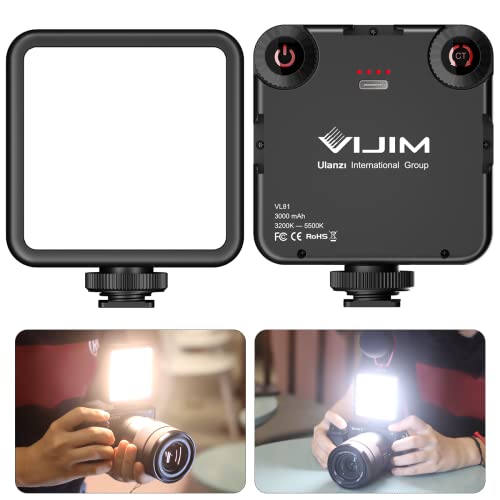
- Adjustable 3200K-5600K color with CRI95+
- 81 LEDs, softbox design, and three cold shoes
- 3000mAh battery lasts up to 480 minutes at low output
Best For: Vloggers and photographers needing adjustable soft continuous light
Best Portable Pick
Godox iA32 Mini Auto/Manual Flash

- 117g flat, travel-friendly design
- Auto and eight-level manual control
- Tilt head supports bounce lighting
Best For: Travel and everyday photographers needing a compact, flexible flash
Best Multifunction Option

- Flash, focus assist, and continuous light
- 2500K–6500K bi-color adjustment
- Up to 550 flashes per charge
Best For: Hybrid photo and video shooting in dim or changing light
Best Manual Control

- Manual output from 1/128 to 1/1
- Up to 650 full-power flashes
- Compact 150g body with optical slave modes
Best For: Photographers who prefer hands-on flash control and rechargeable power
Ultra-Compact Pick

- 36g travel-friendly design
- Four manual brightness levels
- Flash and continuous video-light modes
Best For: Compact setups, travel, portraits, and macro work
Versatile Manual Pick

- GN33 output with LCD display
- 22-level manual power adjustment
- Includes filters, stand, and pouch
Best For: Manual portraits, events, studios, and off-camera setups
Macro Lighting Pick
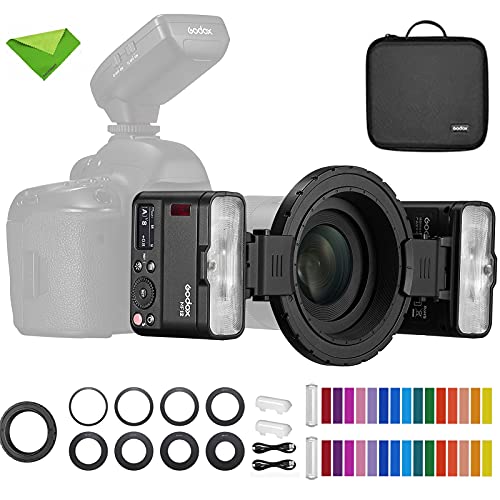
- 2.4G wireless TTL/M control
- Flexible ring-mount positioning
- Up to 500 full-power flashes
Best For: Wireless macro and close-up photography
Best Budget Manual Flash – NEEWER TT560 Speedlite
The NEEWER TT560 is a straightforward option among camera flashes for low light when you want manual control and broad compatibility with cameras using a standard center-contact hot shoe. Its GN38 output, eight power levels, and bounce/swivel head suit basic portraits, events, and off-camera setups, but it does not provide TTL, HSS, or automatic exposure.
Best For: Photographers who want an affordable manual flash for learning flash exposure, bounce lighting, or optical-slave setups.
Pros:
- Eight manual power levels from 1/128 to full power.
- Tilts 0°-90° and rotates 0°-270° for bounce lighting.
- Supports S1/S2 optical slave modes and PC sync.
- Uses widely available four AA batteries.
Cons:
- No TTL, HSS, camera-menu control, or automatic flash exposure.
- Requires mechanical-shutter mode on Fujifilm and other compatible mirrorless cameras.
- Compatibility must be checked carefully, and batteries are not included.
The TT560 is best when low cost and hands-on control matter more than automation. Confirm your camera has a compatible center-contact hot shoe and keep shutter speeds at 1/200 second or slower for reliable synchronization.
Best Compact LED Fill Light – Ulanzi VL49 On-Camera Light
The Ulanzi VL49 is a pocket-size continuous light rather than a traditional flash, making it useful among camera flashes for low light when you need to see the lighting effect before recording. Its 5500K output, five brightness levels, and rechargeable battery support quick fill light for vlogging, portraits, product shots, and live streaming.
Best For: Mobile creators and photographers who need a lightweight, rechargeable fill light for cameras, phones, or compact rigs.
Pros:
- Compact 130g design with a built-in 2000mAh rechargeable battery.
- Five brightness settings from 20% to 100%.
- CRI up to 95+ and a 5500K daylight color temperature.
- Three cold shoes plus a 1/4-inch screw hole for flexible mounting.
Cons:
- Provides continuous LED illumination, not a conventional camera flash burst.
- Color temperature is listed at 5500K rather than adjustable.
- Not water resistant.
The VL49 is a practical low-light companion for video and close-range fill, especially when portability matters. Choose it over a speedlight if continuous preview and simple USB-C charging are more valuable than powerful still-photo flash output.
Best Wireless Manual Speedlight – Godox TT600 Speedlight
The Godox TT600 is a powerful manual speedlight for camera flashes for low light, offering GN60 output and a built-in 2.4G Godox X wireless system. It works with standard hot-shoe cameras from several brands and becomes more capable off-camera with a compatible Godox trigger, though on-camera HSS is not available.
Best For: Photographers building a Godox-compatible off-camera lighting system for portraits, events, and creative multi-light work.
Pros:
- GN60 output provides strong illumination and longer reach.
- Built-in 2.4G wireless transmission reaches up to 100 meters.
- Supports up to five groups and 32 channels in the wireless system.
- Offers approximately 230 full-power flashes with 0.1-2.6 second recycling.
Cons:
- Manual flash operation; TTL trigger functions require a compatible Godox wireless trigger.
- Cannot perform HSS on the camera hot shoe.
- Four AA batteries are required and not included.
The TT600 is a strong choice if you want more power and wireless expansion than a basic manual flash provides. Its value is greatest off-camera within the Godox X ecosystem; verify trigger and camera compatibility before relying on HSS or remote control.
Best Bi-Color LED Light – ULANZI VL-81 Video Light
The ULANZI VL-81 is a rechargeable continuous light for camera flashes for low light when adjustable color and soft illumination are more useful than a flash burst. Its 81 LEDs, 3200K-5600K range, built-in softbox, and multiple cold shoes make it well suited to vlogging, interviews, product work, and close-range photography.
Best For: Creators who need a portable bi-color light that can adapt from warm indoor scenes to daylight-balanced setups.
Pros:
- Adjustable 3200K-5600K color temperature with CRI95+ output.
- Built-in 3000mAh battery provides up to 150 minutes at maximum brightness or 480 minutes at minimum.
- Softbox design helps produce less harsh illumination.
- Three cold shoes allow additional lights or accessories to be attached.
Cons:
- Continuous LED light rather than a conventional still-photo flash.
- Requires about three hours to charge.
- Not water resistant.
The VL-81 offers more control than a fixed-color pocket light while staying compact at about 120g. It is a practical low-light tool for video and nearby subjects, particularly when matching ambient color or softening the light is important.
Best Portable Pick – Godox iA32 Mini Auto/Manual Flash
For photographers seeking camera flashes for low light without adding much bulk, the Godox iA32 combines a 117g design with adjustable bounce control and both automatic and manual operation. Its compact profile makes it practical for travel, events, and everyday carry.
Best For: On-the-go photographers who want a lightweight flash with flexible exposure control.
Pros:
- Very compact and lightweight at 117g.
- Tilts from -7° to 90° for direct or bounce lighting.
- Offers Auto mode plus eight manual power levels from 1/128 to 1/1.
- Runs on two AA batteries, with up to 490 full-power flashes and a 2.5-second recycle time.
Cons:
- Compatibility exclusions include several Canon, Sony, and Fujifilm models; check the hot-shoe contact images before buying.
- Requires two AA batteries, which are sold separately.
- Sync speed is limited to 1/200.
The iA32 is a convenient low-light accessory when portability and simple control matter most. Its Auto mode suits quick shooting, while manual adjustment provides more creative control, provided your camera’s hot shoe is compatible.
Best Multifunction Option – ULANZI F16R 3-in-1 Flash
The ULANZI F16R stands out among camera flashes for low light by combining a GN16 flash, focus-assist light, and continuous video light. It also adds adjustable color temperature, making it useful for dim photography, portraits, vlogging, and mixed lighting.
Best For: Hybrid shooters who need flash, focusing assistance, and adjustable continuous lighting in one small unit.
Pros:
- Three functions: flash, focus-assist light, and continuous light.
- Seven flash power levels with 0.5–3-second recycle times.
- Built-in 1200mAh battery supports up to 550 full-power flashes and USB-C charging.
- Bi-color 2500K–6500K light offers stepless brightness and CRI 96 color rendering.
Cons:
- Not compatible with Canon 1500D, 3000D, or 200D Mark II, or cameras without a standard center contact.
- Only a 90° tilt range is specified.
- Listed with a one-month warranty.
With its built-in rechargeable battery and multiple lighting modes, the F16R is more versatile than a basic manual flash. Confirm your camera has a compatible single-pin hot shoe before ordering.
Best Manual Control – NEEWER Z160 SE Mini Flash
The NEEWER Z160 SE is a compact manual choice among camera flashes for low light, offering 1/128-to-1/1 power adjustment, optical slave modes, and a built-in rechargeable battery. Its straightforward design suits photographers who prefer setting flash output themselves.
Best For: Manual-flash users shooting street, daily, or studio work with a standard single-contact hot shoe.
Pros:
- Small 150g body with a rotary dial and display screen.
- Manual power range from 1/128 to 1/1 plus S1/S2 optical slave modes.
- 1200mAh battery supports up to 650 full-power flashes.
- USB-C charging takes about 1.5 hours with 5V/1A input.
Cons:
- No TTL, HSS, automatic flash exposure, or camera-menu control.
- Requires a standard center-contact hot shoe and has numerous camera exclusions.
- Fujifilm and other compatible mirrorless cameras must use mechanical shutter mode; no modeling light is included.
The Z160 SE is a good fit when predictable manual output matters more than automation. Its battery capacity and optical slave modes add flexibility, but buyers should verify both hot-shoe compatibility and their camera’s shutter settings first.
Ultra-Compact Pick – ULANZI SL02 Mini Flash
If you need camera flashes for low light that can travel light, the ULANZI SL02 combines a compact GN8 flash with a steady video-light mode. Its four manual brightness levels suit portraits, close-ups, and macro work, but compatibility should be checked carefully before purchase.
Best For: Travel photographers and compact-camera users who need lightweight supplemental flash or continuous light.
Pros:
- Extremely light 36g design for travel and compact setups.
- Four selectable flash levels from 1/1 to 1/8.
- Video-light mode provides 5600K illumination with CRI 95.
- Rechargeable battery supports up to 500 full-power flashes and can operate while charging.
Cons:
- Only works with cameras featuring a single-contact hot shoe, with several listed model exclusions.
- Manual operation and a recommended maximum shutter speed of 1/250s may limit convenience.
- Charger and cable are not included.
The SL02 is a practical low-light accessory when portability matters more than maximum output or advanced automation. Confirm your exact camera model and hot-shoe type first.
Versatile Manual Pick – PHOTOOLEX FK310 Speedlite
For photographers comparing camera flashes for low light, the PHOTOOLEX FK310 offers stronger GN33 output, an LCD display, and detailed manual adjustment. It is designed for users who want hands-on control across portraits, events, and studio setups.
Best For: Manual shooters who want precise power control, optical off-camera triggering, and a useful accessory bundle.
Pros:
- GN33 output provides more reach than a compact mini flash.
- LCD displays mode, power level, and battery status.
- 22-level adjustment from 1/128 to 1/4 enables fine output control.
- Includes S1/S2 triggering, Multi mode, a sync port, stand, pouch, and 12 color filters.
Cons:
- Requires four AA batteries.
- Manual exposure control may require more setup than TTL systems.
- Single-contact hot-shoe compatibility should be confirmed for your camera.
The FK310 is a flexible choice if you value output and precise manual adjustments over automatic TTL exposure. Its included accessories also make it a practical starting point for off-camera experiments.
Macro Lighting Pick – Godox MF12-K2 Wireless Flash
The Godox MF12-K2 takes a specialized approach to camera flashes for low light, using off-camera TTL/M flash units for macro subjects. Its wireless control, rechargeable batteries, and adjustable mounting positions make it useful when direct on-camera lighting would be too harsh or restrictive.
Best For: Macro photographers who need flexible, wireless lighting around close-up subjects.
Pros:
- 2.4G wireless control supports five groups and 32 channels per group.
- TTL and manual modes work with compatible Godox triggers and major camera systems.
- Each flash can rotate and slide around the mounting ring for precise positioning.
- Rechargeable lithium batteries provide up to 500 full-power flashes with 0.01–1.7-second recycling.
Cons:
- Its macro-focused off-camera design is less suited to general-purpose event photography.
- Wireless operation depends on compatible Godox equipment or triggers.
- It is not weather resistant.
The MF12-K2 is the most specialized option here, offering control and positioning advantages for macro work rather than a simple hot-shoe solution. Choose it when flexible subject-side illumination is the priority.
How We Picked the Best Camera Flashes for Low Light
We compared these 10 lighting options by evaluating output, portability, power control, mounting flexibility, battery design, wireless features, and compatibility. The selection spans simple manual flashes for beginners, more powerful speedlights for event and portrait work, continuous LED lights for video, and dedicated macro equipment.
Because “low light” can mean anything from indoor snapshots to close-up product photography, we also considered ease of use and the type of control each model provides. A flash with broad manual power adjustment may suit an experienced photographer, while a compact automatic or LED light can be more approachable for casual use.
Quick Comparison
| Best For | Recommended Type | What to Look For |
|---|---|---|
| Beginners and casual photos | Compact automatic or manual flash | Simple controls and adjustable head |
| Portraits and events | Full-size speedlight | Higher guide number, swivel, and wireless control |
| Video and hybrid shooting | Continuous LED light | Adjustable brightness, color temperature, and CRI |
| Macro photography | Dedicated macro flash | Off-camera control and close-subject compatibility |
Key Buying Factors for Camera Flashes for Low Light
Flash Power and Coverage
Guide number, wattage, and beam coverage indicate how much light a unit can provide. More power helps when photographing subjects farther away or bouncing light from ceilings, but compact models are easier to carry and may be sufficient for nearby subjects.
Manual, Automatic, or TTL Control
Manual flashes offer predictable output and often cost less, but they require you to set power yourself. Automatic or TTL-compatible models can adjust exposure more quickly when distance or framing changes. Confirm that the flash supports your camera brand before relying on automatic functions.
Wireless Features and Positioning
Built-in radio triggering, master/slave modes, and off-camera compatibility make it easier to shape light from the side. A tilting or swiveling head is also valuable for bouncing light and creating softer illumination indoors.
Battery and Rechargeability
Rechargeable batteries reduce disposable-battery costs and can simplify travel. Check rated capacity, recharge time, spare-battery availability, and whether the unit uses standard AA cells. Continuous LEDs also consume power differently depending on brightness.
Flash Versus Continuous LED Light
A flash produces a brief, powerful burst that can freeze motion and preserve battery life. An LED light remains on, making it useful for video and easier for previewing shadows, but it may provide less peak output. Bi-color LEDs add flexibility when matching warm or cool ambient lighting.
Who Should Buy Which Camera Flashes for Low Light?
Choose a compact manual flash if you want an affordable way to brighten indoor photos and are comfortable adjusting settings. Choose a full-size wireless speedlight for portraits, events, or off-camera lighting where reach and control matter more than minimum size.
Choose an LED video light if you shoot video, livestreams, product content, or hybrid photo-video projects and want to see the lighting effect before recording. Choose a macro flash when close-up subjects, insects, jewelry, or small products are your primary focus.
Before buying, verify the camera mount and triggering system, then prioritize the feature you will use most: output, portability, wireless control, continuous lighting, or specialized close-up performance.