
The best microphone preamp can add clean gain, improve signal quality, and help you get more from demanding dynamic or ribbon microphones. The right choice depends on your microphone, recording setup, available connections, and need for extra processing.
We compared 10 microphone preamp options ranging from compact inline boosters to full channel strips, tube systems, and USB audio interfaces. Use the guide below to narrow the list by gain, noise performance, features, and compatibility.
Best 10 Microphone Preamp Picks for 2026
Feature-Rich Channel Strip

- Integrated preamp, compression, de-esser, enhancer, and gate
- XLR and 1/4-inch inputs with loop-out connectivity
- Rack-mountable 1U design with status LEDs
Best For: Vocal processing, podcasting, and rack-based studios
Clean Gain Booster
Cloudlifter CL-1 Microphone Preamp

- Provides up to +25 dB of gain for passive microphones
- Phantom-powered without passing phantom power to the mic
- Compact XLR in-line design for studios and broadcasts
Best For: Passive ribbons, podcasts, streaming, and quiet sources
Compact Class-A Booster
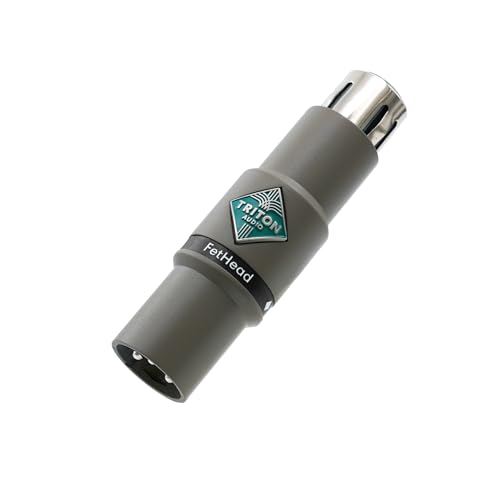
- Low-noise Class-A JFET amplifier design
- Four matched JFETs and double single-ended topology
- Shielded in-line enclosure for space-conscious setups
Best For: Compact recording rigs needing added microphone gain
Tube-Tone Preamp

- Tube design with a stated warm sound profile
- Variable input impedance and Valve Voicing controls
- Supports microphone and instrument preamp operation
Best For: Guitarists and studios seeking flexible tube coloration
Best All-Around Interface
Focusrite Scarlett Solo 3rd Gen
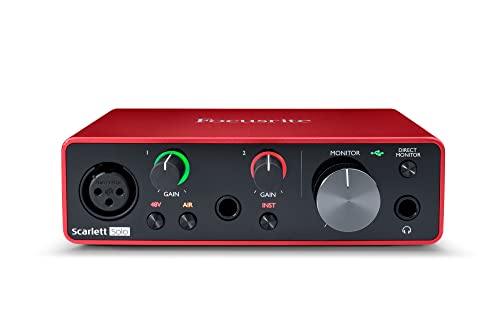
- 56dB-gain XLR mic preamp with Air mode
- 24-bit/192kHz recording via USB
- Includes Hi-Z input and starter software
Best For: Home recording, podcasts, and beginner music production
Best Standalone Gain Booster

- 19–66dB variable gain range
- Advertised -120dBV EIN low-noise performance
- XLR, TRS, and TS output options
Best For: Adding gain to microphones or instruments before an interface or mixer
Best Inline Boost for Dynamic Mics
StudioMan DPM1 Dynamic Mic Preamp

- Adds up to 29dB of gain
- Compact XLR inline design
- Requires 48V phantom power
Best For: Dynamic and ribbon microphones used for podcasts, vocals, or live sound
Flexible Gain Control

- 0–72 dB adjustable gain
- −120 dBV EIN for low noise
- USB-C, 48V, Hi-Z, and dual outputs
Best For: Flexible studio, instrument, and mobile streaming setups
Dual-Channel Mic Booster

- Two channels with +25 dB gain
- Designed for dynamic and passive ribbon mics
- Phantom-powered balanced XLR design
Best For: Two-channel passive-microphone gain boosting
Multi-Output Recording Preamp

- Up to 75 dB gain with −120 dB EIN
- 48V phantom power for dynamic and condenser mics
- Balanced XLR plus dual 3.5mm outputs
Best For: Flexible vocal recording and portable audio setups
Feature-Rich Channel Strip – dbx 286s Microphone Preamp
The dbx 286s is a microphone preamp and channel strip for users who want more than basic gain. It combines compression, de-essing, enhancement, and expander/gate processing in a rack-mountable 1U unit, with XLR and 1/4-inch inputs for microphones, instruments, or prerecorded tracks.
Best For: Home studios, vocal processing, podcast setups, and rack-based recording systems that need integrated signal shaping.
Pros:
- Combines microphone preamp, compressor, de-esser, enhancer, and expander/gate functions.
- Compression helps bring vocals forward by reducing dynamic range.
- Includes loop-out and insert connections for adding external processors.
- Status LEDs provide at-a-glance level and processor monitoring.
Cons:
- Its 1U rack format is less convenient for compact desktop setups.
- Offers one channel, so it is not designed for stereo processing.
The dbx 286s is a practical choice when you want a microphone preamp with hands-on dynamics and tone processing built in. Choose it over a simpler booster if you value an all-in-one channel strip and rack integration.
Clean Gain Booster – Cloudlifter CL-1 Microphone Preamp
The Cloudlifter CL-1 is an in-line microphone preamp designed to add clean gain before your main preamp. It uses phantom power to provide passive microphones with up to 25 dB of gain without passing phantom power through to the microphones themselves.
Best For: Passive ribbon microphones, quiet vocals, podcasts, streaming, voiceover, and recording setups that need additional signal strength.
Pros:
- Adds up to +25 dB of microphone gain while maintaining the microphone’s natural sound.
- Uses standard +48V phantom power from the connected microphone input.
- Designed to reduce unwanted noise and improve clarity with quiet sources.
- Compatible with tube-, battery-, or power-supply-driven microphones and passive ribbons.
Cons:
- It is a gain activator rather than a full channel strip with built-in tone controls.
- Requires a microphone input that supplies phantom power.
The CL-1 makes sense when your existing interface or mixer lacks enough clean gain, particularly with passive ribbon microphones. It is a focused upgrade for signal strength rather than a replacement for a complete recording preamp.
Compact Class-A Booster – Triton Audio FetHead
The Triton Audio FetHead is an in-line microphone preamp for adding low-noise gain in a compact form. Its Class-A JFET amplifier, double single-ended topology, four matched JFETs, and shielded enclosure target clean signal enhancement without taking up the space of a conventional rack unit.
Best For: Small recording rigs and microphone setups that need a compact, low-noise gain stage.
Pros:
- Uses a low-noise Class-A JFET amplifier design.
- Four matched JFETs support the stated amplifier topology.
- Shielded enclosure helps suit close-proximity microphone applications.
Cons:
- The supplied notes provide limited information about controls and connectivity beyond its in-line preamp format.
- It is a focused gain stage, not a full channel strip with compression or equalization.
The FetHead is worth considering when your priority is a small, low-noise microphone preamp rather than extensive processing. Its straightforward in-line design fits users who want to add a dedicated gain stage without adding a larger processor.
Tube-Tone Preamp – ART TPS II Tube Preamplifier
The ART TPS II is a tube microphone preamp and instrument preamp with variable input impedance and V3 Variable Valve Voicing. It provides LED input and analog output metering, automatically switches between instrument and microphone modes, and includes an output protection limiter.
Best For: Guitarists and recording users who want tube-based warmth, flexible input matching, and both microphone and instrument operation.
Pros:
- Tube amplifier design is specified with a warm sound profile.
- Variable input impedance and Variable Valve Voicing provide tonal flexibility.
- Automatically switches between instrument and microphone preamp modes.
- Offers LED input metering, analog output metering, and output protection limiting.
Cons:
- Its 19-inch-wide chassis requires more space than compact in-line preamps.
- Tube-based operation may be unnecessary if you only need transparent gain.
The TPS II is a strong fit for users who want a microphone preamp that also handles instruments and offers a deliberately warm tube character. Its metering and input flexibility make it better suited to a dedicated recording setup than a minimal desktop rig.
Best All-Around Interface – Focusrite Scarlett Solo 3rd Gen
The Focusrite Scarlett Solo 3rd Gen is a practical microphone preamp solution for home recording, podcasts, and music production. Its XLR mic preamp offers a 56dB gain range, while Air mode can add extra clarity to suitable recordings.
Best For: Beginners and home producers who want a USB audio interface with a quality microphone preamp and instrument input.
Pros:
- High-performance XLR mic preamp with switchable Air mode
- 24-bit/192kHz recording and low-noise balanced outputs
- Includes a Hi-Z instrument input for guitar or bass
- Comes with recording software and a three-year warranty
Cons:
- Provides only one XLR mic preamp
- Requires a computer or compatible iPad setup for recording
Choose the Scarlett Solo if you need more than a standalone preamp: it combines microphone gain, instrument connectivity, monitoring, and recording software in a compact interface.
Best Standalone Gain Booster – Rodyweil RO03 Mic Preamp
The Rodyweil RO03 is a dedicated microphone preamp for users who need additional gain before an interface, mixer, amplifier, or PA system. It provides variable 19–66dB gain and is designed for dynamic, condenser, and ribbon microphones, with a 1MΩ instrument input for DI use.
Best For: Recording setups that need a portable, high-gain preamp with XLR, TRS, and TS connectivity.
Pros:
- Variable 19–66dB gain range for flexible signal boosting
- Advertised -120dBV EIN and low-noise operation
- 1MΩ instrument input helps reduce impedance-related signal loss
- Type-C power input supports more portable setups
Cons:
- Microphone and instrument inputs cannot operate simultaneously
- For lowest noise, the manufacturer recommends connecting to an interface’s TRS line input
- Does not function as a complete USB recording interface
The RO03 makes sense when your existing interface or mixer needs more clean gain. Its connection requirements matter, so plan to use the appropriate TRS cable and line input for the intended low-noise setup.
Best Inline Boost for Dynamic Mics – StudioMan DPM1 Dynamic Mic Preamp
The StudioMan DPM1 is a compact inline microphone preamp designed to add gain to low-output dynamic and ribbon microphones. It supplies up to 29dB of gain and fits between a microphone and an interface or mixer, but it requires 48V phantom power and is not intended for condenser microphones.
Best For: Podcasters, vocalists, and live-sound users with a quiet dynamic or ribbon microphone and a phantom-powered interface.
Pros:
- Adds up to 29dB of gain at the microphone connection
- Compact plug-and-play XLR male-to-female design
- Metal housing helps with durability and interference shielding
- Backed by a one-year warranty and technical support
Cons:
- Requires 48V phantom power, which is not included
- Strictly not for condenser microphones
- Provides less gain than the RO03
The DPM1 is a focused fix for gain-hungry dynamic and ribbon microphones rather than a general-purpose microphone preamp. Confirm that your interface or mixer supplies phantom power before choosing it.
Flexible Gain Control – RO-04 Mic Preamp
The RO-04 is a versatile microphone preamp for recording, podcasting, streaming, and instrument use. Its 0–72 dB gain range, ultra-low-noise design, separate mic and instrument inputs, and dual output levels make it adaptable to both desktop and mobile setups.
Best For: Users who need substantial clean gain for low-output dynamic microphones, plus flexible connections for instruments and streaming devices.
Pros:
- 0–72 dB adjustable gain suits quiet sources and demanding microphones such as the SM7B.
- −120 dBV EIN helps maintain a low noise floor when adding gain.
- Includes 48V phantom power, Hi-Z instrument input, HPF, and phase controls.
- USB-C and power-bank support improve portability for mobile recording or streaming.
Cons:
- The feature set may be more extensive than necessary for a simple single-microphone setup.
- The unit weighs 2.42 pounds, making it less lightweight than some compact boosters.
The RO-04 stands out when you want one microphone preamp to cover studio recording, instruments, and mobile streaming. Its broad gain range and dual-output design provide useful flexibility, while the low-noise specification supports cleaner recordings.
Dual-Channel Mic Booster – StudioMan CL-200
The StudioMan CL-200 is a focused microphone preamp and activator for boosting two passive microphone signals by 25 dB. It uses balanced XLR connections and phantom-power operation to add clean gain before a mixer or audio interface.
Best For: Dynamic and passive ribbon microphone users who need two channels of clean gain without relying on maximum interface or mixer gain.
Pros:
- Two channels provide simultaneous +25 dB gain for dynamic or passive ribbon microphones.
- Low THD+N and a 10 Hz–20 kHz ±1 dB response support transparent signal reproduction.
- Balanced XLR input and output connections work well in studio and stage setups.
- Phantom-powered operation requires no separate power adapter.
Cons:
- It cannot pass phantom power to condenser microphones and is not compatible with them.
- The mic-to-booster cable is recommended to be shorter than 30 feet.
- Its fixed 25 dB boost offers less gain adjustment than variable-gain preamps.
The CL-200 is a practical choice when your main need is clean, consistent gain for passive microphones. Its dual-channel format is especially useful for two-mic recording or live sound, but condenser-microphone users should choose a different microphone preamp.
Multi-Output Recording Preamp – JCANOL MIC-1 Mic Preamp
The JCANOL MIC-1 is a versatile microphone preamp with up to 75 dB of gain, 48V phantom power, and balanced XLR output. It also provides 3.5mm mic and line outputs, making it suitable for traditional recording chains as well as compact audio devices.
Best For: Vocalists, podcasters, and home-recording users who want high gain, low noise, and both professional XLR and portable 3.5mm output options.
Pros:
- Up to +75 dB of gain provides headroom for low-output dynamic microphones and quiet sources.
- −120 dB EIN and DC analog power are designed for clean, low-interference recordings.
- 48V phantom power supports dynamic and condenser microphones.
- Balanced XLR, 3.5mm mic, and 3.5mm line outputs accommodate varied setups.
Cons:
- The XLR microphone input and 1 MΩ instrument input cannot be used simultaneously.
- The 3.5mm outputs may be less suitable than balanced XLR for long cable runs.
- It offers broad connectivity that may be unnecessary for a basic XLR-only setup.
The MIC-1 is a strong all-purpose option for users who need both substantial gain and connection flexibility. Its dual input modes and multiple outputs broaden its usefulness, while the stated low-noise performance fits vocal recording and other quiet-source applications.
How We Picked the Best Microphone Preamps
We focused on practical performance and setup compatibility rather than treating every preamp as interchangeable. Our selection includes inline boosters for low-output dynamic microphones, standalone units for studio systems, channel strips with built-in processing, and an audio interface for users who need preamp gain plus computer connectivity.
We considered maximum gain, stated noise performance, phantom-power requirements, input and output connections, controls, portability, and the types of microphones each model can support. Because specifications can vary by configuration, confirm the manufacturer’s current details before buying.
Quick Comparison
- Best for complete vocal processing: dbx DBX286SV, with compression, de-essing, enhancement, and gating.
- Best for adding gain to a passive microphone: Cloudlifter CL-1 or Triton Audio FetHead.
- Best for tube coloration: ART TPS II.
- Best for computer recording: Focusrite Scarlett Solo 3rd Gen.
- Best for flexible studio control: RO-04, with adjustable gain, Hi-Z, phantom power, high-pass filtering, and phase controls.
- Best for compact multi-channel use: StudioMan CL-200 2-CH.
Key Buying Factors for a Microphone Preamp
Gain and Microphone Sensitivity
Dynamic and ribbon microphones often need more clean gain than condenser microphones. An inline Microphone Preamp or activator can raise the signal before it reaches an interface, while a full preamp offers broader control. Avoid turning gain up unnecessarily, since excessive gain can increase hiss or overload the next device.
Noise Performance
Look for a low equivalent input noise figure, commonly shown as EIN. Lower numbers generally indicate quieter operation, but the complete signal chain still matters. Cable quality, room noise, interface settings, and microphone output level can all affect the final result.
Phantom Power and Ribbon Safety
Many inline boosters require 48V phantom power from an interface or mixer, even when they are used with a passive dynamic microphone. Phantom power is normally compatible with balanced dynamic microphones, but exercise caution with vintage or improperly wired ribbon microphones and follow the manufacturer’s instructions.
Connections and Extra Processing
Check whether the unit uses XLR input and output, a 1/4-inch instrument input, USB connectivity, or another format. Compression, de-essing, filtering, phase controls, and gating can be useful for spoken-word and vocal recording, but a simpler preamp may be preferable when you want maximum flexibility during mixing.
Who Should Buy Which Microphone Preamp?
Choose the Cloudlifter CL-1 or FetHead if you already own an interface and mainly need more clean gain. Pick the dbx DBX286SV for broadcast-style voice processing, or the ART TPS II if tube character and multiple studio inputs are priorities.
The Scarlett Solo is the practical choice for a beginner or mobile creator who needs a Microphone Preamp built into a USB recording system. Select the RO-series models or MIC-1 when you want higher gain and additional controls, while the StudioMan units suit users seeking compact, straightforward XLR signal boosting. For two-microphone setups, the StudioMan CL-200 provides a convenient dual-channel format.