
Protecting patient information starts with disposing of paper records properly. The best paper shredders for medical records create small, difficult-to-reassemble pieces while handling the volume and materials common in home offices, clinics, and administrative workspaces.
These 10 models cover compact personal shredders, higher-capacity heavy-duty machines, and autofeed options. Use the guide below to match security level, bin size, runtime, and operating convenience to your workload.
Best 10 Paper Shredders for Medical Records Picks for 2026
Best Heavy-Duty Micro-Cut Pick
VidaTeco 18-Sheet Micro-Cut Shredder

- P-4 micro-cut particles
- 60-minute runtime and 18-sheet capacity
- 7.9-gallon bin with casters
Best For: Busy offices handling larger batches of sensitive paperwork
Best Compact Budget Pick
Bonsaii 6-Sheet Cross-Cut Shredder

- P-4 cross-cut security
- Compact under-desk design
- 3.4-gallon bin and six-sheet capacity
Best For: Occasional home or small-office document disposal
Best Autofeed Option
Bonsaii 120-Sheet Micro-Cut Shredder

- 120-sheet automatic feeder
- P-4 micro-cut output
- Six-gallon bin with casters
Best For: Hands-free batch shredding with manual-feed flexibility
Best High-Capacity Cross-Cut Pick
Amazon Basics 24-Sheet Shredder
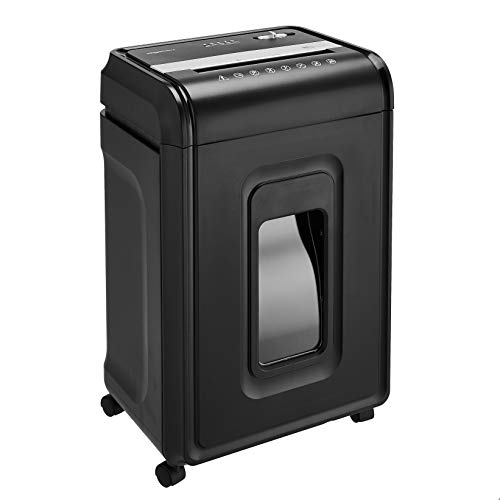
- 24-sheet P-4 cross-cut capacity
- 40-minute runtime
- Seven-gallon pullout bin
Best For: Regular home-office shredding with higher sheet loads
Best Compact Micro-Cut Pick
Bonsaii 12-Sheet Micro-Cut Shredder

- P-4 micro-cut security
- 20-minute continuous runtime
- Mobile 4.2-gallon pullout bin
Best For: Home and small offices shredding sensitive paperwork
Best High-Volume Choice
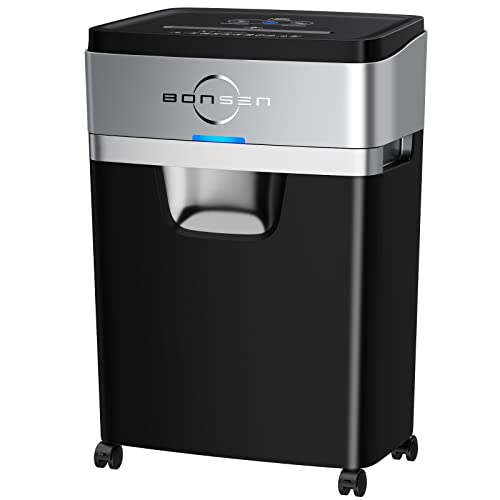
- 20-sheet P-4 cross-cut capacity
- Up to 60-minute continuous runtime
- 6.6-gallon bin for fewer emptying trips
Best For: Batch shredding in busy home or small offices
Best Large-Bin Compact Option
Bonsaii 12-Sheet Micro-Cut Shredder

- P-4 micro-cut output
- 5.5-gallon, 350-sheet bin
- Automatic operation and overheat protection
Best For: Small offices prioritizing bin capacity over long runtimes
Heavy-Duty Pick
Suntiko 14-Sheet Cross-Cut Shredder

- P-4 cross-cut security for sensitive records
- 14-sheet capacity with media shredding
- 6.6-gallon bin and anti-jam protection
Best For: High-volume home-office shredding
Compact Choice
BONSEN 8-Sheet P-4 Cross-Cut Shredder

- Compact design fits under a desk
- P-4 cross-cut protection
- 4-gallon bin with overheat protection
Best For: Small home offices and routine document disposal
Balanced Performer
Bonsaii 12-Sheet P-4 Cross-Cut Shredder

- 12-sheet P-4 cross-cut capacity
- Six-minute continuous shredding
- 5.5-gallon transparent bin
Best For: Home and small-office document cleanup
Best Heavy-Duty Micro-Cut Pick – VidaTeco 18-Sheet Micro-Cut Shredder
For offices processing a steady stream of paper shredders for medical records, the VidaTeco combines P-4 micro-cut security with an 18-sheet capacity and extended runtime. Its large bin and quieter operation make it practical for recurring document-disposal tasks.
Best For: Busy home offices and professional workspaces handling larger batches of sensitive paperwork.
Pros:
- Micro-cuts paper into 0.16 × 0.47-inch particles for P-4 security.
- Runs for up to 60 minutes and accepts up to 18 sheets at once.
- 7.9-gallon pullout bin, casters, viewing window, and included bags simplify disposal.
- Handles staples, paper clips, CDs, credit cards, and junk mail.
Cons:
- Its 15 kg weight is substantial compared with compact shredders.
- The larger office-oriented design may be more than occasional users need.
Choose this model when throughput, capacity, and smaller micro-cut particles matter more than portability. Auto-reverse jam handling and a 58 dB operating level add convenience for routine use.
Best Compact Budget Pick – Bonsaii 6-Sheet Cross-Cut Shredder
For light-duty paper shredders for medical records use at home, the Bonsaii C237-B offers P-4 cross-cut security in a compact footprint. It fits under a desk and includes basic protections for occasional document disposal.
Best For: Home users and small offices shredding modest amounts of paperwork.
Pros:
- Produces 5 × 14 mm cross-cut particles rated at P-4 security.
- Shreds up to six sheets and can handle staples, small paper clips, and credit cards.
- Separate 3.4-gallon bin has a clear window and the head includes a lifting handle.
- Auto start/stop, manual reverse, and overheat protection support easier operation.
Cons:
- Four-minute operating time requires a 20-minute cooling cycle.
- Six-sheet capacity is better suited to smaller batches than bulk shredding.
- The plastic enclosure is less substantial than a metal-bodied office model.
This is a sensible space-saving option when medical-record disposal is occasional rather than continuous. Its short duty cycle and small capacity should be considered before choosing it for a busy records workflow.
Best Autofeed Option – Bonsaii 120-Sheet Micro-Cut Shredder
The Bonsaii C233-B is designed for larger batches of paper shredders for medical records, with a 120-sheet automatic feeder and P-4 micro-cut output. It also supports manual shredding for mail, cards, staples, and other individual items.
Best For: Users who want hands-free shredding for stacks of paper while retaining manual-feed flexibility.
Pros:
- Automatically shreds up to 120 sheets of paper at a time.
- Micro-cuts documents to 4 × 12 mm particles for P-4 security.
- Manual feed handles up to 12 sheets, plus mail, cards, and staples.
- Six-gallon pullout bin, casters, and 62 dB operation support office use.
Cons:
- Automatic mode runs for 30 minutes before a 60-minute cooldown.
- Manual mode has a shorter 10-minute runtime before cooldown.
- Automatic feeding is specified for shredded paper only.
This model stands out when staff need to load a stack and continue with other tasks. Its cooldown periods mean it is best for scheduled batches rather than uninterrupted all-day shredding.
Best High-Capacity Cross-Cut Pick – Amazon Basics 24-Sheet Shredder
For paper shredders for medical records that need a higher sheet capacity without switching to micro-cut technology, this Amazon Basics model processes up to 24 sheets at once. Its P-4 cross-cut output, pullout bin, and long runtime suit regular home-office use.
Best For: Users seeking a straightforward, high-capacity cross-cut shredder for recurring paperwork.
Pros:
- Handles up to 24 sheets of 20-pound paper at once.
- Produces 4 × 38 mm particles and meets P-4 security standards.
- Runs for up to 40 minutes with a 50-minute cooldown period.
- Seven-gallon pullout bin, casters, LED indicators, and auto-reverse improve convenience.
Cons:
- Cross-cut particles are larger than those from a micro-cut shredder.
- At 31.6 pounds, it is relatively heavy to reposition.
- Credit cards must be fed one at a time through the dedicated slot.
This is a practical choice for users who prioritize sheet capacity and a familiar cross-cut design. Consider a micro-cut model instead if producing smaller particles is the primary concern.
Best Compact Micro-Cut Pick – Bonsaii 12-Sheet Micro-Cut Shredder
For home offices handling paper shredders for medical records, the Bonsaii C266-B offers P-4 micro-cut security in a relatively compact, mobile design. It can process up to 12 sheets per pass and run continuously for up to 20 minutes, making it practical for routine document disposal.
Best For: Home offices and small offices that need a movable, moderately high-volume shredder for sensitive paperwork.
Pros:
- P-4 micro-cut particles measure approximately 5 x 12 mm.
- Runs for up to 20 minutes and handles up to 12 sheets per pass.
- Includes a 4.2-gallon pullout bin, viewing window, and four casters.
- Shreds staples, paper clips, credit cards, and CDs.
Cons:
- The 4.2-gallon bin is smaller than those on the other listed models.
- Its 12-sheet capacity is lower than the 20-sheet option.
The C266-B balances P-4 protection, mobility, and a longer stated runtime. Its smaller bin may require more frequent emptying during large record-disposal jobs.
Best High-Volume Choice – BONSEN 20-Sheet P-4 Shredder
When disposing of medical records in larger batches, the BONSEN S3104 stands out with a 20-sheet capacity, a 6.6-gallon bin, and up to 60 minutes of continuous shredding. Its P-4 cross-cut output is designed for routine handling of sensitive documents.
Best For: Busy home offices and small offices that need longer runtimes and fewer bin emptying interruptions.
Pros:
- Shreds up to 20 sheets per pass into P-4 particles.
- Supports up to 60 minutes of continuous shredding with its cooling system.
- Large 6.6-gallon pullout bin can hold about 520 sheets.
- Features jam-proof operation, casters, and noise rated at 60 dB or less.
Cons:
- Its larger 15.7 x 10.7 x 21.6-inch footprint may require more floor space.
- At about 12.05 kg, it is heavier than the compact models.
The S3104 is the strongest fit here for sustained shredding sessions. Its higher capacity and larger bin are useful for batch work, though they come with added size and weight.
Best Large-Bin Compact Option – Bonsaii 12-Sheet Micro-Cut Shredder
The Bonsaii C275-B combines P-4 micro-cut shredding with a 5.5-gallon bin, giving offices a practical option for paper shredders for medical records when storage capacity matters more than extended runtime. It supports up to 12 sheets per pass and includes automatic start/stop operation.
Best For: Home offices and small offices that want a larger wastebasket in a compact shredder.
Pros:
- Produces P-4 micro-cut particles approximately 5 x 12 mm.
- 5.5-gallon transparent bin holds up to about 350 sheets.
- Automatic start/stop, manual forward/reverse, and overheat protection help simplify use.
- Shreds paper, staples, paper clips, and cards.
Cons:
- Continuous runtime is limited to 5 minutes before cooling is needed.
- The supplied details list a 6-sheet standard capacity, despite a 12-sheet maximum claim.
- The manufacturer warns against shredding metallic credit cards and using aerosols around the unit.
The C275-B is appealing when a larger bin and small-office footprint are priorities. Its short runtime makes it better suited to smaller batches than continuous record-clearance projects.
Heavy-Duty Pick – Suntiko 14-Sheet Cross-Cut Shredder
For buyers comparing paper shredders for medical records, the Suntiko offers P-4 cross-cut security and a 14-sheet capacity. Its larger bin and media-shredding capability make it practical for busy home offices or shared workspaces handling mixed sensitive materials.
Best For: High-volume home-office shredding of medical records, financial documents, cards, and CDs.
Pros:
- P-4 cross-cut particles help protect sensitive medical documents and IDs.
- Shreds up to 14 sheets per pass, plus CDs, credit cards, staples, and paper clips.
- Large 6.6-gallon bin, transparent fullness window, anti-jam system, and ETL certification.
Cons:
- Its recommended duty cycle requires cooling breaks during extended shredding.
- At 68 dB, it may be noticeable in quiet work areas.
- Glossy, coated, crumpled, and carbonless papers require extra care.
The Suntiko is a strong choice when capacity and versatility matter most. Follow the stated duty cycle and avoid overfilling the bin to help maintain reliable operation.
Compact Choice – BONSEN 8-Sheet P-4 Cross-Cut Shredder
The BONSEN S3101 is a compact option for paper shredders for medical records, especially when desk space is limited. Its P-4 cross-cut design, 4-gallon bin, and automatic safety features suit routine home or small-office document disposal.
Best For: Small home offices that need a compact shredder for medical records and everyday paperwork.
Pros:
- P-4 cross-cut shredding helps protect confidential documents.
- Handles up to eight sheets, credit cards, staples, and small paper clips.
- Compact under-desk design with a 4-gallon bin, anti-jam system, and overheat protection.
Cons:
- Its five-minute continuous run time requires a 30-minute cooldown.
- Lower sheet capacity than the larger models in this roundup.
- Credit cards must be fed one at a time.
Choose this BONSEN when footprint and straightforward operation are priorities. The lift-off handle and basket-position safety protection make routine emptying and use more convenient.
Balanced Performer – Bonsaii 12-Sheet P-4 Cross-Cut Shredder
The Bonsaii C275-A balances capacity and size for buyers seeking paper shredders for medical records in a home or small office. It supports 12 sheets per pass, produces P-4 particles, and includes a transparent 5.5-gallon bin for easier monitoring.
Best For: Home and small-office users who want a balance of shredding capacity, bin size, and compact storage.
Pros:
- P-4 cross-cut shredding produces small particles from sensitive documents.
- 12-sheet capacity and support for cards, staples, clips, and mail.
- Six-minute continuous run time, auto start/stop, reverse function, and overheat protection.
Cons:
- A six-minute run time still requires pauses for cooling during larger jobs.
- It is less compact than the smallest shredder in this selection.
- The supplied notes do not specify an ETL certification.
This Bonsaii model is a practical middle ground for regular record cleanup. Its transparent bin and portable handle simplify monitoring and emptying, while the safety shutoff stops operation when the shredder head is lifted.
How We Picked the Best Paper Shredders for Medical Records
We focused on shredders with cross-cut or micro-cut operation, since these security styles reduce documents to smaller particles than strip-cut machines. We also compared sheet capacity, waste-bin volume, continuous runtime, thermal protection, and support for common materials such as staples, paper clips, credit cards, and CDs.
For medical records, security is only part of the decision. A shredder that overheats quickly or requires constant emptying may encourage unsafe disposal habits. The selected models therefore span compact units for occasional paperwork and larger machines for recurring document destruction.
Quick Comparison
| Best For | What to Prioritize | Recommended Type |
|---|---|---|
| Occasional home paperwork | Compact size, simple controls, adequate bin | 6- to 8-sheet cross-cut model |
| Regular medical-record disposal | Micro-cut security, longer runtime, larger bin | 12- to 20-sheet heavy-duty model |
| Large batches | Autofeed capacity and cooling protection | Autofeed micro-cut shredder |
| Shared office use | High sheet capacity, pullout bin, overload protection | 20- to 24-sheet cross-cut model |
Key Buying Factors for Paper Shredders for Medical Records
Security Level
Choose micro-cut when records contain diagnoses, identification numbers, insurance details, or other highly sensitive information. Cross-cut is generally suitable for routine confidential paperwork, but smaller particle size offers more protection and makes reconstruction harder.
Capacity and Workload
Check both the maximum sheet rating and the recommended operating pattern. A high sheet count does not necessarily mean the shredder can run continuously. For frequent batches, look for longer rated runtimes, automatic cooling, and overload or jam protection.
Bin Size and Maintenance
A larger pullout bin reduces interruptions and makes disposal cleaner. Transparent windows or full-bin indicators are useful, while compact bins may be preferable when storage space is limited. Empty the container before compressed shreds obstruct the cutting head.
Material Compatibility
Confirm whether the machine accepts staples, paper clips, credit cards, or optical discs before feeding them. Never exceed the stated capacity, and remove laminates, adhesive labels, thick cardstock, and other restricted materials unless the manufacturer specifically permits them.
Noise, Footprint, and Safety
For home offices or patient-facing areas, quieter operation and a compact footprint matter. Features such as auto start and stop, overheat protection, jam reversal, and a safety lock can make regular use more convenient and reduce accidental operation.
Who Should Buy Which Paper Shredders for Medical Records?
Choose a Compact Cross-Cut Model If You Shred Occasionally
Smaller 6- to 8-sheet machines suit households or professionals handling a modest stack of receipts, forms, and old correspondence. They are easier to store but usually require more frequent emptying and cooling breaks.
Choose a Micro-Cut Heavy-Duty Model for Sensitive Records
If you routinely dispose of patient files or other personally identifiable information, a 12- to 20-sheet micro-cut shredder offers a stronger security balance. Prioritize a larger bin and a runtime that matches your daily volume.
Choose an Autofeed Model for Large Batches
Autofeed shredders are useful when you need to process a stack without standing beside the machine. They are best for organized, compatible paper batches; remove clips, folded pages, and restricted materials first.
Choose a High-Capacity Shared-Office Model for Multiple Users
A 20- to 24-sheet unit with a pullout bin and robust jam protection can better handle shared use. Even with a heavy-duty machine, stagger large jobs and follow the manufacturer’s duty cycle to prevent overheating.