
The best portable DAC with battery models make headphones and IEMs sound cleaner, louder, and more flexible without tying you to a desktop setup. The right choice depends on whether you prioritize Bluetooth convenience, USB playback, balanced output, battery life, or power for demanding headphones.
We compare ten portable DAC and headphone amplifier options across those use cases, from compact dongle-style models to powerful Bluetooth receivers with advanced EQ and high-resolution support.
Best 10 Portable Dac with Battery Picks for 2026
Wireless Hi-Res Pick

- Bluetooth 5.1 with LDAC and aptX Adaptive
- 3.5mm and 4.4mm headphone outputs
- USB support up to PCM 384kHz and DSD256
Best For: Wireless listening with flexible headphone connectivity
Balanced USB Essential

- True Native support for PCM, DSD256, and MQA
- Balanced 4.4mm and S-Balanced 3.5mm outputs
- PowerMatch, iEMatch, and XBass controls
Best For: USB-C listening with adaptable headphone output
Maximum Feature Flagship

- Bluetooth 5.4 with aptX Lossless and LDAC
- Up to 650mW output with balanced connectivity
- PC, Bluetooth, and phone tail-DAC modes
Best For: Powerful, versatile portable audio setups
High-Power Wireless Choice

- 4,900mAh battery with up to 7 hours playback
- Up to 2,173mW peak headphone output
- aptX Lossless, SPDIF, analog inputs, and OLED controls
Best For: Demanding headphones and feature-rich portable listening
Best Budget Bluetooth Pick

- LDAC and Bluetooth 5.3 wireless audio
- Up to 15 hours of playback
- 12.5g design with clip and lanyard
Best For: Compact Bluetooth listening and calls
Best High-Power Option

- Up to 600mW balanced output
- 10-band persistent parametric EQ
- 4.4mm and 3.5mm headphone outputs
Best For: Power-hungry headphones and audio enthusiasts
Best Balanced Pocket Amp

- 6–8 hours of battery life
- 4.4mm balanced and 3.5mm outputs
- Up to 400mW of amplifier power
Best For: USB-connected phones, computers, and headphones
Compact Hi-Res Pick
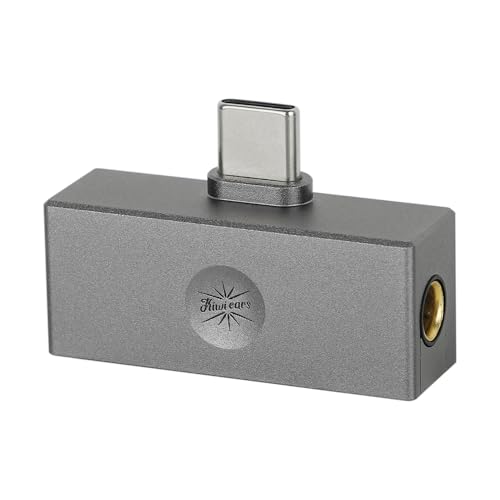
- Compact aluminum USB-C DAC
- 3.5mm and 4.4mm outputs
- PCM 32-bit/384kHz and DSD128
Best For: Portable Android and IEM listening
Feature-Rich Power Pick

- Dual DAC and amplifier chips
- Up to 500mW balanced output
- OLED display and physical controls
Best For: Power-hungry headphones and balanced listening
Low-Noise Dongle Pick

- Dual CS43131 DAC design
- 3.5mm and 4.4mm outputs
- 60-step volume with memory
Best For: Mobile and computer users wanting a compact, quiet DAC
Wireless Hi-Res Pick – FiiO BTR7 Portable DAC
The FiiO BTR7 is a versatile portable dac with battery for listeners who want wireless convenience alongside USB DAC performance. Bluetooth 5.1, LDAC, aptX Adaptive, dual headphone outputs, and support for PCM 384kHz/32-bit and native DSD256 make it a flexible companion for phones, computers, cars, and home audio setups.
Best For: Listeners who want a compact Bluetooth receiver with both 3.5mm and 4.4mm headphone outputs.
Pros:
- Supports LDAC, aptX Adaptive, aptX HD, AAC, SBC, and other Bluetooth formats.
- Offers both 3.5mm single-ended and 4.4mm balanced outputs.
- Supports PCM up to 384kHz, native DSD256, and MQA rendering in USB DAC mode.
- Includes cVc 8.0 voice-call support and a built-in microphone.
Cons:
- The supplied notes do not specify battery capacity or playback time.
- Its feature set may be more than needed for basic wired listening.
The BTR7 stands out when wireless codec support and output flexibility matter as much as wired resolution. It is a strong all-purpose option, although shoppers focused primarily on battery endurance will need to verify runtime separately.
Balanced USB Essential – iFi Hip-dac 3
The iFi Hip-dac 3 is a portable dac with battery designed for USB-C phones, tablets, and computers. Its bit-perfect True Native DAC supports 32-bit/384kHz PCM, DSD256, and full MQA decoding, while its balanced output and adjustable controls help accommodate a broad range of headphones and IEMs.
Best For: USB-C users seeking a compact wired DAC amp with balanced output and sound-shaping controls.
Pros:
- Supports 32-bit/384kHz PCM, DSD256, and full MQA decoding.
- Provides fully balanced 4.4mm and S-Balanced 3.5mm outputs.
- PowerMatch adjusts gain for more demanding headphones.
- iEMatch and XBass help tailor output for sensitive IEMs and different headphones.
Cons:
- It is a wired USB DAC rather than a Bluetooth receiver.
- The supplied notes do not state battery capacity or playback duration.
Choose the Hip-dac 3 if your priority is a straightforward USB connection with high-resolution support and useful output tuning. Its separate USB-C data and charging inputs are practical, but wireless users should consider a Bluetooth-equipped alternative.
Maximum Feature Flagship – FiiO BTR17 Bluetooth DAC Amp
The FiiO BTR17 is a high-performance portable dac with battery for users who want Bluetooth, USB, and smartphone tail-DAC modes in one device. Bluetooth 5.4, aptX Lossless, LDAC, dual ES9069Q DACs, PEQ adjustment, and up to 650mW output give it an unusually broad feature set for portable listening.
Best For: Enthusiasts who want powerful amplification, modern wireless codecs, and multiple connection modes.
Pros:
- Supports Bluetooth 5.4, aptX Lossless, LDAC, and aptX Adaptive up to 96kHz/24-bit.
- Offers PC, Bluetooth, and smartphone tail-DAC modes through a three-mode switch.
- Provides 3.5mm unbalanced and 4.4mm balanced outputs with up to 650mW output capability.
- Includes dual ES9069Q DACs, 10-band PEQ, DSD512 support, and full MQA decoding.
Cons:
- Its extensive feature set may be unnecessary for casual listeners.
- The supplied notes do not provide a specific battery capacity or playback-time figure.
The BTR17 is the most feature-rich choice in this group for listeners who regularly switch between wireless, computer, and phone-based use. Desktop mode can draw power from USB to avoid consuming the smartphone battery, adding flexibility for demanding setups.
High-Power Wireless Choice – iFi iDSD GR 2
The iFi iDSD GR 2 is a powerful portable dac with battery for listeners who need broad connectivity and substantial headphone drive. Its 4,900mAh battery is rated for up to 7 hours of playback, while aptX Lossless Bluetooth, SPDIF, analog inputs, and up to 2,173mW peak output support both portable and demanding listening applications.
Best For: Headphone enthusiasts who want high output power, aptX Lossless wireless, and extensive sound customization.
Pros:
- Includes a 4,900mAh battery with up to 7 hours of playback.
- Supports aptX Lossless Bluetooth for detailed wireless listening.
- Delivers up to 2,173mW peak output for sensitive IEMs and demanding headphones.
- Offers K2/K2HD, digital filters, XBass+, XSpace, SPDIF, analog inputs, and an OLED touch display.
Cons:
- At 0.5 kg, it is heavier than the other listed portable models.
- Its powerful feature set may be excessive for simple phone-and-IEM use.
- The supplied notes do not specify a detailed runtime breakdown by operating mode.
The iDSD GR 2 is the clearest fit when battery information, output power, and connection flexibility are central buying criteria. It is less pocket-friendly than smaller DAC amps, but its high power and extensive tuning options make it suited to serious portable headphone systems.
Best Budget Bluetooth Pick – FiiO BTR11
The FiiO BTR11 is a compact, wireless option for shoppers seeking a portable dac with battery support. Its LDAC and Bluetooth 5.3 connectivity can add higher-quality wireless playback to wired headphones, speakers, and other compatible devices, while the built-in battery provides up to 15 hours of continuous music playback.
Best For: Listeners who want an especially small Bluetooth receiver with a built-in microphone, clip, and lanyard for everyday carry.
Pros:
- Supports LDAC and Bluetooth 5.3 for wireless audio.
- Up to 15 hours of continuous music playback.
- Very light 12.5g design with clip and lanyard options.
- Built-in microphone with call noise reduction.
Cons:
- Uses a 3.5mm auxiliary audio connection rather than balanced headphone output.
- Its 45mW output is less suited to especially demanding headphones than higher-powered models.
The BTR11 is best viewed as a lightweight Bluetooth upgrade for existing wired audio gear rather than a high-power desktop-style amplifier. Choose it when portability, wireless convenience, and battery life matter most.
Best High-Power Option – Protocol Max
The Protocol Max is a feature-rich portable dac with battery-oriented power modes and substantial amplification. Dual Cirrus Logic CS43198 DAC chips, balanced 4.4mm output, and up to 600mW of power make it a strong choice for users who need more headroom from a portable setup.
Best For: Enthusiasts who want powerful amplification, balanced and single-ended outputs, and customizable parametric EQ in one portable unit.
Pros:
- Up to 600mW output through the balanced 4.4mm connection.
- Includes both 4.4mm balanced and 3.5mm single-ended outputs.
- 10-band parametric EQ profiles can be saved directly to the device.
- Eco and Boost modes provide a choice between battery economy and maximum output.
Cons:
- At 110g, it is considerably heavier than a tiny Bluetooth receiver.
- USB connectivity is required; the supplied notes do not identify Bluetooth support.
- It is not water resistant.
The Protocol Max prioritizes control and driving power over minimal size. Its dual outputs and persistent EQ make it more flexible for serious wired listening, while the two power modes help tailor portable use.
Best Balanced Pocket Amp – iFi hip-dac2 Gold Edition
The iFi hip-dac2 Gold Edition is a slim, battery-powered portable dac and headphone amplifier for direct USB connection to phones, tablets, and computers. It offers 6–8 hours of battery life depending on use, native high-resolution conversion, and both 3.5mm and balanced 4.4mm headphone outputs.
Best For: Smartphone and computer listeners who want a portable wired amplifier with balanced-output flexibility and enough power for IEMs or over-ear headphones.
Pros:
- Portable battery life rated at 6–8 hours depending on use.
- Supports USB connection with smartphones, tablets, PCs, and Macs.
- Provides both 3.5mm unbalanced and 4.4mm balanced outputs.
- Up to 400mW of amplifier power for IEMs and over-ear headphones.
Cons:
- Battery life is shorter than the BTR11’s stated 15 hours.
- USB input only; the supplied notes do not list Bluetooth connectivity.
- At 0.23kg, it is not the lightest option for pocket carry.
The hip-dac2 Gold Edition suits listeners who prefer a direct USB audio path and want balanced-output compatibility without moving to a larger desktop amplifier. Its main trade-offs are wired-only operation, weight, and moderate battery life.
Compact Hi-Res Pick – Kiwi Ears Allegro Mini
If you want a portable DAC with battery-free operation, the Kiwi Ears Allegro Mini keeps the setup compact by drawing power through USB-C. Its aluminum body, dual outputs, and high-resolution decoding make it a practical choice for phone or PC listening.
Best For: Android listeners and IEM users who want a small, durable DAC with both 3.5mm and 4.4mm outputs.
Pros:
- Compact all-aluminum design for portable use.
- Offers both 3.5mm single-ended and 4.4mm outputs.
- Supports PCM up to 32-bit/384kHz and DSD128.
- USB-C connection works with Android devices version 5.1 and above, phones, and PCs.
Cons:
- It does not include an internal battery, so it draws power from the connected source.
- Supplied notes list Android compatibility but do not specify iPhone support.
The Allegro Mini is a straightforward, high-resolution dongle for listeners who value portability and flexible headphone connections. Its lack of a built-in battery keeps the design simple, but users seeking source-independent power should consider a battery-equipped amplifier instead.
Feature-Rich Power Pick – Shanling Onix Alpha XI1
The Shanling Onix Alpha XI1 is a portable DAC with battery-powered-style convenience for travel-focused setups, though the supplied details do not state its battery capacity or runtime. It combines dual DACs, balanced amplification, a screen, physical controls, and power-saving technology in one flexible headphone amplifier.
Best For: Enthusiasts who want strong balanced output, on-device controls, and broad source compatibility.
Pros:
- Uses dual CS43198 DACs and supports PCM up to 768kHz/32-bit and DSD256.
- Provides 3.5mm single-ended and 4.4mm balanced outputs with two gain levels.
- Delivers up to 180mW at 32 ohms single-ended and 500mW at 32 ohms balanced.
- OLED display, physical buttons, app settings, and power-saving modes improve control.
Cons:
- The supplied notes do not specify battery capacity or playback runtime.
- Windows users may need to install the recommended official driver.
The XI1 stands out for listeners who want more control and output than a basic dongle provides. Its balanced power and display suit demanding portable audio use, while the power-saving system is designed to reduce heat and front-end battery anxiety.
Low-Noise Dongle Pick – Fosi Audio DS2
The Fosi Audio DS2 is a compact portable DAC with battery-saving operation rather than a built-in battery: its dual CS43131 design is intended to avoid unnecessarily draining the connected mobile device. It offers high-resolution playback, independent volume controls, and both standard and balanced headphone outputs.
Best For: Phone, tablet, and computer users who want a small USB-C DAC with low noise and flexible output options.
Pros:
- Supports PCM up to 32-bit/384kHz and DSD256.
- Offers 3.5mm single-ended and 4.4mm balanced connections.
- Provides up to 170mW at 32 ohms per channel.
- Includes 60-step independent volume control with volume memory.
Cons:
- It has no stated internal battery and relies on the connected source for power.
- The high-output balanced mode may be unnecessary for efficient IEMs.
The DS2 is a sensible choice when size, low noise, and easy operation matter most. Its battery-friendly design helps preserve mobile-device power, while the 4.4mm output adds headroom for listeners using balanced headphones.
How We Picked the Best Portable Dac with Battery Options
We evaluated these products as complete portable listening systems rather than DAC chips alone. Key considerations included connection type, battery-powered operation, headphone output options, supported Bluetooth codecs and USB formats, amplifier power, portability, and everyday controls. We also considered whether each model is better suited to IEMs, portable headphones, or harder-to-drive over-ear designs.
Feature claims such as DSD, PCM, MQA, LDAC, and balanced output can be useful, but they do not automatically guarantee better sound. Implementation, headphone matching, software compatibility, and usable battery life matter just as much.
Quick Comparison
- Best for Bluetooth versatility: FiiO BTR7 or BTR17.
- Best for USB-focused listening: iFi hip-dac 3 or iFi iDSD GR 2.
- Best for high output power: Protocol Max or Shanling Onix Alpha XI1.
- Best compact IEM choices: FiiO BTR11, Kiwi Ears Allegro Mini, or Fosi Audio DS2.
- Best value-oriented balanced dongle: Fosi Audio DS2.
Key Buying Factors for a Portable Dac with Battery
Bluetooth, USB, or Both?
Bluetooth receivers are convenient for phones, tablets, cars, and computers because the source device can stay in your pocket. Look for LDAC or aptX support if your phone and streaming service support those codecs. USB-only models can avoid wireless compression and often work well with phones and laptops, but they may draw power from the source unless they include their own battery.
Output Power and Headphone Matching
Most IEMs and efficient headphones need modest power, making compact models easier to carry and less likely to introduce hiss. Planar headphones and high-impedance over-ear models may benefit from a stronger amplifier and a 4.4mm balanced connection. Balanced output is not automatically superior, but it can provide more power and channel separation when the headphones and cable support it.
Battery, Controls, and Portability
Check rated playback time, charging behavior, screen or button controls, gain settings, and whether the unit can clip securely to clothing. A larger battery-powered amplifier may offer more power but add noticeable weight. For commuting, pocket size and simple volume control can matter more than maximum format support.
Compatibility and Features
Confirm the required USB connector, operating-system support, microphone behavior, and whether the device works while charging. EQ, a display, multiple outputs, and independent volume controls are helpful for frequent listeners, while very high-resolution format support is less important if your library and streaming services use standard lossless files.
Who Should Buy Which Portable Dac with Battery?
Choose a Bluetooth model such as the BTR7 or BTR17 if you want wireless convenience with a wide range of headphones. Pick an iFi hip-dac or iDSD model for a USB-centered setup and a warmer, feature-rich portable amplifier design. The Protocol Max and Onix Alpha XI1 are better fits for listeners who need substantial output power. IEM users should favor compact, low-noise options such as the BTR11, Allegro Mini, or DS2. Before buying, match the outputs, power requirements, and connection method to your actual headphones and daily listening habits.