
If your editing workflow depends on fast scratch drives, reliable media offloads, and portable project storage, the right enclosure matters just as much as the SSD inside it.
In this roundup of the best options for 2026, we focus on speed, cooling, compatibility, and value so you can match an enclosure to your editing setup with confidence.
Best 10 SSD Enclosures for Video Editing Picks for 2026
USB4 Speed Pick
Satechi USB4 NVMe SSD Pro Enclosure

- 40Gbps USB4 performance
- Tool-free, plug-and-play setup
- Supports up to 16TB NVMe drives
Best For: Editors needing a fast, compact USB4 enclosure
Budget SATA Option
SABRENT 2.5in SATA to USB 3.0 Enclosure
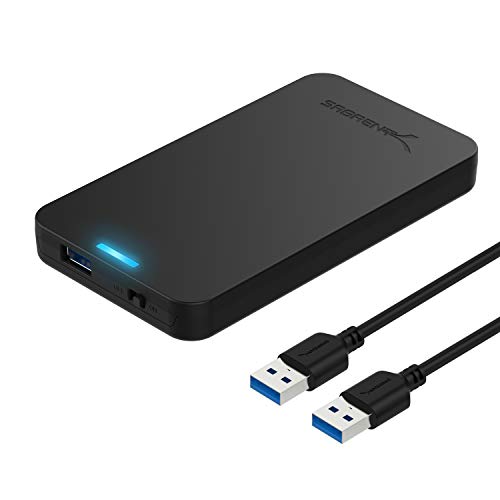
- Tool-free 2.5-inch SATA setup
- Up to 5Gbps over USB 3.0
- Optimized for SSDs with UASP
Best For: Repurposing a 2.5-inch SATA SSD for portable storage
Quiet Workhorse
Yottamaster 40Gbps NVMe Enclosure

- 40Gbps USB4/Thunderbolt 4 support
- Active cooling fan and aluminum body
- Tool-free design for M.2 SSDs
Best For: Sustained 4K editing and cooled external storage
Pro Editing Pick
TERRAMASTER D1 SSD Pro 80Gbps Enclosure

- 80Gbps bandwidth for top-end throughput
- Fanless aluminum cooling with dual-fin heatsink
- Built for 8K and 12K editing workflows
Best For: Professional 8K/12K editors needing maximum speed
Pro-Grade Silent Cooling
ACASIS 40Gbps USB4 NVMe Enclosure

- Fanless aluminum fin cooling
- USB4 and Thunderbolt support
- Up to 8TB NVMe capacity
Best For: Quiet, fast external storage for editing and backup
Extreme Speed Expansion
UGREEN 80Gbps TB5 NVMe Enclosure

- 80Gbps TB5-ready design
- Built-in fan and aluminum body
- Supports up to 8TB NVMe
Best For: Thunderbolt 5 editors chasing maximum transfer speed
Quiet Workstation Pick
Qwiizlab Fanless 40Gbps USB4 Enclosure

- Fanless aluminum cooling
- Up to 40Gbps USB4 speeds
- Supports NVMe up to 8TB
Best For: Quiet Mac/Windows editing setups that need portable NVMe storage
Tool-Free Portable NVMe Pick
UGREEN 10Gbps M.2 SSD Enclosure
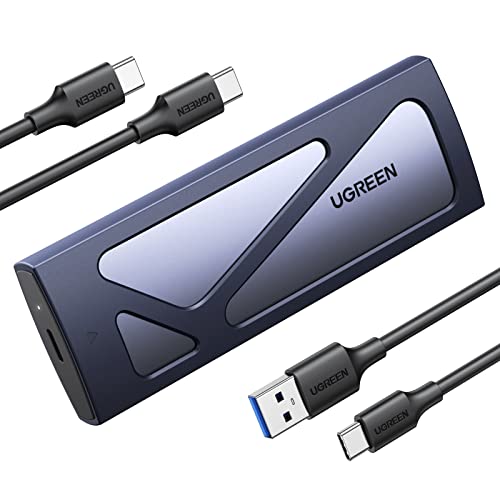
- Tool-free NVMe installation
- 10Gbps USB 3.2 Gen 2
- Aluminum case with silicone protection
Best For: Editors who want a compact, travel-friendly NVMe enclosure with easy installation.
Cooler Slide-Free Build

- Flip-open tool-free access
- Aluminum top with thermal pad
- 10Gbps USB-C NVMe support
Best For: Creators who move large video files often and want a simple enclosure with better cooling contact.
Active-Cooling Workhorse
Plugable 10Gbps NVMe Enclosure

- Temperature-controlled quiet fan
- Aluminum body for passive cooling
- UASP and TRIM support
Best For: Editors who regularly transfer massive files and want active cooling to help reduce thermal throttling.
USB4 Speed Pick – Satechi USB4 NVMe SSD Pro Enclosure
If you want one of the faster SSD enclosures for video editing, this Satechi USB4 model is built for quick scratch-disk transfers and large project files. It supports 40Gbps connectivity, PCIe Gen 4×4 performance, and broad compatibility across Mac, Windows, and Linux.
Best For: Editors who want a compact USB4 NVMe enclosure for fast external storage and mobile workflows.
Pros:
- Up to 40Gbps transfer support with PCIe Gen 4×4 drives
- Tool-free, plug-and-play installation with no extra drivers
- Fits M.2 2280/2260/2242/2230 drives and supports up to 16TB
- Includes thermal pad and cable for ready-to-use setup
Cons:
- SSD is not included
- Best performance depends on a USB4-capable host
This is a strong choice if you need a compact, travel-friendly enclosure that prioritizes speed and straightforward setup. Its cooling-focused design and wide drive support make it a practical pick for editing on the go.
Budget SATA Option – SABRENT 2.5in SATA to USB 3.0 Enclosure
If your edit drive is a 2.5-inch SATA SSD, this Sabrent enclosure offers a simple, affordable way to turn it into portable storage. It is optimized for SSDs, supports UASP SATA III, and keeps setup easy with a tool-free, plug-and-play design.
Best For: Editors repurposing a 2.5-inch SATA SSD as a basic external drive.
Pros:
- Tool-free installation with no drivers needed
- Supports USB 3.0 speeds up to 5Gbps
- Optimized for SSD use with UASP SATA III support
- Hot-swappable and backward compatible with USB 2.0/1.1
Cons:
- Only works with 2.5-inch SATA drives, not NVMe
- Plastic enclosure material
This is a sensible pick if you already have a SATA SSD and just need a straightforward external housing. It is not the fastest option for demanding video editing, but it is practical for lighter media transport and backup use.
Quiet Workhorse – Yottamaster 40Gbps NVMe Enclosure
For video editing workflows that need fast external storage, this Yottamaster NVMe enclosure pairs 40Gbps USB4/Thunderbolt 4 support with active cooling and a clear tool-free design. It is positioned for sustained performance and says it can handle 4K video editing and professional workloads.
Best For: Editors who want a fast, cooled NVMe enclosure for sustained 4K editing sessions.
Pros:
- 40Gbps support for Thunderbolt 4 and USB4 hosts
- Active cooling fan plus aluminum construction
- Tool-free installation with a transparent cover
- Supports M.2 2230/2242/2260/2280 drives
Cons:
- Best speeds depend on a 40Gbps-rated cable and host
- Real-world speeds vary with SSD and system conditions
This enclosure makes sense if your priority is staying cool during longer transfers and editing sessions. It blends fast interface support with practical thermal management, which is especially useful when working with larger media files.
Pro Editing Pick – TERRAMASTER D1 SSD Pro 80Gbps Enclosure
Among ssd enclosures for video editing, this TERRAMASTER model is the most performance-focused option here, with 80Gbps bandwidth and claimed speeds up to 7061MB/s for demanding projects. Its fanless aluminum design and dual-fin heatsink are aimed at keeping speeds steady during long 8K and 12K editing sessions.
Best For: Professional editors working on high-bitrate 8K or 12K timelines who want maximum external throughput.
Pros:
- 80Gbps bandwidth with up to 7061MB/s claimed read speed
- Fanless, all-aluminum cooling with dual-fin heatsink
- Supports Thunderbolt 5/4/3 and USB4 devices
- Works with macOS, Windows, and Linux
Cons:
- SSD is not included
- Top speeds depend on compatible hardware and test conditions
If you need one enclosure built around raw throughput, this is the strongest match in the group. It is designed for demanding workflows where sustained performance, cooling, and cross-platform compatibility matter more than simplicity alone.
Pro-Grade Silent Cooling – ACASIS 40Gbps USB4 NVMe Enclosure
If you want ssd enclosures for video editing that prioritize speed and low noise, this ACASIS model is built for a quiet, fast workflow. Its fanless aluminum fin design helps manage heat without adding moving parts, while USB4 and Thunderbolt support make it a strong fit for large media files, project caches, and backups.
Best For: Editors who want a quiet, high-speed external NVMe enclosure for Mac or PC workstations.
Pros:
- Dual-sided aluminum fins with fanless cooling for silent operation.
- USB4 and Thunderbolt 5/4/3 support with up to 2700MB/s real-world speeds.
- Compatible with up to 8TB NVMe SSDs for large media libraries and backups.
- Compact, portable build that is easy to carry between edit stations.
Cons:
- Requires a USB4 or Thunderbolt-capable setup to reach top performance.
- Optimized for M.2 NVMe drives, not SATA SSDs.
For editors who value a quiet desk setup and fast file movement, this enclosure strikes a practical balance between cooling and throughput. It is especially appealing for 4K editing, Time Machine, and portable project storage.
Extreme Speed Expansion – UGREEN 80Gbps TB5 NVMe Enclosure
Among ssd enclosures for video editing, this UGREEN model is the speed-focused option for users with Thunderbolt 5 hardware. The 80Gbps design, aluminum body, and built-in fan are aimed at heavy transfers and sustained performance, making it suited to large project libraries and demanding media workflows.
Best For: Editors with Thunderbolt 5 systems who want the highest possible external NVMe enclosure speed.
Pros:
- 80Gbps enclosure with JHL9480 chip and up to 7000MB/s theoretical speed on Thunderbolt 5.
- Built-in cooling fan plus aluminum construction for stronger heat dissipation.
- Supports up to 8TB NVMe drives for large media workloads.
- Backward compatible with Thunderbolt 4/3 and USB4/3.2/3.1/3.0.
Cons:
- Full 80Gbps performance requires Thunderbolt 5 cables and devices.
- Compatibility is limited to supported NVMe M-key/B&M-key 2280 drives.
- Fan only activates at 40°C, so cooling behavior is workload-dependent.
This is the enclosure to consider if speed is the main priority and your workstation can take advantage of Thunderbolt 5. It is built for high-end editing setups where transfer time matters more than silent operation.
Quiet Workstation Pick – Qwiizlab Fanless 40Gbps USB4 Enclosure
If you’re comparing ssd enclosures for video editing and want a simple, quiet option, this Qwiizlab enclosure is a solid fit. It uses a fanless aluminum chassis for passive cooling, while USB4 and Thunderbolt 4/5 support provide the kind of speed needed for moving large footage files and working from an external NVMe drive.
Best For: Editors who want a compact, fanless 40Gbps enclosure for Mac or Windows workflows.
Pros:
- 40Gbps USB4 performance with sequential read speeds up to 3,840MB/s.
- Fanless aluminum build helps dissipate heat without noise.
- Supports M.2 NVMe drives in multiple sizes up to 8TB.
- Includes thermal pads, screwdriver, screws, and a USB-C cable.
Cons:
- Does not include an SSD, so you must supply your own drive.
- Not compatible with Thunderbolt 2/1 ports.
For most editing rigs, this enclosure offers the right mix of portability, cooling, and performance without adding fan noise. It is a practical choice when you need fast external storage that stays understated on the desk or in a gear bag.
Tool-Free Portable NVMe Pick – UGREEN 10Gbps M.2 SSD Enclosure
If you want one of the more versatile SSD enclosures for video editing, this UGREEN model keeps the workflow simple: tool-free setup, 10Gbps USB 3.2 Gen 2 performance, and broad NVMe compatibility for common M.2 sizes. It’s a practical choice for offloading footage, moving project files, or carrying a fast scratch drive between systems.
Best For: Editors who want a compact, travel-friendly NVMe enclosure with easy installation and strong compatibility.
Pros:
- Tool-free design makes SSD swaps quick and easy.
- 10Gbps USB 3.2 Gen 2 support for fast file transfers.
- Supports NVMe M.2 drives in 2230/2242/2260/2280 sizes up to 8TB.
- Includes aluminum housing, silicone thermal pad, and extra silicone case for portability.
Cons:
- Does not support SATA NGFF or mSATA SSDs.
- 10Gbps speeds require a USB C 3.2 Gen 2 cable.
For editors who need a simple external NVMe drive without extra setup, this UGREEN enclosure covers the basics well and adds useful protection for mobile use. It’s especially appealing if you value a small, sturdy enclosure that can move between Windows, Mac, Linux, Android, and iOS devices.
Cooler Slide-Free Build – SABRENT USB-C NVMe Enclosure
Among SSD enclosures for video editing, the SABRENT EC-PNVO stands out for users who do long transfers and want a cooler-running NVMe setup. Its flip-open, tool-free design makes it easy to swap drives, while the aluminum top and thermal pad are designed to improve heat transfer during sustained 10Gbps work.
Best For: Creators who move large video files often and want a simple enclosure with better cooling contact.
Pros:
- Flip-open tool-free design for fast drive installation.
- Aluminum top with thermal pad for improved heat transfer.
- Supports M.2 NVMe SSDs in 2230/2242/2260/2280 sizes up to at least 8TB.
- USB-C plug-and-play with up to 10Gbps USB 3.2 Gen 2 speeds.
Cons:
- Not compatible with M.2 SATA SSDs.
- Only one USB-C cable is included.
If your editing workflow involves frequent cloning, backup, or project shuttling, this SABRENT enclosure is built for straightforward use and steady performance. The cooling-focused design is the main reason to pick it over a more basic enclosure.
Active-Cooling Workhorse – Plugable 10Gbps NVMe Enclosure
If you need SSD enclosures for video editing that can stay fast through very large transfers, this Plugable model adds a standout feature set: an intelligent temperature-controlled fan plus full aluminum passive cooling. That combination is aimed at keeping 10Gbps speeds steady during long reads and writes, which matters when you’re moving huge media libraries or working with large project backups.
Best For: Editors who regularly transfer massive files and want active cooling to help reduce thermal throttling.
Pros:
- Intelligent fan turns on during read/write and stays quiet below 28dB.
- Aluminum alloy body adds passive heat dissipation.
- RTL9210 chipset with UASP and TRIM support for stable performance.
- Includes both USB-C and USB-A cables for flexible connections.
Cons:
- Does not support NGFF SATA SSDs.
- Only fits M.2 NVMe drives in 2242/2260/2280 sizes.
This is the most cooling-focused option in the group, so it makes sense if you edit from large external libraries or routinely push long sustained transfers. The active fan design gives it an edge when consistency matters more than having the smallest possible enclosure.
How We Picked These SSD Enclosures for Video Editing
We prioritized sustained transfer speed, enclosure cooling, connector compatibility, and build quality. For video work, peak numbers matter less than how well an enclosure maintains performance during long copies, proxy generation, and timeline playback from external storage.
We also looked at capacity support, tool-free access, and whether each model makes sense for common editing rigs, from USB 10Gbps laptops to Thunderbolt and USB4 workstations.
Quick Comparison
Use 10Gbps enclosures for lighter edits, backups, and general portable storage. Step up to 40Gbps USB4 or Thunderbolt-class options when you need faster ingest and smoother 4K/8K workflows. The newest 80Gbps models are best for users who want maximum headroom and a more future-proof setup.
Key Buying Factors for SSD Enclosures for Video Editing
Interface Speed
The enclosure should match your computer’s port. A fast USB4 or Thunderbolt enclosure will not reach full potential on a basic USB-C 10Gbps port. For large video files, choose the fastest interface your system can actually support.
Thermals and Throttling
Video editing often means sustained writes, not short bursts. Aluminum bodies, thermal pads, fins, and fans help keep NVMe drives from throttling during long transfers or cache-heavy sessions.
Drive Type and Capacity
Make sure the enclosure supports the SSD form factor you own: M.2 NVMe for most high-speed use cases, or 2.5-inch SATA if you are repurposing an older drive. Capacity limits matter too, especially for large footage libraries.
Workflow Fit
If you are editing directly from the drive, prioritize stable sustained performance. If you mainly need ingest and archive storage, value and compatibility may matter more than top-end speed.
Who Should Buy Which SSD Enclosures for Video Editing?
Choose a 10Gbps enclosure if you want an affordable, dependable option for backups, proxies, and everyday portable storage. Pick a 40Gbps USB4 or Thunderbolt enclosure if you regularly move large camera files, edit from external SSDs, or work with 4K footage.
If you handle especially heavy media loads or want extra breathing room for future systems, an 80Gbps model is the premium choice. And if you are simply reusing an older 2.5-inch SATA SSD, a SATA enclosure is the most practical buy.
For most creators, the best SSD Enclosures for Video Editing are the ones that stay cool, match your port speed, and deliver consistent performance throughout the edit.