
Resin printing can capture the fine prong work, filigree, and micro-textures that jewelry design demands. The right setup also helps you move from concept to castable parts with fewer failed prints.
This roundup covers resin printers for jewelry design plus a few castable resins that matter for finishing and investment casting. The goal is simple: help you choose the right balance of detail, build size, reliability, and workflow.
Best 10 Resin Printers for Jewelry Design Picks for 2026
High-Detail Resin Printer Pick

- 7-inch 10K screen with 17 x 17μm pixels
- Uniform LighTurbo lighting for smoother surfaces
- 4-point leveling and power-loss recovery
Best For: Jewelry designers wanting high detail and beginner-friendly operation
Castable Resin Choice
SuperCast 8K Jewelry Casting Resin

- Wax-filled resin for ultrafine filigree work
- Low-temp burnout with no ash trace
- Compatible with regular and mono LCD printers
Best For: Casting-focused jewelry makers needing clean burnout and fine detail
Speedy Precision Printer Pick
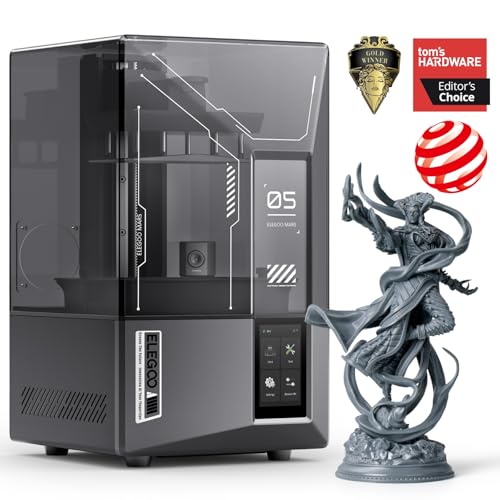
- 9K LCD with 18μm XY resolution
- Prints up to 150 mm/h with tilt release
- AI camera and smart sensors reduce failures
Best For: Users who want fast, monitored resin printing for detailed jewelry parts
Castable Resin for Fine Jewelry

- Zero ash content for clean burnout
- 20% wax for light to medium jewelry pieces
- Low shrinkage for thin, delicate designs
Best For: Jewelers needing clean-burning castable resin for delicate patterns
Beginner-Friendly Compact Pick
Creality HALOT R6 Fully Assembled

- Built-in boot guide simplifies first setup
- Compact 2K resin printer saves workspace
- Integral light source supports consistent curing
Best For: Beginners who want an easy-to-use compact printer
Jewelry Casting Resin

- Castable formula developed for jewelry work
- Wax content helps it burn out more easily
- High-resolution resin with smooth surfaces
Best For: Jewelers making castable rings, pendants, and small parts
High-Detail Workflow Pick
UniFormation GK3T 16K Resin Printer

- 16K resolution targets very fine detail
- Pre-leveling and smart feeding simplify setup
- Built-in heating helps with stable year-round printing
Best For: Users who want ultra-fine detail and a streamlined workflow
Ultra-detail mid-size pick
ELEGOO Saturn 4 Ultra 16K Resin 3D Printer

- 16K LCD with 14 x 19 μm XY resolution
- Automatic heated resin tank for steadier printing
- AI camera plus auto-leveling and Wi-Fi tools
Best For: Jewelry designers wanting fine detail and smart automation in a mid-size resin printer
Fast precision starter pick
ELEGOO Saturn 4 Ultra 16K Resin 3D Printer

- 16K detail with smooth-surface focus
- Auto-leveling and plug-and-play setup
- Heated tank and AI camera for easier monitoring
Best For: Makers who want an easy-to-use resin printer for fine jewelry parts and prototypes
High-Detail Resin Printer Pick – ANYCUBIC Photon Mono 4
If you’re shopping for resin printers for jewelry design, the Anycubic Photon Mono 4 stands out for its 7-inch 10K screen and 17 x 17μm XY pixel size, which are aimed at capturing fine detail in small models. Its uniform LighTurbo light source helps reduce layer lines and supports smoother surfaces, while the 6.04″ x 3.42″ x 6.49″ build volume leaves room for everyday design work and short production runs.
Best For: Jewelry designers who want sharp detail, a beginner-friendly setup, and a compact printer for regular work.
Pros:
- 7-inch 10K LCD with 9024 x 5120 resolution for very fine detail
- LighTurbo light source is designed for more even exposure and smoother surfaces
- Laser-engraved platform improves adhesion and helps reduce warping
- 4-point leveling and power-loss recovery make setup and reprints simpler
Cons:
- Anycubic APP service is not supported for this model
- Build size is practical, but not large for bigger batch production
For detailed jewelry work, this printer prioritizes precision and consistency over sheer size. It is a strong fit if you want accurate small parts and an easier learning curve.
Castable Resin Choice – SuperCast 8K Jewelry Casting Resin
When comparing resin printers for jewelry design, the resin matters just as much as the machine, and SuperCast is built specifically for casting workflows. This wax-filled resin is designed for ultrafine filigree work, supports 8K printing at 22μm resolution, and burns out at low temperature without ash, which is exactly what many jewelry casting projects need.
Best For: Jewelry makers who need a castable resin for fine casting patterns and clean burnout.
Pros:
- Wax-filled formula adds strength and stiffness for ultrafine filigree designs
- Low-burning behavior is designed for complete burnout with no ash trace
- Compatible with regular and mono LCD printers
- High-resolution 8K printing support with very low viscosity
Cons:
- Important notice says it does not need post-curing, so the workflow differs from standard resins
- Primarily suited to casting rather than finished display prints
This is a specialized material, not a general-purpose resin. If your goal is clean casting output for intricate jewelry pieces, it is a highly relevant option.
Speedy Precision Printer Pick – ELEGOO Mars 5 Ultra
For jewelry design, the ELEGOO Mars 5 Ultra brings together 9K detail, 18μm XY resolution, and fast printing speeds up to 150 mm/h. Its tilt release technology is meant to speed up peeling without sacrificing accuracy, while the AI camera and smart sensors add extra protection against common print failures and resin-related waste.
Best For: Makers who want a fast resin printer with strong detail and monitoring features for repeatable jewelry work.
Pros:
- 7-inch 9K mono LCD with 18μm XY resolution for intricate reproduction
- Up to 150 mm/h printing speed with tilt release innovation
- AI camera monitors prints and alerts you to errors in real time
- Smart sensor helps detect residue, resin shortages, and leveling failures
Cons:
- AI detection results may vary depending on environment, models, and resin types
- Wi-Fi cluster printing is useful, but may be more than a solo user needs
This model is a strong balance of speed and detail, especially if you expect to run jewelry projects regularly. The monitoring tools are a practical advantage when consistency matters.
Castable Resin for Fine Jewelry – Phrozen Castable Resin W40
If you’re evaluating resin printers for jewelry design, this Phrozen castable resin is aimed at the casting stage rather than the printer itself. It is built for clean burnout with zero ash, includes 20% wax for reliable casting of light to medium pieces, and is described as delivering low shrinkage for thin, delicate jewelry forms like wedding rings and micro-pattern work.
Best For: Jewelers who need a castable resin for delicate, detailed pieces with clean burnout.
Pros:
- Zero ash content and clean burnout support smoother casting results
- 20% wax content is intended for light to medium jewelry pieces
- Low shrinkage helps preserve crisp details in thin designs
- Odor-free and easy to clean up, with simple pre-casting prep
Cons:
- Requires a specific post-print prep process with IPA wash and drying
- Best suited to casting workflows, not general-purpose printing
This resin is a focused choice for castable jewelry patterns where detail and burnout quality are the priorities. It makes the most sense if your workflow already includes casting after printing.
Beginner-Friendly Compact Pick – Creality HALOT R6 Fully Assembled
If you’re comparing resin printers for jewelry design and want something approachable, the Creality HALOT R6 is built for easy setup and straightforward operation. Its compact size, built-in boot guide, and one-click workflow options make it a practical entry point for beginners learning resin printing basics.
Best For: New users who want a compact, easy-to-set-up resin printer for small detailed projects.
Pros:
- Built-in boot guide helps with networking and initial configuration.
- 2K LCD and integral light source are aimed at smoother, more consistent layer curing.
- Compact, lightweight body saves space and is easier to place in a small workspace.
- Flat build platform and stable Z-axis design are meant to improve print success rates.
Cons:
- 2K resolution is more modest than the higher-end detail printers in this roundup.
- Its beginner-focused design may be less appealing to advanced users wanting more control.
The HALOT R6 makes sense if your priority is getting started without a complicated learning curve. For jewelry design work, it offers a simple path into resin printing, but users who need the finest possible micro-detail may want to look higher up the range.
Jewelry Casting Resin – Siraya Tech Cast Purple 500g
For resin printers for jewelry design, the material matters as much as the machine, and Siraya Tech Cast is built specifically for casting workflows. This purple castable resin is designed for rings, pendants, and other small metal parts, with a formula that prints easily and is intended to burn out more readily than many non-wax casting resins.
Best For: Jewelers and makers who need a castable resin for rings, pendants, and other small metal parts.
Pros:
- Developed by jewelers for casting jewelry and small metal parts.
- Contains some wax, which helps it burn out more easily.
- High-resolution output and smooth surfaces suit detailed models.
- Compatible with most LCD and DLP printers and is 8K capable.
Cons:
- It is a resin material, not a complete printer solution.
- Castable workflow still requires post-processing and burnout steps.
If your goal is to produce castable jewelry masters, this resin is the most directly aligned option here. It focuses on fine detail, easy printing, and burnability, which are the core needs for jewelry casting workflows.
High-Detail Workflow Pick – UniFormation GK3T 16K Resin Printer
If you want a resin printer for jewelry design that emphasizes detail and workflow speed, the UniFormation GK3T is positioned as a high-precision option. Its 16K resolution, ultra-fine pixel size, and beginner-friendly features are designed to capture intricate geometry while keeping the printing process organized and stable.
Best For: Users who want ultra-fine detail, smart features, and a more complete resin printing workflow.
Pros:
- 16K LCD and ultra-fine pixel size are built for very sharp detail.
- Factory pre-leveling, smart resin feeding, and anti-drip platform improve convenience.
- Built-in resin heating helps maintain stable printing in cold environments.
- Remote control and real-time monitoring add flexibility during longer prints.
Cons:
- At 52.8 pounds, it is much heavier than smaller desktop printers.
- It is a more involved, full-featured system than a simple entry-level machine.
The GK3T stands out for users who care about capturing tiny features and want a smoother end-to-end workflow. For jewelry design, that combination of precision and process control can be especially useful when detail and consistency matter.
Ultra-detail mid-size pick – ELEGOO Saturn 4 Ultra 16K Resin 3D Printer
If you’re comparing resin printers for jewelry design, the ELEGOO Saturn 4 Ultra 16K is built to capture very fine detail while still giving you enough build area for multiple small pieces or larger display parts. Its 16K LCD, heated resin tank, and fast tilt-release system make it a practical option when precision and repeatability matter.
Best For: Jewelry designers who want a high-detail resin printer with a solid mid-size build volume and smart automation features.
Pros:
- 16K LCD with 14 x 19 μm XY resolution for fine, intricate surfaces
- Automatic heated resin tank helps maintain better print conditions below 25°C
- AI camera, light, and monitoring features help catch issues during printing
- Auto-leveling, Wi-Fi transfer, and power-on resume support easier day-to-day use
Cons:
- Build size is smaller than the larger Jupiter 2 if you need bulk production
- Advanced monitoring and automation may be more than some simple users need
The Saturn 4 Ultra 16K is a strong fit if your priority is crisp detail for rings, pendants, and prototype parts without moving to a huge machine. It combines speed, heating, and monitoring in a way that should appeal to makers who want fewer failed prints and less hands-on tuning.
Large-format production pick – ELEGOO Jupiter 2 Resin 3D Printer
For jewelry design workflows that need lots of parts at once, the ELEGOO Jupiter 2 is the roomy choice in this lineup. It pairs a very large 302.4 × 161.98 × 300 mm build volume with 16K resolution, automatic resin feeding, and heated tank control, making it useful when you want detail plus throughput.
Best For: Jewelry studios that need a large resin printer for batch production, oversized prototypes, or multiple designs per run.
Pros:
- Very large build volume supports bigger pieces or multiple small models in one job
- 16K resolution and fully enclosed light source aim for consistent fine-detail output
- Smart tank heating keeps resin at 30°C, and auto resin feeding helps avoid mid-print shortages
- Built-in camera, Wi-Fi cluster management, and sensor alerts add workflow control
Cons:
- Much larger and heavier than the Saturn models
- Likely overkill if you only print a few small jewelry pieces at a time
The Jupiter 2 makes sense when your jewelry work is closer to production than hobby printing. If you value volume, automation, and monitoring more than a compact footprint, it offers a strong mix of scale and detail.
Fast precision starter pick – ELEGOO Saturn 4 Ultra 16K Resin 3D Printer
The ELEGOO Saturn 4 Ultra 16K is another strong option for resin printers for jewelry design when you want high detail without a complicated setup. It focuses on precision, automatic leveling, and fast tilt-release printing, while the heated tank and AI camera help keep the process stable and easier to watch.
Best For: Jewelry makers who want a plug-and-play resin printer with strong detail, fast output, and simple monitoring.
Pros:
- 16K resolution is designed to capture smooth surfaces and fine textures
- Tank heating maintains resin at 30°C for better fluidity and layer adhesion
- Auto-leveling and plug-and-play setup reduce manual adjustment
- AI camera with light provides real-time monitoring and alerts for print issues
Cons:
- Build volume is still smaller than the Jupiter 2 for larger batch jobs
- AI detection results may vary depending on the environment, models, and resin types
This model is a practical fit if you care most about ease of use and dependable fine detail. It should work well for small jewelry parts, prototypes, and other prints where crisp geometry matters more than maximum build size.
How We Picked These Resin Printers for Jewelry Design
We focused on the factors that matter most for jewelry workflows: fine detail resolution, print consistency, build volume, ease of setup, and castable resin compatibility. For Resin Printers for Jewelry Design, the best options are the ones that can reliably produce clean edges, smooth surfaces, and predictable dimensional accuracy.
We also looked for models and materials that fit different skill levels, from beginner-friendly printers to larger, higher-resolution machines for batch production. Because jewelry work often involves prototypes and casting masters, clean burnout and low ash content were important for the resin picks.
Quick Comparison
If you need maximum detail for small parts, prioritize high-resolution MSLA printers and castable resins made for clean burnout. If you want faster iteration and easier setup, choose a user-friendly printer with auto-leveling or simplified calibration. For larger production runs, a bigger build area can save time by letting you print multiple rings, pendants, or wax masters at once.
Best for Detail
Look at the higher-resolution 16K and 10K printers when surface fidelity and sharp edges are the top priority.
Best for Casting Workflow
Choose castable resins with low ash content, good burnout behavior, and proven jewelry use.
Key Buying Factors for Resin Printers for Jewelry Design
Resolution: Higher pixel density helps reproduce tiny engravings, stone seats, and delicate lattice patterns more cleanly. Resolution alone does not guarantee quality, but it is one of the biggest indicators of fine-detail performance.
Build size: Small build plates work well for prototypes and one-off pieces, while larger machines are better if you need to print multiple designs or larger statement pieces at once.
Ease of use: Features like auto-leveling, smart resin handling, and stable platform design can reduce failed prints and make day-to-day use easier, especially for beginners.
Material compatibility: If your goal is casting, make sure the resin is suitable for jewelry investment casting, with clean burnout and minimal ash. Not every standard resin is a good substitute.
Workflow fit: Some buyers need a printer only for prototypes, while others need a true production tool. Match the machine and resin to your own process so you are not paying for features you will not use.
Who Should Buy Which Resin Printers for Jewelry Design?
Beginners should lean toward simpler printers with easy setup and forgiving operation. Designers who value ultra-fine detail should focus on the highest-resolution machines in the list. If you are producing castable masters, prioritize dedicated casting resin over general-purpose materials. And if you run a busy studio, a larger printer with smart automation can improve throughput and reduce handling time.
In short, the best Resin Printers for Jewelry Design are the ones that fit your detail requirements, casting plans, and production pace. Pick for workflow first, then choose the highest resolution and most advanced features your budget allows.